.webp&w=384&q=75)

Loading, please wait...
Loading, please wait...

Clinicians managing survivors of sexual violence rely heavily on evidence-based post-sexual assault care guidelines to deliver empathetic, timely, and effective clinical interventions. Survivors frequently experience overwhelming physical trauma and profound psychological distress. Therefore, healthcare professionals must initiate standardized clinical care pathways immediately. These pathways address acute physical trauma, prevent unintended pregnancies, reduce sexually transmitted infections, and mitigate blood-borne pathogen transmission. However, recommendations across international medical organizations differ considerably, particularly regarding routine antimicrobial prophylaxis.
Recent clinical investigations systematically evaluated published English-language post-sexual assault care guidelines using the Appraisal of Guidelines for Research and Evaluation II toolkit. Specifically, investigators evaluated sixteen guidelines across six key domains to determine methodological quality and clinical applicability. Furthermore, the appraisal incorporated a bespoke framework co-designed with survivors. This unique framework evaluated trauma-informed communication, survivor autonomy, psychological impact, and antimicrobial stewardship principles. The evaluated clinical guidelines originated from several jurisdictions, including the World Health Organization, the United Kingdom, the United States, Ireland, and Australia. Consequently, the analysis provides a comprehensive comparative benchmark for global clinical practice. The median overall guideline score reached sixty-five percent. However, the quality varied markedly across domains. Scope and purpose achieved the highest domain rating with a median score of eighty-nine percent. Stakeholder involvement and clarity of presentation also demonstrated robust scores. Conversely, developmental rigour revealed significant systemic deficiencies across most international publications. Therefore, clinicians must scrutinize guidelines carefully before adopting their recommendations wholesale.
The evaluation identified substantial variability in how guideline developers formulated their recommendations. In particular, the developmental rigour domain averaged a concerning median score of only forty-two percent. Many organizations failed to document systematic search strategies or formal evidence grading methodologies transparently. Furthermore, the applicability domain scored a modest median of fifty-six percent, highlighting persistent barriers to real-world clinical implementation. Editorial independence achieved sixty-nine percent, though several protocols omitted critical conflict of interest declarations. Ultimately, only three guidelines met the predefined high-quality threshold across the six AGREE II domains. These leading protocols included guidelines from the World Health Organization, the British Association for Sexual Health and HIV, and the United States Centers for Disease Control and Prevention. In addition, six guidance documents satisfied all criteria established by the survivor co-designed tool. These organizations successfully integrated inclusive language, clear prophylactic criteria, and structured mental health follow-up pathways. Consequently, these findings emphasize that future guideline committees must improve development transparency while maintaining deep stakeholder engagement.
Antimicrobial recommendations for sexually transmitted infections represent the most starkly polarized aspect of acute survivor management. For instance, the United States Centers for Disease Control and Prevention recommends universal empiric antibiotic prophylaxis for adolescents and adults. This regimen typically combines intramuscular ceftriaxone, oral doxycycline, and oral metronidazole to cover gonorrhoea, chlamydia, and trichomoniasis. Developers prioritize presumptive treatment because survivors rarely return for scheduled follow-up visits. Conversely, the World Health Organization and the British Association for Sexual Health and HIV actively discourage routine antibiotic prophylaxis. Instead, these bodies recommend individualized clinical risk assessments and targeted testing. They argue that baseline transmission rates from an isolated assault remain relatively low. Therefore, routine administration exposes survivors to avoidable adverse medication effects, including severe gastrointestinal distress. Moreover, widespread prophylaxis may obscure forensic testing outcomes and complicate sexual partner notification efforts. Consequently, healthcare providers face a challenging therapeutic dilemma between providing immediate presumptive cover and practicing responsible antimicrobial stewardship.
Balancing antimicrobial stewardship against patient-level infection risk requires careful contextual judgment. In many global and community hospital settings, follow-up attendance among sexual violence survivors drops below twenty percent. Consequently, clinicians who defer empiric therapy risk allowing untreated bacterial infections to progress toward pelvic inflammatory disease, infertility, or chronic pelvic pain. Furthermore, surviving assault generates severe emotional anxiety regarding disease transmission. Providing immediate prophylactic protection often delivers substantial psychological reassurance to survivors during crisis. Nevertheless, excessive antibiotic prescribing fuels global resistance patterns in pathogens such as Neisseria gonorrhoeae. Doxycycline and cephalosporin resistance continue to rise worldwide. In response, emerging clinical protocols investigate targeted post-exposure doxycycline prophylaxis, mirroring regimens used in other sexual health contexts. Additionally, clinicians must routinely assess Hepatitis B vaccination status, consider vaccine initiation, and offer emergency contraception within seventy-two to one hundred twenty hours. Thus, care teams must align medication regimens with local epidemiological resistance profiles and individual follow-up feasibility.
Optimal clinical care extends far beyond forensic evidence collection and pharmacotherapy. Specifically, survivor co-designed frameworks emphasize the preservation of survivor autonomy through shared decision-making. Experiencing sexual assault strips individuals of control over their bodies; hence, clinicians must never impose mandatory treatments paternalistically. Instead, physicians should clearly explain potential infection risks, drug side effects, and follow-up expectations. Moreover, healthcare teams should use non-judgmental, inclusive language that accommodates diverse gender identities and cultural backgrounds. In addition, comprehensive management mandates immediate access to human immunodeficiency virus post-exposure prophylaxis within seventy-two hours of exposure. Dedicated mental health support, psychological first aid, and social service referrals must accompany acute medical assessments. By embedding survivor-centered principles into standardized clinical pathways, emergency departments and sexual assault referral centers can deliver trauma-informed care. Ultimately, future guideline updates must bridge the gap between rigorous scientific evidence and survivor empowerment to optimize long-term clinical recovery.
Major guidelines differ significantly regarding routine antimicrobial administration. The United States CDC recommends empiric prophylaxis covering gonorrhoea, chlamydia, and trichomoniasis for all adult survivors, citing low follow-up rates. In contrast, the World Health Organization and British Association for Sexual Health and HIV oppose routine universal prophylaxis. Instead, they recommend individualized risk assessment and baseline diagnostic testing to prevent unnecessary drug exposure, severe adverse events, and antimicrobial resistance.
Guideline development groups frequently failed to document rigorous, transparent methodologies during guideline formulation. Most evaluated protocols lacked explicit systematic literature search strategies, formal risk of bias evaluations, and standardized evidence grading systems. Furthermore, panels rarely detailed how they formulated specific recommendations or managed potential conflicts of interest. Consequently, these widespread methodological omissions lowered median rigour scores to forty-two percent, highlighting urgent needs for standardized development protocols in future updates.
Comprehensive post-assault clinical care requires multiple urgent prophylactic interventions beyond antibacterial coverage. Clinicians must assess HIV transmission risk and initiate three-drug antiretroviral post-exposure prophylaxis within seventy-two hours of exposure. Furthermore, providers should administer oral emergency contraception to prevent unwanted pregnancy and provide Hepatitis B vaccination or immunoglobulin if unimmunized. Finally, teams must ensure trauma-informed forensic examination, tetanus toxoid immunization, baseline serology testing, and ongoing psychological support referrals.
Disclaimer: This content is for informational and educational purposes only and should not be considered medical or legal advice. Clinical decision-making must be individualized based on patient presentation, local epidemiology, and institutional protocols. Refer to the latest local and national guidelines for clinical practice.
References

Read summarized clinical updates, watch expert medical content, and earn CME certifications right from your smartphone.
Open your smartphone camera to scan and install.





An AGREE II evaluation of global post-sexual assault care guidelines reveals significant variability in methodological rigour and prophylactic antibiotic recommendations, underscoring the urgent need for survivor-centered frameworks and robust antimicrobial stewardship.
Today
A network meta-analysis of 10 RCTs comprising 37,923 patients reveals that SGLT2 inhibitors offer the broadest cardiorenal protection in diabetic kidney disease. Dapagliflozin reduced kidney outcomes more than semaglutide, while finerenone increased hyperkalaemia and treatment discontinuation rates.
Today

A groundbreaking study demonstrates that coronary angiography-derived radial wall strain reflects plaque morphology, predicting future rupture and erosion.
Today

The Delhi Cabinet has cleared an advanced seven-storey critical care expansion at Guru Tegh Bahadur Hospital under PMSSY Phase-IV. Costing Rs 244.87 crore, the new wing features 250 beds, specialized intensive care units, modern operation theatres, and round-the-clock emergency diagnostics for East Delhi.
Today
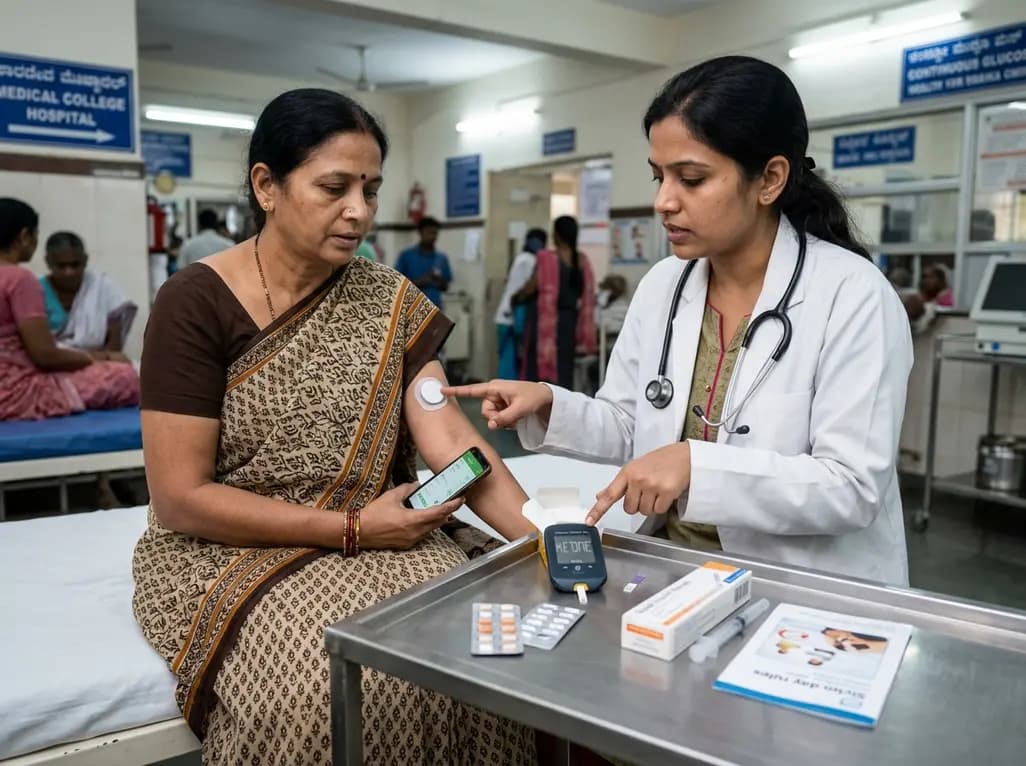
A landmark case demonstrates that favorable continuous glucose monitoring metrics cannot rule out SGLT2 inhibitor-associated euglycemic diabetic ketoacidosis. Clinicians must educate patients on symptom-based sick-day rules, uninterrupted basal insulin therapy, and proactive blood ketone testing.
Today
