.webp&w=384&q=75)

Loading, please wait...
Loading, please wait...
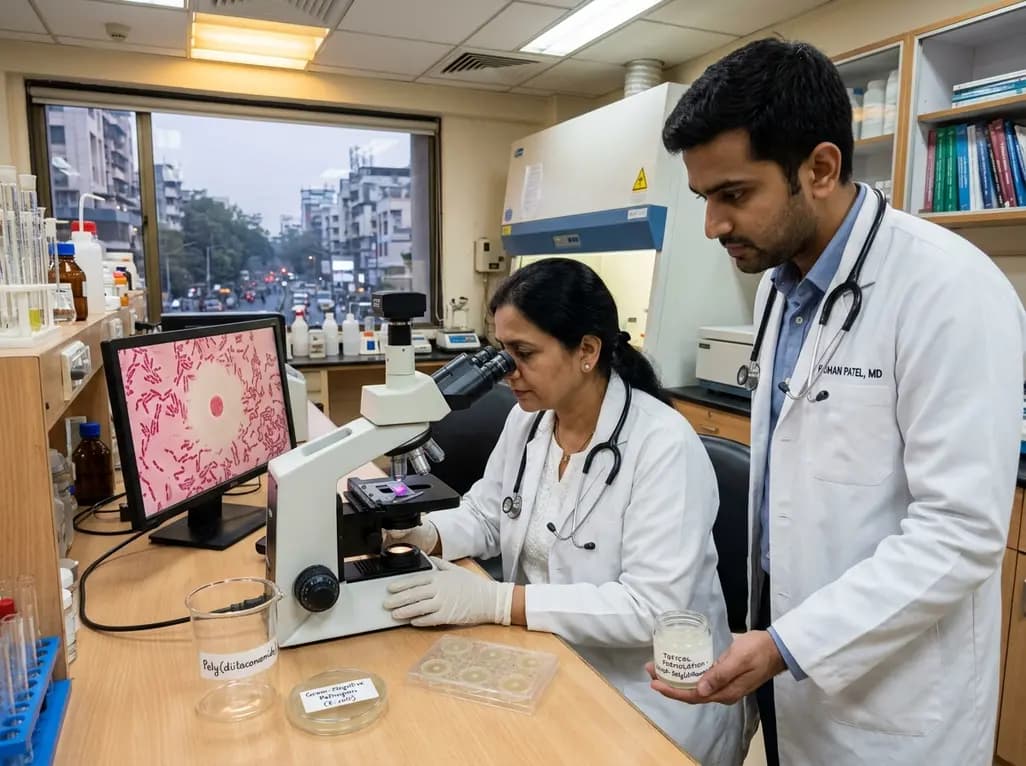
Antimicrobial resistance represents one of the most critical threats facing modern clinical medicine. Across outpatient centers and intensive care units, clinicians confront multi-drug resistant pathogens that fail to respond to traditional antibiotic classes. Consequently, researchers actively explore non-conventional therapeutic strategies to eradicate resilient bacteria. Natural host defense peptides offer potent, membrane-directed bactericidal activity without easily triggering bacterial resistance mechanisms. However, native peptides suffer from rapid enzymatic degradation, challenging synthesis pathways, and high production costs. To overcome these pharmacological limitations, medicinal chemists develop antimicrobial peptide mimics that emulate the essential amphiphilic properties of biological peptides. These synthetic macromolecules reproduce the spatial arrangement of cationic and lipophilic moieties required for bacterial envelope permeabilization. Recent advances in polymer chemistry allow researchers to design synthetic mimics of antimicrobial peptides with robust hydrolytic stability and scalable yields. Furthermore, these synthetic platforms enable precise architectural tuning to minimize toxicity against host erythrocytes. Ultimately, developing stable synthetic mimics provides a viable pathway to combat formidable resistant strains in both systemic and localized clinical settings.
Diitaconate and diitaconamide derivatives have recently captured considerable interest in functional macromolecular chemistry. Researchers synthesize novel poly(diitaconamide)-based copolymers by utilizing free radical copolymerization techniques. Specifically, they combine diitaconamide units with acrylamide-based repeat units, decorating each monomer with distinct alkyl side chains. This synthetic strategy establishes facially amphiphilic repeat units throughout the polymeric backbone. In this conformation, hydrophobic alkyl groups segregate spatially from cationic charges, mimicking the spatial segregation seen in natural helical host defense peptides. Moreover, these synthetic polymers exhibit exceptional hydrolytic stability across a broad pH spectrum. Unlike natural peptide linkages that hydrolyze readily under physiological or acidic conditions, poly(diitaconamide) structures resist spontaneous chemical degradation. Therefore, this chemical stability ensures that the bioactive architecture remains intact within diverse biological microenvironments. In addition, free radical copolymerization offers an efficient, reproducible synthetic route suitable for industrial scale-up. By systematically varying monomer feed ratios, investigators achieve precise control over charge density and hydrophobic distribution. Consequently, this versatile platform permits targeted optimization of the macromolecular architecture for specific therapeutic applications.
The therapeutic index of any membrane-active agent depends heavily on its ability to distinguish bacterial membranes from eukaryotic lipid bilayers. Bacterial membranes possess a high density of negatively charged phospholipids, whereas mammalian membranes contain zwitterionic lipids and stabilizing cholesterol. Notably, poly(diitaconamide) copolymers exhibit structure-bioactivity relationships that directly correlate with their alkyl chain lengths. Researchers observed that increasing polymer hydrophobicity significantly enhances antimicrobial activity against microbial targets. However, excessive hydrophobicity also increases hemolytic activity against human red blood cells. Specifically, copolymers featuring pentyl-substituted repeat units display potent bactericidal actions, yet they cause higher rates of red blood cell lysis. In contrast, analogues bearing shorter propyl substituents demonstrate superior biocompatibility. These propyl-substituted polymers preserve strong electrostatic affinity for bacterial walls while avoiding non-specific insertion into mammalian membranes. Consequently, propyl derivatives achieve high selectivity factors, killing bacterial pathogens without destroying surrounding host tissues. Thus, maintaining a refined hydrophobic balance at the repeat unit level remains essential for designing safe antimicrobial therapeutics.
Gram-negative infections pose severe clinical challenges due to the complex architecture of the outer membrane. This outer asymmetric bilayer contains lipopolysaccharides that establish a formidable permeability barrier against hydrophobic antibiotics. Interestingly, specific poly(diitaconamide) formulations display remarkable selectivity for Gram-negative pathogens over Gram-positive bacteria. In experimental evaluations, these specialized copolymers rapidly neutralized Escherichia coli while sparing non-target organisms. Researchers attribute this pronounced Gram-negative selectivity to a precise combination of hydrophobic balance and tailored molar mass. Specifically, polymers with optimized molecular weights penetrate the outer lipopolysaccharide matrix efficiently without triggering non-specific membrane disruption. Furthermore, the facial amphiphilicity allows the polymer chains to destabilize the inner bacterial membrane, resulting in rapid bacterial death. In contrast, many conventional antibiotics require active bacterial transport systems that become ineffective through mutational resistance or efflux pump upregulation. Because poly(diitaconamide) agents disrupt physical membrane integrity, bacteria encounter immense evolutionary hurdles in developing resistance. Therefore, these targeted polymers serve as effective tools against recalcitrant Gram-negative pathogens.
Translating macromolecular antimicrobials from laboratory benchtop discovery to clinical bedside use requires practical formulation vehicles and robust shelf life. To demonstrate real-world clinical feasibility, investigators incorporated poly(diitaconamide) copolymers into topical ointment bases. Notably, these formulated ointments maintained high bactericidal potency against Gram-negative pathogens throughout extensive testing periods. The formulations demonstrated remarkable pot stability for at least eight weeks without phase separation, chemical decomposition, or loss of biological efficacy. Furthermore, the ointment vehicle maintained its physical integrity across varying environmental conditions. Many conventional topical peptides degrade rapidly in semi-solid matrices, limiting their commercial viability and clinical utility. In contrast, the hydrolytic stability of the poly(diitaconamide) backbone shields the active ingredient from rapid hydrolysis. Consequently, healthcare providers could utilize these stable ointments in outpatient clinics for managing infected wounds, surgical incisions, and burns. Moreover, the targeted Gram-negative activity provides a focused approach to prevent opportunistic infections. Thus, this formulation represents an important technical leap toward practical, non-antibiotic topical therapies.
Bacterial skin and soft tissue infections represent a substantial healthcare burden in India, particularly within crowded urban centers and tertiary burn units. Furthermore, diabetic foot ulcers, post-surgical wounds, and traumatic injuries frequently harbor multi-drug resistant Gram-negative bacilli, including Escherichia coli. Consequently, local clinicians urgently require stable topical anti-infectives that bypass existing beta-lactam and aminoglycoside resistance mechanisms. Poly(diitaconamide) topical ointments offer an exceptional solution for Indian clinical practice because they combine high bactericidal potency with robust shelf-life stability. In addition, in peripheral clinics where uninterrupted cold-chain storage remains inconsistent, an agent exhibiting eight-week pot stability provides enormous practical utility. Moreover, by deploying topical agents that selectively neutralize Gram-negative pathogens, practitioners can reduce systemic broad-spectrum antibiotic use. Therefore, this targeted intervention directly supports hospital antimicrobial stewardship initiatives while diminishing selective pressures driving resistance. Ultimately, translating these synthetic macromolecules into clinical reality will furnish Indian surgeons, dermatologists, and primary physicians with a potent therapeutic weapon against refractory superficial infections.
Poly(diitaconamide) polymers overcome the major pharmacological limitations of natural peptides, including susceptibility to protease degradation and high production costs. Furthermore, synthetic chemists can precisely modify these facially amphiphilic polymers by radical copolymerization. Consequently, they offer superior hydrolytic stability across a wide pH spectrum. In addition, synthetic tuning permits optimization of charge density and hydrophobicity, which enhances antibacterial potency while preventing the severe mammalian cell toxicity commonly observed with native peptides.
Alkyl substituents directly alter the hydrophobic balance of the synthetic polymer. Specifically, pentyl-substituted repeat units introduce higher hydrophobicity, which noticeably elevates bactericidal potency against tough bacterial membranes. However, excessive hydrophobicity also promotes mammalian erythrocyte lysis. In contrast, propyl-substituted analogues balance hydrophobic insertion with electrostatic binding. Therefore, propyl-modified polymers achieve significantly higher selectivity indices for bacterial envelopes over mammalian membranes, ensuring potent antibacterial activity alongside minimal hemolytic destruction during tissue exposure.
Topical formulations often suffer from chemical degradation, phase separation, or rapid loss of antimicrobial activity in warm storage conditions. Notably, the newly engineered poly(diitaconamide) ointments retain potent antimicrobial efficacy and physical stability for at least eight weeks. Consequently, this extended shelf life enables reliable storage in outpatient clinics and rural dispensaries. Furthermore, sustained stability ensures predictable therapeutic dosing when managing complex wound infections, burn injuries, or hospital-acquired Gram-negative bacterial skin colonizations.
Disclaimer: This content is for informational and educational purposes only and does not substitute professional medical judgment. Refer to the latest local and national guidelines for clinical practice.
References

Read summarized clinical updates, watch expert medical content, and earn CME certifications right from your smartphone.
Open your smartphone camera to scan and install.





Researchers have engineered poly(diitaconamide) synthetic mimics of antimicrobial peptides with facial amphiphilicity, showing potent, selective activity against Gram-negative bacteria like E. coli and stability in topical ointments for over 8 weeks.
Today

Recent clinical investigations demonstrate that nasal mucociliary clearance is significantly prolonged in patients with multiple sclerosis, correlating with disease severity, autonomic dysfunction, and specific disease-modifying therapies, underscoring mucosal vulnerability to upper respiratory infections.
Today
Hormonal shifts throughout puberty, menstruation, fertility treatments, pregnancy, and menopause cause profound glucose excursions in women with diabetes. Understanding these endocrine transitions and utilizing advanced continuous glucose monitoring enables clinicians to optimize personalized diabetes care.
Today

Emerging evidence shows that even dim night-time light exposure alters cardiac geometry and weakens contractility. In a landmark cohort study, nocturnal light above 3 lux triggered concentric left ventricular hypertrophy and subclinical dysfunction, highlighting nocturnal illumination as a modifiable cardiac risk factor.
Today
Cervi-AI achieves expert-level agreement in evaluating cervical spinal stenosis and spinal cord compression on MRI, while its automated imaging metrics reliably predict anterior versus posterior surgical approaches in multilevel degenerative cervical myelopathy.
Today

A retrospective cohort study evaluates the short- and long-term impacts of SARS-CoV-2 infection on patients with Graves' disease receiving antithyroid drug therapy, highlighting thyroid status destabilization, clinical symptom exacerbations, and post-viral sequelae.
Today
