

Loading, please wait...
Loading, please wait...
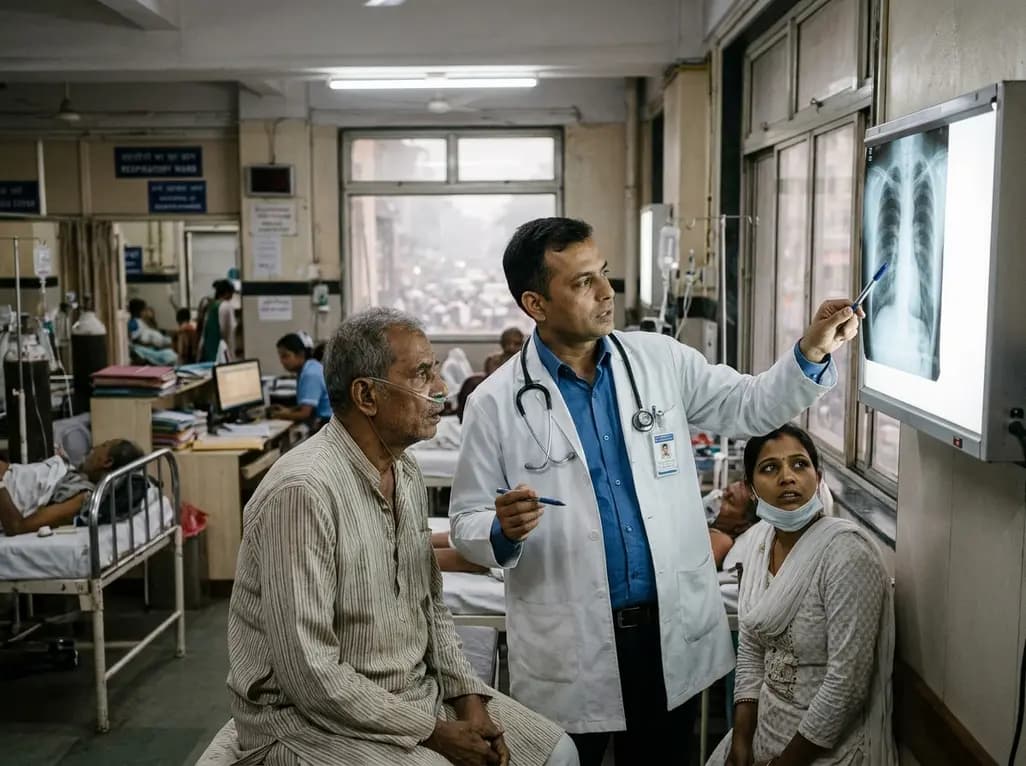
Air quality degradation across urban India presents an escalating public health crisis that strains healthcare infrastructure. Recent actuarial analyses reveal that pollution-linked health claims surged 4.3 times over the last three years. Consequently, physicians must recognize these shifting epidemiological patterns to manage systemic inflammation and organ damage effectively in daily outpatient settings.
According to recent industry figures, insurance claims associated with toxic air exposure rose 4.3-fold between fiscal years 2023 and 2026. Moreover, cumulative payouts climbed 4.5 times to reach Rs 241.6 crore nationwide. The average reimbursement ticket size escalated to Rs 62,662 per patient hospitalization. In addition, year-on-year data showed sustained double-digit growth rates exceeding 50 percent each year. This sharp trajectory indicates that acute health deterioration now requires formal inpatient care far more frequently. Furthermore, financial strain heavily impacts uninsured and underinsured families who face unexpected hospitalizations. Medical professionals must understand that poor ambient air quality no longer causes merely mild ambulatory symptoms. Instead, toxic airborne particulates precipitate severe physiological collapses requiring intensive medical treatments. Therefore, primary care practitioners and hospital administrators should anticipate greater winter admission volumes. Consequently, hospital networks must prepare operational bed capacities well ahead of predictable seasonal smog episodes. Additionally, proactive counseling helps vulnerable individuals manage chronic diseases before emergency interventions become unavoidable. Ultimately, these actuarial trends mirror a severe underlying disease burden that demands urgent multi-stakeholder clinical attention. Thus, routine clinical documentation must accurately capture environmental risk factors during patient admissions.
Clinical perspectives historically viewed ambient air pollution primarily as a pulmonary hazard causing bronchospasm and chronic cough. However, recent actuarial records challenge this traditional assumption quite dramatically. Cardiovascular conditions actually accounted for 43.5 percent of all pollution-associated insurance claims. In contrast, general respiratory infections represented 35 percent of claims, while pneumonia and bronchitis accounted for 11.2 percent and 6 percent respectively. Pathophysiologically, ultrafine particulate matter like PM2.5 penetrates alveolar-capillary barriers directly. Consequently, these tiny particles enter systemic circulation, provoking pervasive endothelial dysfunction and marked vascular inflammation. In addition, chronic particle inhalation stimulates autonomic nervous reflex arcs that trigger sympathetic overdrive, arterial vasoconstriction, and acute hypertensive surges. Furthermore, elevated inflammatory cytokines promote platelet aggregation, plaque instability, and rapid intravascular thrombosis. As a result, susceptible individuals experience acute coronary syndromes, unstable angina, and fatal myocardial infarctions during severe air quality spikes. Clinicians must therefore screen hypertensive and diabetic patients aggressively for cardiovascular vulnerabilities whenever air quality metrics decline. Additionally, physicians should educate at-risk patients about early ischemic symptoms during heavy winter smog episodes. Thus, addressing pollution requires robust cardioprotective regimens alongside traditional respiratory therapies.
A widespread clinical assumption suggests that environmental pollution damages only fragile elderly individuals and very young children. Nevertheless, recent claim statistics overturn this paradigm by revealing immense vulnerability among young workforce demographics. Working professionals aged 31 to 55 years filed 59 percent of all pollution-related insurance claims. Meanwhile, senior citizens aged 55 and above contributed another 31 percent to the total volume. Together, these two key cohorts accounted for roughly 90 percent of all hospital claims. Conversely, young adults aged 21 to 30 made up 6.7 percent, and pediatric patients below 20 years represented 3.7 percent. Working professionals experience substantial pollutant exposure during long daily commutes and outdoor corporate activities. Furthermore, high workplace stress, metabolic syndrome, sedentary lifestyles, and chronic sleep deprivation amplify their vascular susceptibility. As a consequence, severe ambient toxins push borderline metabolic abnormalities into acute clinical crises requiring hospitalization. Moreover, prolonged hospitalizations disrupt household income and diminish national economic productivity. Therefore, corporate occupational health physicians must institute proactive wellness checks and air purification protocols. Additionally, general practitioners should urge working adults to avoid strenuous outdoor exercises during hazardous morning smog windows.
Public discussions regarding urban toxic haze frequently center on the National Capital Region. Unquestionably, Delhi recorded the single highest claim volume with 8,093 cases, followed closely by Pune, Bengaluru, Mumbai, and Hyderabad. However, the geographic reality of toxic exposure extends far beyond these major metropolitan epicenters. In fact, Tier-2 and Tier-3 cities together accounted for 55 percent of all pollution-linked insurance claims. Industrial manufacturing hubs, unpaved roads, and regional agricultural biomass burning contribute significantly to deteriorating air across semi-urban landscapes. Furthermore, smaller municipalities often lack comprehensive ambient monitoring equipment, sophisticated early warning advisories, and tertiary critical care infrastructure. Consequently, peripheral residents inhale hazardous particulate mixtures for prolonged intervals without recognizing impending cardiopulmonary hazards. In response to these mounting health risks, nearly 48 percent of consumers in polluted districts purchased higher health coverage limits. Nevertheless, insurance reimbursement cannot fully compensate for irreversible microvascular or parenchymal pulmonary damage. Therefore, physicians operating in non-metro clinics must maintain heightened diagnostic suspicion for pollution-induced exacerbations. Additionally, state public health authorities should expand critical care facilities and diagnostic spirometry networks within secondary tier centers.
Epidemiological data demonstrates a pronounced seasonal surge in pollution-induced morbidity across the subcontinent. Specifically, nearly 56 percent of annual claims occurred during the cold months spanning October through March. Thermal inversions during north Indian winters trap particulate matter near ground level, creating persistent toxic smog layers. Moreover, dropping temperatures induce peripheral vasoconstriction, which elevates baseline systemic blood pressure and cardiac workload. In addition, respiratory viral pathogens circulate widely during these cooler periods, compounding airway mucosal inflammation. Clinicians must therefore execute structured preventive protocols before winter peaks arrive each year. For instance, physicians should review asthma and COPD action plans, optimizing inhaled corticosteroid maintenance dosages preemptively. Furthermore, cardiologists must emphasize strict compliance with antihypertensive, lipid-lowering, and antiplatelet medications among vulnerable cohorts. Doctors should also advise high-risk patients to remain indoors during peak early-morning smog hours. When outdoor travel is mandatory, patients should utilize certified particulate-filtering respirators such as N95 masks consistently. Additionally, physicians should recommend annual influenza and pneumococcal immunizations to mitigate secondary pulmonary complications. Ultimately, anticipatory outpatient interventions can reduce emergency room surges and lower life-threatening hospitalizations significantly during harsh winter months.
Q1: Why are cardiovascular diseases outnumbering respiratory claims during high pollution episodes?
Inhaled fine particulate matter rapidly crosses the pulmonary alveolar barrier and enters systemic circulation directly. As a result, these particles trigger widespread endothelial injury, arterial vasoconstriction, and systemic inflammation. Furthermore, elevated inflammatory mediators promote platelet hyperreactivity and coronary plaque instability. Consequently, vulnerable patients develop acute coronary syndromes and decompensated heart failure more frequently than acute primary respiratory failures during toxic air episodes.
Q2: Which patient demographics face the highest risk of hospitalization from severe ambient air pollution?
Working adults aged 31 to 55 years account for nearly 59 percent of claims due to sustained commute exposures and underlying metabolic stressors. In addition, senior citizens aged 55 and above contribute 31 percent due to reduced cardiopulmonary reserves and pre-existing chronic conditions. Together, these two demographics constitute roughly 90 percent of pollution-associated hospitalizations, requiring vigilant clinical surveillance and preventive medical guidance.
Q3: How should clinicians in tier-2 and tier-3 cities adapt their preventive screening protocols?
Physicians in non-metropolitan hubs must actively monitor local air quality trends and maintain high diagnostic suspicion for environmental exacerbations. Furthermore, clinicians should routinely perform baseline spirometry and cardiovascular risk scoring for symptomatic adults. In addition, practitioners must educate patients on air quality index awareness, promote appropriate respirator usage, and ensure strict adherence to maintenance medications well before seasonal winter smog sets in.
Disclaimer: This content is for informational and educational purposes only. It does not constitute medical advice or replace professional judgment. Refer to the latest local and national guidelines for clinical practice.
References

Read summarized clinical updates, watch expert medical content, and earn CME certifications right from your smartphone.
Open your smartphone camera to scan and install.





A recent nationwide report reveals a steep 4.3-fold increase in pollution-related medical claims over three years. Cardiovascular and respiratory illnesses drive nearly 78 percent of these hospitalizations. Working adults and seniors bear the heaviest burden across both major metropolitan areas and expanding tier-2 hubs.
Today
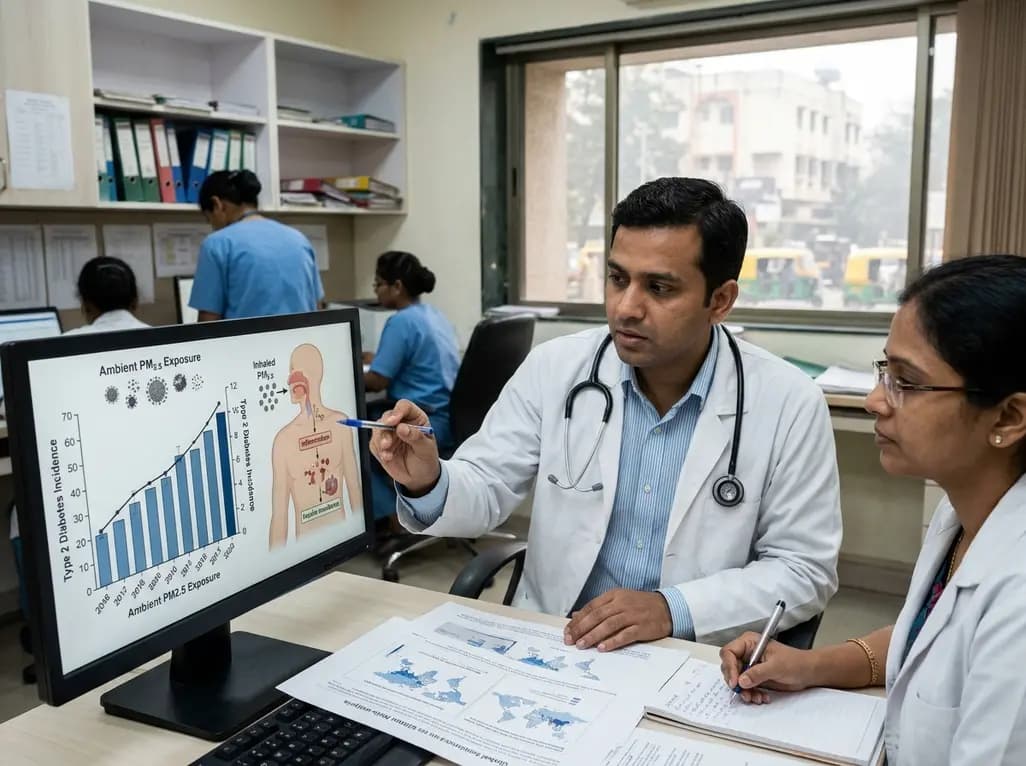
A landmark global umbrella review spanning 200 million participant observations reveals that long-term exposure to fine particulate matter significantly increases the risk of developing type 2 diabetes. Clinicians must now address environmental pollution within routine cardiometabolic prevention frameworks.
Today

Public health experts urge policymakers to review rigorous clinical evidence before scaling up double fortified salt. With only half of India's anaemia cases stemming from iron deficiency, specialists highlight structural trial limitations, dietary diversity needs, and pending data from the SAMPADA national survey.
Today

A multicenter registry of 854 patients shows that re-isolating multiple reconnected pulmonary veins during second catheter ablation significantly lowers atrial arrhythmia recurrence, particularly in patients without heart failure, whereas extra-PV ablation provided no clear additive benefit.
Today

A clinical overview of resveratrol supplementation in mitigating exercise-induced muscle damage. This narrative review explores physiological mechanisms, reductions in soreness markers like creatine kinase, dosage strategies, and bioavailability enhancements for sports medicine and nutrition practitioners.
Today
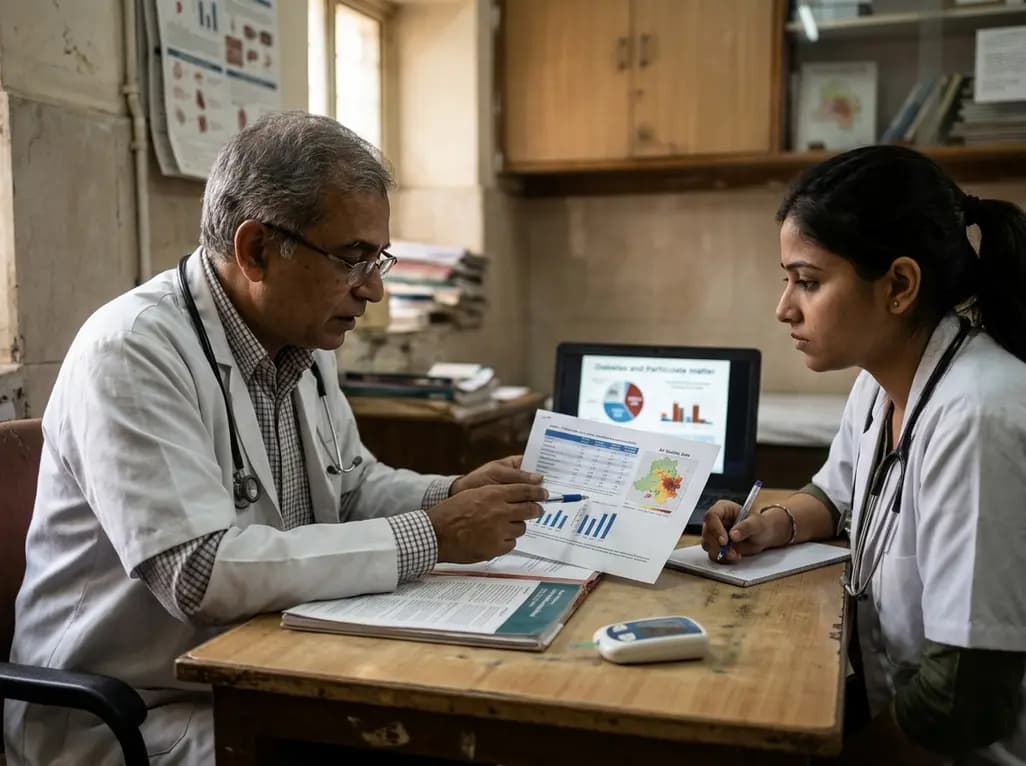
The global APEX-T2D umbrella review synthesises data from over 200 million individuals, establishing that long-term PM2.5 exposure raises type 2 diabetes risk by 10% to 16% per 10 ug/m3. Clinicians must recognize ambient air pollution as an independent systemic metabolic disruptor alongside traditional risk factors.
Today
