.webp&w=384&q=75)

Loading, please wait...
Loading, please wait...

Platelet transfusions represent a common therapy in neonatal intensive care units across India and worldwide. However, transfusing adult donor units into fragile preterm infants creates a profound biological incompatibility. Emerging evidence indicates that platelet P-selectin expression differs dramatically across ontogeny, influencing how transfused cells interact with recipient immune cells. Consequently, understanding this developmental mismatch provides critical physiological insight into post-transfusion complications in vulnerable infants.
Neonatal platelets exhibit a distinctive physiological profile that differs substantially from adult platelets. Specifically, neonatal platelets demonstrate relative hypo-reactivity when exposed to typical agonists such as adenosine diphosphate, thrombin, and collagen. Despite this in vitro hypo-responsiveness, healthy neonates maintain robust primary hemostasis through compensatory physiological mechanisms. These compensations include elevated hematocrit, larger red cell mean corpuscular volume, and higher concentrations of ultra-large von Willebrand factor multimers.
However, when severely thrombocytopenic preterm neonates require transfusions, blood banks supply platelet units collected exclusively from adult donors. This standard clinical practice inadvertently introduces mature, fully reactive adult platelets into an immature physiological environment. As a result, this cellular developmental mismatch creates unexpected biological interactions that extend far beyond simple clot formation. Adult platelets carry unique proteomic profiles and heightened immunological responsiveness. Therefore, clinicians must recognize that transfused adult platelets do not merely restore cell counts; they also introduce active immune modulators into the naive neonatal circulation. Furthermore, recent translational studies demonstrate that this developmental disparity alters downstream vascular signaling and reshapes recipient leukocyte function, raising vital questions regarding transfusion safety in preterm infants.
A recent laboratory investigation modeled this developmental mismatch by exposing neonatal cord blood monocytes to either adult or neonatal cord platelets. Adult platelets demonstrated significantly higher surface levels of platelet P-selectin expression following activation compared with their neonatal counterparts. In addition, activated adult platelets released greater concentrations of beta-2-microglobulin into the surrounding medium. This structural disparity directly shaped how monocytes responded to cellular contact.
Consequently, monocytes exposed to adult platelets developed striking phenotypic alterations. While monocytes maintained baseline morphology, adult platelets induced profound surface upregulation of chemokine receptors, specifically CCR2 and CCR5. These dual receptors govern monocyte arrest, endothelial adhesion, and trans-endothelial migration into inflamed tissues. In contrast, neonatal platelets failed to stimulate comparable receptor expression on neonatal monocytes. Most importantly, targeted antibody blockade of the P-selectin and PSGL-1 binding interaction completely abrogated CCR2 and CCR5 upregulation. Thus, platelet P-selectin expression serves as the primary molecular driver that converts resting neonatal monocytes into an actively migrating phenotype during cellular cross-talk. This selective receptor induction illustrates how mature donor platelets directly rewire neonatal leukocyte behavior through contact-dependent pathways.
Interestingly, the study revealed a clear dissociation between monocyte cytokine secretion and migratory receptor expression. Exposure to platelets stimulated neonatal monocytes to produce substantial amounts of interleukin-8 and monocyte chemoattractant protein-1. Nevertheless, platelets from both neonatal and adult donors triggered virtually identical levels of these pro-inflammatory chemokines. Developmental maturity did not alter the magnitude of cytokine release.
Furthermore, blocking the P-selectin and PSGL-1 pathway had no measurable effect on cytokine production. While antibody neutralization completely halted CCR2 and CCR5 upregulation, interleukin-8 and monocyte chemoattractant protein-1 secretion remained entirely intact. These findings establish that platelet-induced cytokine release operates through distinct molecular pathways that function independently of platelet P-selectin expression. Platelets likely drive chemokine synthesis via alternative surface ligands or soluble paracrine factors. Consequently, the inflammatory response separates into two distinct mechanistic arms: a developmental stage-independent secretome activation and a developmental stage-dependent migratory priming. This distinction provides crucial clarity for researchers investigating neonatal inflammatory cascades. Clinicians can therefore appreciate that adult platelets induce a specific pro-migratory transformation rather than generalized immune hyper-activation.
These cellular discoveries align closely with landmark clinical findings from large neonatal trials. For instance, the PlaNeT-2 randomized controlled trial demonstrated that liberal platelet transfusion thresholds increased mortality and major bleeding in preterm infants. Historically, neonatologists assumed that higher platelet counts uniformly protected fragile infants from catastrophic intraventricular hemorrhage. However, real-world data contradicted this assumption, revealing unexpected harm from excessive platelet transfusions.
The discovery of P-selectin-driven monocyte priming provides an essential mechanistic explanation for these adverse outcomes. When adult platelets enter neonatal blood vessels, they prime recipient monocytes to express CCR2 and CCR5. Consequently, these primed monocytes migrate rapidly across delicate endothelial barriers into vulnerable organs. In the developing brain, lungs, and intestines, infiltrating monocytes exacerbate localized tissue injury and microvascular inflammation. This migration potentially accelerates pathological states such as necrotizing enterocolitis, bronchopulmonary dysplasia, and intracranial hemorrhage extension. Therefore, donor platelet reactivity transforms a routine supportive therapy into a potential immunopathological trigger in sick preterm neonates. Understanding this cellular mechanism underscores why indiscriminate transfusion practices harm vulnerable neonates in critical care units.
Recognizing the risks of developmental mismatch creates valuable opportunities to refine neonatal transfusion protocols. First, clinicians in neonatal units must strictly implement restrictive transfusion thresholds. International and national pediatric guidelines now recommend withholding prophylactic transfusions in stable infants until platelet counts fall below twenty-five thousand per microliter. By avoiding unnecessary transfusions, pediatricians directly reduce neonatal exposure to hyper-reactive adult platelets.
Second, these molecular findings highlight novel therapeutic targets for future clinical investigation. Because blocking the P-selectin and PSGL-1 axis successfully abolishes pro-migratory receptor induction in vitro, targeted inhibitors could protect high-risk infants. Pharmacological agents that selectively disrupt selectin-mediated binding might prevent monocyte extravasation without impairing primary hemostasis. Additionally, blood banking innovations may eventually offer age-matched or functionally modified donor products tailored specifically for neonates. Until such bioengineered products become widely accessible, adhering to evidence-based restrictive thresholds remains the safest strategy. Through disciplined transfusion stewardship, neonatal intensivists can minimize inflammatory organ injury and substantially improve clinical outcomes for preterm infants. Ultimately, integrating developmental biology into daily bedside practice protects fragile neonates from preventable immune-mediated tissue injury.
Adult platelets express significantly higher quantities of surface P-selectin upon activation compared with neonatal platelets. When transfused adult platelets interact with neonatal monocytes, this enhanced P-selectin binds to monocyte PSGL-1 receptors. Consequently, this contact triggers intracellular signaling pathways that strongly upregulate chemokine receptors CCR2 and CCR5. These surface receptors promote monocyte adhesion and tissue migration, establishing a pro-migratory cellular phenotype that neonatal platelets do not induce.
Surprisingly, platelet P-selectin expression does not regulate monocyte cytokine secretion. While platelet exposure stimulates neonatal monocytes to release interleukin-8 and monocyte chemoattractant protein-1, both adult and neonatal platelets induce equivalent cytokine amounts. Furthermore, experimental blockade of P-selectin or PSGL-1 leaves chemokine release completely intact. Therefore, cytokine synthesis occurs through independent signaling mechanisms, indicating that developmental stage selectively governs monocyte migratory behavior rather than general inflammatory mediator release.
These findings provide clear biological plausibility for clinical trials showing increased mortality after liberal platelet transfusions in preterm infants. Because transfusing adult platelets promotes monocyte infiltration into developing tissues, clinicians must avoid unnecessary transfusions. Consequently, neonatal guidelines strongly recommend restrictive prophylactic thresholds, commonly twenty-five thousand per microliter for stable preterm infants. Restricting transfusions prevents unwarranted immune activation and reduces the risk of serious inflammatory organ injuries in preterm neonates.
Disclaimer: This content is for informational and educational purposes only, and should not be taken as medical advice. It is not intended to substitute for professional medical advice, diagnosis, or treatment. Always seek the advice of your physician or other qualified healthcare provider with any questions you may have regarding a medical condition. Refer to the latest local and national guidelines for clinical practice.
References

Read summarized clinical updates, watch expert medical content, and earn CME certifications right from your smartphone.
Open your smartphone camera to scan and install.





Adult platelets express higher P-selectin levels than neonatal platelets, driving CCR2 and CCR5 expression on neonatal monocytes. This cellular developmental mismatch promotes monocyte migration, providing mechanistic insight into clinical harms observed after neonatal platelet transfusions.
Today

A quaternary centre study of 143 patients undergoing TIPS revealed high 90-day rates of hepatic encephalopathy (43.8%) and mortality (18.6%). Type 2 diabetes independently doubled encephalopathy risk, while advancing age and higher baseline MELD scores strongly predicted short-term mortality.
Today
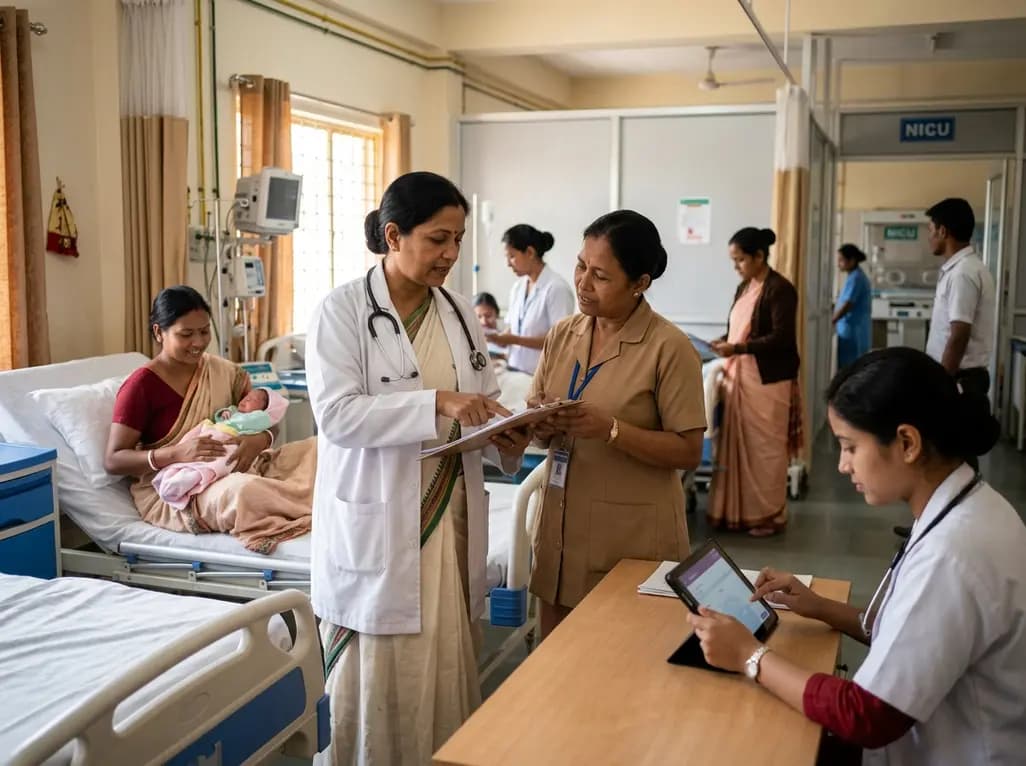
Meghalaya recorded a historic 55% reduction in maternal deaths, dropping from 244 to 107 over five years. Through the MOTHER app, dedicated transit homes, and expanded infrastructure like the 150-bed Tura Maternity Hospital with its first public NICU, the state demonstrates an effective public health model.
Today

Explore modern perioperative management protocols for clinical xenotransplantation. Learn how costimulation blockade, anti-inflammatory perfusion, and coagulopathy rescue overcome interspecies hurdles.
Today

North India's first Centre of Excellence for Brain and Spine at Amrita Hospital Faridabad integrates Brainlab's Loop-X mobile robot. This landmark facility combines cone-beam computed tomography with surgical navigation to elevate precision, optimize operative workflows, and enhance specialized clinician training.
Today

At Homa CME 2026 at Hyderabad's T-Hub, healthcare leaders emphasized moving beyond routine metrics through digital calculators and precision stratification. Discover why characterizing individual insulin secretion, resistance patterns, and vascular risks transforms chronic metabolic care in India.
Today
