.webp&w=384&q=75)

Loading, please wait...
Loading, please wait...
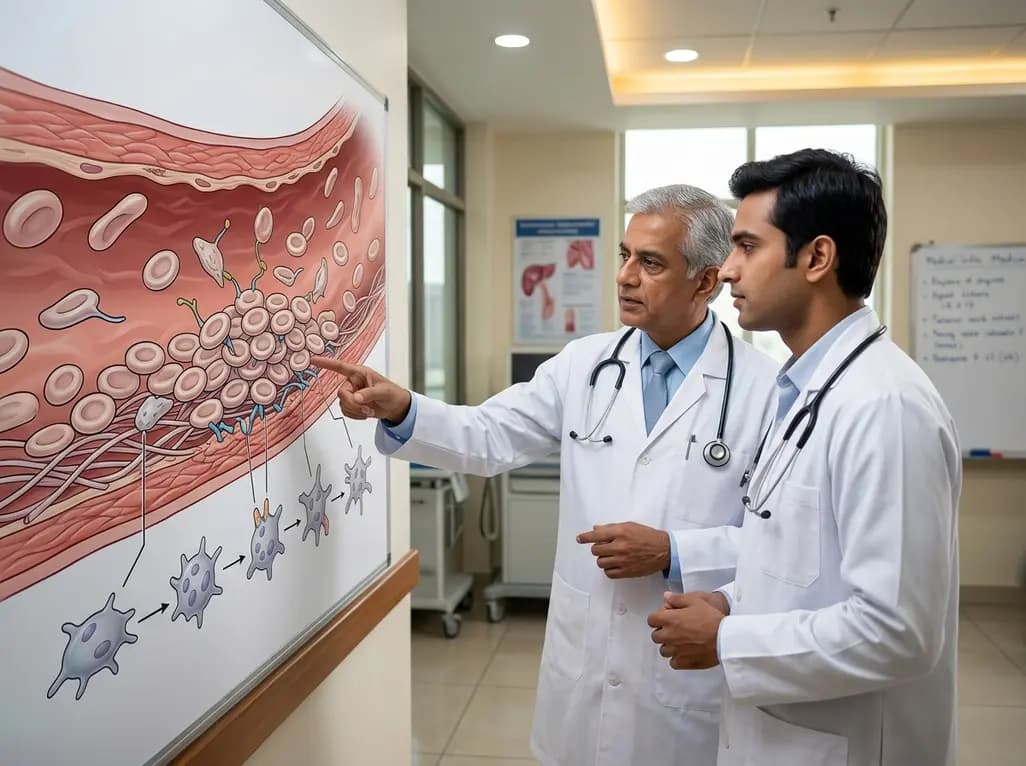
Platelet-collagen interactions represent a fundamental phase in the body's response to vascular injury. When the protective endothelial lining breaks, subendothelial collagen becomes exposed to circulating blood. This exposure acts as a primary signal for platelet recruitment. Furthermore, these interactions facilitate the transition from a flowing state to a stable clot. By understanding these pathways, clinicians can better appreciate the nuances of hemostasis and thrombosis.
Several specialized receptors manage these vital interactions on the platelet surface. Glycoprotein VI (GPVI) stands as the principal signaling receptor. Additionally, the integrins α2β1 and αIIbβ3 contribute to stable adhesion and structural integrity. Moreover, von Willebrand factor (vWF) serves as a critical bridge. It links platelets to collagen fibers, particularly under high-shear conditions in arterial systems.
Beyond the common types, research now highlights collagen types IV, VI, XV, and XVIII. These variants play distinct roles in maintaining the vascular wall. Consequently, targeting these specific pathways offers hope for novel antithrombotic therapies. These new drugs aim to prevent pathological clotting while minimizing the risk of excessive bleeding.
When blood vessels suffer damage, collagen exposure triggers platelet adhesion. This process activates signaling pathways through receptors like GPVI, which leads to aggregate formation and fibrin production.
GPVI is central to collagen-induced platelet activation. Researchers believe that inhibiting this receptor could prevent arterial thrombosis without significantly impairing normal hemostasis or increasing bleeding risks.
Disclaimer: This content is for informational and educational purposes only. It does not constitute professional medical advice, diagnosis, or treatment. Refer to the latest local and national guidelines for clinical practice.
References
1. Shen R et al. Platelet-Collagen Interactions in Hemostatic Mechanisms. Adv Healthc Mater. 2026 Jun 06. doi: 10.1002/adhm.71326. PMID: 42251479.
2. Nieswandt B, Watson SP. Platelet-collagen interaction: is GPVI the central receptor? Blood. 2003;102(2):449-461.
3. Deckmyn H. Platelet adhesion to collagen. ResearchGate. 2020.

Read summarized clinical updates, watch expert medical content, and earn CME certifications right from your smartphone.
Open your smartphone camera to scan and install.





An overview of how platelet-collagen interactions trigger hemostasis via receptors like GPVI and vWF, offering insights for future antithrombotic drug resea...
4 months ago

Review how tailored exercise programs benefit frail older patients with heart failure. Explore pathophysiological mechanisms, individualized training prescriptions, and strategies to overcome adherence barriers in clinical practice.
Today

Recent clinical studies reveal maternal autoantibodies targeting IL-1RA as potential triggers for preterm labor, opening avenues for targeted cytokine therapies. Concurrently, new perioperative findings show inhaled cannabis increases propofol requirements during upper endoscopy compared to oral edible consumption.
Today

In high-risk pulmonary embolism complicated by severe anemia and active uterine bleeding, systemic thrombolysis is contraindicated. Large-bore aspiration thrombectomy provides rapid hemodynamic rescue without fibrinolysis, supported by inferior vena cava filter placement and multidisciplinary critical care.
Today

This comparative study evaluates posterior labral tears with and without glenohumeral instability, highlighting distinct demographic patterns, MRI underestimation in stable shoulders, and successful arthroscopic repair outcomes.
Today

A clinical study demonstrates that early intervention with tocilizumab, either as monotherapy or bridged with corticosteroids, achieves significant proptosis reduction and resolves active inflammation in treatment-naive thyroid eye disease.
Today
