

Loading, please wait...
Loading, please wait...

Endoscopic endonasal surgery represents the gold standard for surgical resection of sellar lesions. However, optimizing postoperative recovery and managing pituitary adenoma hospitalization remain crucial clinical challenges. Traditional surgical quality frameworks evaluate patient recovery by examining initial length of stay and 30-day hospital readmission as separate, isolated parameters. While informative, this bifurcated assessment often fails to capture the cumulative clinical trajectory of complex surgical patients. To address this limitation, researchers developed the 30-day hospitalization ratio. This integrated metric computes total inpatient days divided by thirty. Consequently, it reflects both index hospitalization duration and subsequent readmissions within a unified, sensitive index of health system utilization.
Historically, surgical centers have monitored length of stay to benchmark postoperative efficiency. However, an early discharge followed by a prolonged unplanned readmission can mask true morbidity. Therefore, combining both endpoints into a single metric provides superior granularity. A comprehensive retrospective analysis of 492 endoscopic endonasal procedures at a high-volume Pituitary Tumor Center of Excellence examined this paradigm. The study evaluated patients undergoing transsphenoidal resection between January 2015 and September 2022. Investigators sought to clarify whether the 30-day hospitalization ratio could match or exceed conventional metrics in capturing patient recovery. Ultimately, the novel metric proved fully noninferior to separate assessments while providing a more realistic picture of the total post-surgical burden.
Intraoperative cerebrospinal fluid leaks frequently necessitate advanced skull base repair techniques. In this clinical cohort, surgeons selectively placed intraoperative lumbar drains in patients with high-flow intraoperative cerebrospinal fluid leaks or complex suprasellar tumor extensions. Statistical analysis demonstrated that intraoperative lumbar drain placement significantly correlated with 30-day readmission. Moreover, it strongly predicted higher log length of stay and higher log hospitalization ratios. Patients requiring spinal drainage often experience prolonged immobilization, persistent headaches, and an elevated risk of secondary meningitis. In addition, the requirement for a vascularized nasoseptal flap correlated with longer initial care. Conversely, cases managed without nasoseptal flap reconstruction demonstrated significantly reduced hospitalization ratios, reflecting simpler intraoperative anatomy and lower reconstruction complexity.
Preoperative physiological reserve directly determines postoperative tissue healing and infectious risk. The investigation revealed that low preoperative serum prealbumin independently predicted hospital readmission and higher 30-day hospitalization ratios. Serum prealbumin serves as a sensitive, rapid-turnaround biomarker of acute visceral protein depletion and systemic malnutrition. When patients enter transsphenoidal surgery with biochemical malnutrition, mucosal wound healing at the sphenoid sinus and skull base floor suffers substantial impairment. Consequently, these individuals face heightened susceptibility to delayed cerebrospinal fluid leaks, sinonasal crusting, and systemic infections. Routine preoperative nutritional screening thus emerges as an actionable target for risk stratification. Clinicians can actively correct systemic nutritional deficits before elective resection to curb subsequent complications.
Beyond surgical nuances and biological markers, social determinants exerted a striking impact on surgical recovery. The investigation evaluated employment status across several categories, including employed individuals, unemployed persons, retirees, and disabled patients. Nonemployed status emerged as an independent predictor of extended length of stay and higher log hospitalization ratios. Patients lacking active employment often encounter unaddressed socioeconomic barriers, limited outpatient caregiving support, and financial hurdles during convalescence. Consequently, inpatient teams frequently delay discharge because safe home environments or reliable medication supervision are unavailable. Incorporating social risk scoring into early surgical planning enables clinical teams to mobilize medical social work and community resources before surgery begins.
These findings hold profound relevance for neurosurgical, endocrine, and otolaryngology teams practicing across India. In Indian tertiary centers, bed availability and out-of-pocket healthcare expenses exert enormous pressure on families and hospital networks. Minimizing redundant inpatient days directly mitigates catastrophic household expenditure. Therefore, Indian skull base multidisciplinary teams should systematically identify modifiable risk factors prior to elective endoscopic resection. Specifically, clinicians should screen prealbumin or comprehensive nutritional markers during pre-anesthetic clearance. Furthermore, multidisciplinary teams must judiciously restrict routine lumbar drains to strictly indicated, high-flow cerebrospinal fluid fistulas. By optimizing reconstructive protocols and establishing post-discharge support systems, surgical centers can dramatically curtail overall hospitalization days and enhance clinical outcomes.
The 30-day hospitalization ratio is a comprehensive quality metric calculated by dividing the total number of inpatient days, including initial admission and any 30-day readmissions, by thirty. This single measure captures the cumulative healthcare burden far more effectively than isolated length of stay or readmission rates.
Intraoperative lumbar drains indicate high-flow intraoperative cerebrospinal fluid leakage or complex skull base reconstruction. The resulting requirement for strict bed rest, drain management, and surveillance for secondary fistulas or meningitis substantially prolongs the index stay and increases the probability of readmission within thirty days of surgery.
Low preoperative prealbumin reflects acute protein deficiency and impaired wound repair capability. Malnourished patients face higher rates of delayed cerebrospinal fluid rhinorrhea, sinonasal graft breakdown, and systemic infections. Correcting nutritional status preoperatively fortifies mucosal healing, shortens hospital stays, and minimizes costly secondary inpatient admissions.
Disclaimer: This content is for informational and educational purposes only and should not be taken as medical advice. Always consult a qualified healthcare provider for diagnosis and treatment. Refer to the latest local and national guidelines for clinical practice.
References
Tang A et al. Factors Associated With a Higher 30-Day Hospitalization Period for Pituitary Adenoma Patients: Introducing a Novel Outcome Metric. Neurosurgery. 2025 Nov 01. doi: 10.1227/neu.0000000000003471. PMID: 40304493.
Devarajan A, Vasan V, Dullea JT, et al. Clinical and Operative Risk Factors Associated With Prolonged Length of Stay After Endoscopic Pituitary Adenoma Resection. Neurosurgery. 2024;95(2):392-399.
Kazemi F, Liu J, Parker M, et al. Hospital Frailty Risk Score Predicts Postoperative Outcomes after Endoscopic Endonasal Resection of Non-Functioning Pituitary Adenomas. Pituitary. 2025;28(1):27.

Read summarized clinical updates, watch expert medical content, and earn CME certifications right from your smartphone.
Open your smartphone camera to scan and install.





A novel 30-day hospitalization ratio integrates length of stay and readmission for endoscopic pituitary adenoma resection. Research reveals how lumbar drain placement, low preoperative prealbumin, and nonemployed status significantly drive prolonged hospital stays and post-discharge resource utilization.
Today

A breakthrough ultrathin multimodal sensor decouples physical hemodynamic monitoring from disposable electrochemical calibration, achieving long-term wearable glucose prediction with 81.36% accuracy and a 9.12% MARD. This offers a robust, drift-free solution for outpatient metabolic surveillance.
Today

A clinical review of menopause and neurology highlights the neurobiological impacts of midlife hormonal shifts on cognition, epilepsy, migraine, multiple sclerosis, and stroke, emphasizing safe hormone therapy prescribing.
Today

Co-administering antiseizure medications and DOACs frequently causes pharmacokinetic interactions, subtherapeutic drug levels, and thromboembolic failures. This review highlights enzyme induction risks, unpredictable outcomes with levetiracetam, and the vital role of therapeutic drug monitoring.
Today
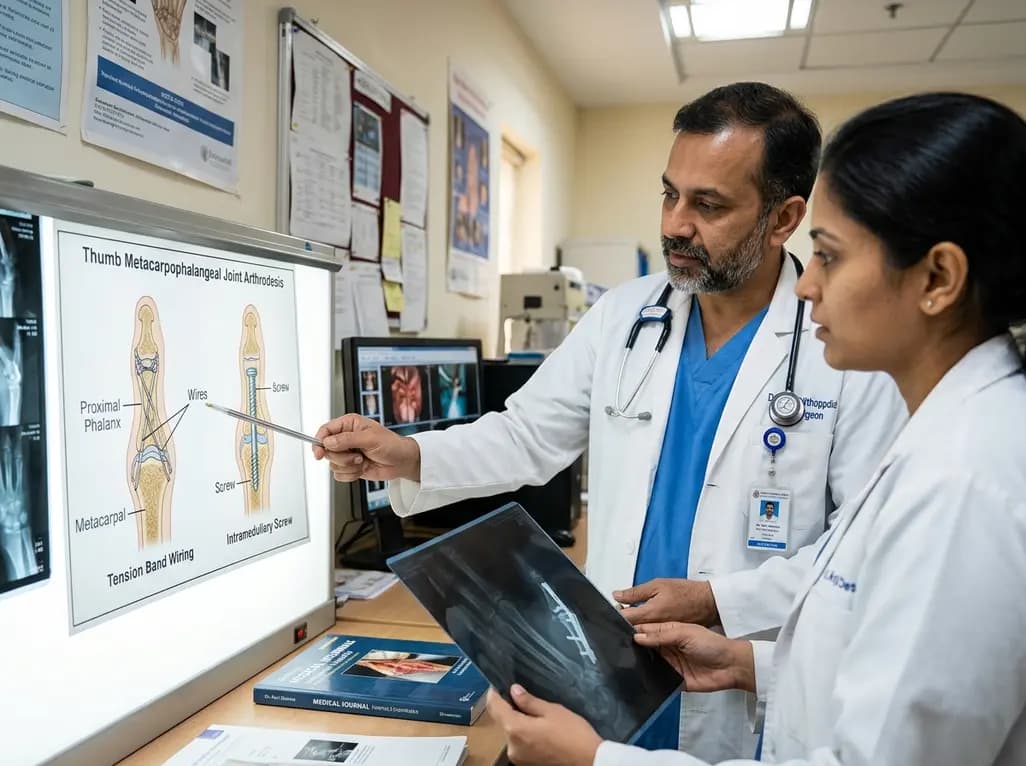
A comparative review of tension band wiring and intramedullary screw fixation in thumb metacarpophalangeal arthrodesis, evaluating union rates, hardware complications, and clinical outcomes.
Today
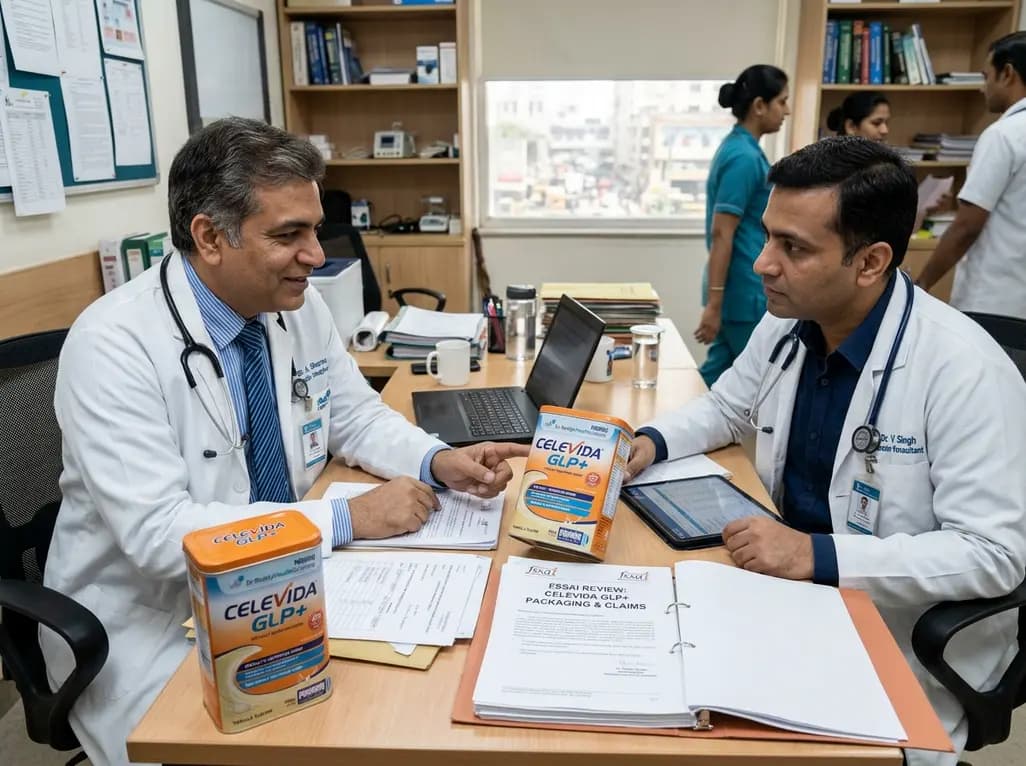
Following regulatory scrutiny from FSSAI regarding promotional representations and lean muscle preservation claims, Dr. Reddy's Laboratories and Nestlé Health Science are currently reviewing the branding and marketing strategy for their joint nutritional supplement Celevida GLP+.
Today
