.webp&w=384&q=75)

Loading, please wait...
Loading, please wait...
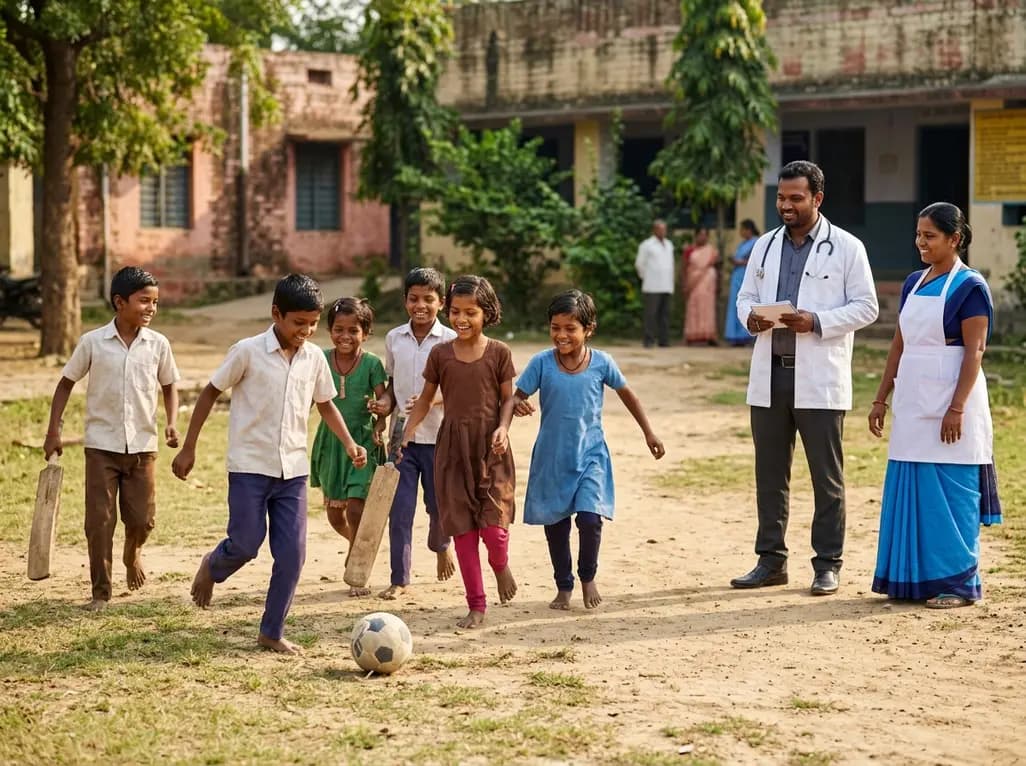
Recent psychological and sociological research has increasingly focused on the developmental trajectories of children residing in rural areas, particularly those whose parents have migrated for work. One of the most significant challenges identified in these populations is the struggle with social integration and emotional resilience. However, a recent study suggests that physical exercise social adaptation and perceived physical health are intrinsically linked. This connection offers a potential pathway for intervention. For medical professionals, especially those in countries like India where internal migration is a common economic reality, understanding these dynamics is crucial. When children are left behind by migrating parents, they often face a unique set of psychosocial stressors. These stressors can impede their ability to interact effectively with peers and adjust to changing social environments. Fortunately, physical activity emerges not just as a tool for fitness, but as a primary driver for social and psychological well-being.
The term \"left-behind children\" refers to minors who remain in their home regions while one or both parents migrate to urban centers for employment. This phenomenon is prevalent in rapidly developing economies. Consequently, these children often experience a lack of direct parental supervision and emotional support. This void can lead to significant deficits in social adaptation, which is the process by which individuals adjust their behavior to meet the demands of their social environment. Research indicates that children in these circumstances often report lower levels of life satisfaction and higher rates of anxiety. Furthermore, the absence of a primary caregiver can limit a child's exposure to structured extracurricular activities, including sports. This lack of engagement further complicates their ability to develop the soft skills necessary for social success. Therefore, the medical community must recognize that physical inactivity in this demographic is often a symptom of broader systemic and familial challenges. Addressing these gaps requires a multi-faceted approach that integrates physical health with social support mechanisms to foster resilience in vulnerable youth populations.
Physical exercise serves as a powerful medium for social interaction and skill development. When children participate in sports or group activities, they are required to communicate, cooperate, and resolve conflicts in real-time. This active engagement facilitates physical exercise social adaptation by providing a controlled environment for practicing social roles. Moreover, team sports instill a sense of belonging and collective identity, which is often missing in the lives of left-behind children. By working toward a common goal, these adolescents learn the value of empathy and mutual support. Additionally, the structured nature of physical exercise provides a sense of routine and discipline that can be grounding for children facing domestic instability. These benefits are not merely anecdotal; they are backed by structural equation modeling that shows a clear positive correlation between frequency of exercise and social competence. For healthcare providers, recommending team-based physical activities can be as therapeutic as traditional counseling. It allows children to build a social network outside the family unit, which is essential for their long-term psychological health and successful transition into adulthood.
A fascinating aspect of the recent findings is the role of perceived physical health as a mediator. It is not just the objective level of fitness that matters, but how children perceive their own vitality and physical capabilities. When children engage in regular physical exercise, they tend to feel more confident in their bodies. This boost in self-perception acts as a psychological bridge, leading to improved social adaptation. Specifically, a child who feels healthy and strong is more likely to initiate social contacts and participate in group activities without fear of inadequacy. Conversely, children who perceive themselves as weak or sickly may withdraw from social situations, fearing peer judgment or physical failure. This internal narrative of health significantly influences their willingness to engage with the world. Therefore, interventions should not only focus on the physical metrics of health but also on improving the child's self-image and confidence. By fostering a positive perception of physical health, we can indirectly enhance a child's ability to navigate complex social landscapes and build meaningful relationships with their peers and mentors.
The study highlights a stark disparity between left-behind children and their peers who live with both parents. Data shows that left-behind children score significantly lower across all three key metrics: physical exercise frequency, perceived physical health, and social adaptation scores. This gap is likely due to the reduced guidance and financial resources available to these children. Parents who migrate are often unable to encourage or facilitate their children's participation in sports clubs or organized physical education. Furthermore, the emotional toll of parental absence can lead to sedentary behaviors as a coping mechanism for loneliness or depression. However, the study also found that the positive impact of physical exercise on social adaptation is even more pronounced in the left-behind group. This suggests that while they are currently at a disadvantage, they stand to benefit the most from targeted interventions. By closing the gap in physical activity levels, we can potentially mitigate some of the negative social outcomes associated with parental migration. This comparative data emphasizes the need for school-based programs that prioritize physical education for those in rural or migrant-heavy communities.
For pediatricians and family physicians, these findings provide a clear directive for clinical practice. When treating adolescents, particularly those from migrant families, it is essential to inquire about their physical activity levels and social lives. Physicians should view physical exercise not just as a preventative measure against obesity, but as a fundamental component of mental health and social development. Additionally, providers can collaborate with schools and community leaders to create accessible sports programs that do not rely on parental transportation or high costs. Educating caregivers—whether they are grandparents or other relatives—about the psychological benefits of exercise is also vital. They need to understand that a child playing outside is not just \"having fun,\" but is actively building the social infrastructure required for a healthy life. Furthermore, healthcare providers should advocate for policy changes that increase funding for rural sports facilities and physical education teachers. By integrating these social and physical health goals, we can ensure that left-behind children have a fair chance at achieving successful social adaptation and long-term well-being despite their challenging domestic circumstances.
The integration of physical activity into the routine care of vulnerable children requires a systematic approach. Healthcare professionals should encourage families to identify local opportunities for group-based movement. This might include school sports, community dance classes, or traditional games that require teamwork. The focus should be on consistency and social interaction rather than competitive performance. Additionally, clinicians can use tools like \"physical activity prescriptions\" to formalize the recommendation, making it clear to both the child and the guardian that exercise is a medical necessity for social health. Monitoring progress in social adaptation during follow-up visits can also help in adjusting these recommendations. For instance, if a child remains socially withdrawn, the provider might suggest a different type of group activity that better suits the child's interests. Ultimately, the goal is to make physical exercise a sustainable part of the child's lifestyle. By doing so, we address the root causes of social maladjustment and empower children to take control of their perceived health. This holistic approach ensures that the benefits of exercise extend far beyond the physical, fostering a generation of socially adept and resilient individuals.
Physical exercise, particularly in group or team settings, requires children to engage in essential social behaviors such as cooperation, verbal communication, and conflict resolution. By navigating the rules of a game and working with teammates toward a common goal, children develop empathy and understanding of social roles. These experiences directly translate to improved social adaptation, allowing them to adjust more effectively to various social environments and peer dynamics in their daily lives.
Left-behind children often face a lack of direct parental emotional support and guidance, which can lead to feelings of isolation and reduced self-esteem. The absence of a primary caregiver often results in fewer opportunities for structured social interaction and physical activities. These combined factors create a developmental disadvantage, making it harder for them to master the social skills necessary for effective adaptation compared to children who live in stable, dual-parent households.
Perceived physical health refers to a child's subjective belief in their own strength and wellness. While actual fitness is important for physical health, the 'perceived' aspect is what drives psychological confidence. A child who feels healthy and capable is more likely to engage socially and take risks in peer interactions. This positive self-perception acts as a mediator, turning the physical benefits of exercise into the psychological fuel needed for successful social integration and adaptation.
Disclaimer: This content is for informational and educational purposes only and does not constitute professional medical advice, diagnosis, or treatment. Always seek the advice of your physician or other qualified healthcare provider with any questions you may have regarding a medical condition. Refer to the latest local and national guidelines for clinical practice.
References
Wu M et al. Physical exercise and social adaptation among Left-Behind and non-Left-Behind Children in China: The mediating role of perceived physical health. Acta Psychol (Amst). 2026 Jul 14. doi: undefined. PMID: 42447581.
Gao, Z., et al. (2021). Effects of Physical Activity on Mental Health Outcomes in Youth. Journal of Clinical Medicine, 10(15), 3241.
UNICEF. (2023). The State of the World's Children: Internal Migration and Child Development. UNICEF Publications.
"
Read summarized clinical updates, watch expert medical content, and earn CME certifications right from your smartphone.
Open your smartphone camera to scan and install.





New research highlights how physical exercise enhances social adaptation among children, particularly those in 'left-behind' status. The study identifies perceived physical health as a critical mediator, offering vital insights for healthcare providers managing adolescent developmental health.
3 months ago

Novel diimide and hydrazone scaffolds, particularly compound #C4, synergistically reactivate latent HIV-1 when combined with JQ1 or PKC activators. Demonstrating donor-matched proviral transcription ex vivo and non-canonical signaling, these findings advance shock and kill strategies toward reservoir eradication.
Today

A comparative cohort study evaluates vNOTES vs TLH hysterectomy for benign conditions, demonstrating shorter operative duration, faster return to daily activities, and equivalent female sexual function scores without increased dyspareunia.
Today

Review how tailored exercise programs benefit frail older patients with heart failure. Explore pathophysiological mechanisms, individualized training prescriptions, and strategies to overcome adherence barriers in clinical practice.
Yesterday

This comparative study evaluates posterior labral tears with and without glenohumeral instability, highlighting distinct demographic patterns, MRI underestimation in stable shoulders, and successful arthroscopic repair outcomes.
Yesterday

A clinical study demonstrates that early intervention with tocilizumab, either as monotherapy or bridged with corticosteroids, achieves significant proptosis reduction and resolves active inflammation in treatment-naive thyroid eye disease.
Today
