

Loading, please wait...
Loading, please wait...

Clinicians routinely advise patients to increase daily movement to prevent and manage affective disorders. However, emerging epidemiological evidence reveals that the mental health effects of movement depend substantially on context. A comprehensive nationwide study evaluated 52,475 individuals aged 18 years and older to analyze how various physical activity domains influence depressive symptoms. Rather than viewing exercise as a uniform physiological stimulus, investigators examined intersections among leisure time, occupational exertion, domestic chores, and active commuting. Their findings challenge the assumption that every form of physical movement benefits mental health. In fact, the results show that the setting and purpose of physical exertion determine whether movement protects against or exacerbates depressive pathology. Consequently, medical practitioners must reconsider generic advice that encourages patients to move more without evaluating daily contextual demands. Distinguishing between restorative exercise and burdensome physical labor is essential for effective lifestyle counseling.
Public health campaigns frequently promote exercise as an accessible, universal antidote to depression. Nevertheless, treating all physical exertion as equivalent overlooks significant neurobiological and psychosocial nuances. The Brazilian epidemiological investigation categorized movement into four primary physical activity domains: leisure time, occupational work, transportation, and household activities. Crucially, researchers analyzed both isolated domain participation and all possible intersections among these four categories. This granular methodology revealed that psychological outcomes vary drastically depending on specific domain combinations. For instance, physical exertion during leisure hours represents voluntary behavior driven by personal autonomy, social connection, and stress relief. In contrast, occupational and domestic tasks typically involve obligatory exertion, repetitive biomechanical strain, and sustained fatigue. Furthermore, active transportation often reflects economic necessity rather than intentional recreation. Because these environments evoke contrasting neuroendocrine responses, their mental health impacts diverge sharply. Thus, evaluating domain intersections clarifies why some physically active adults still experience severe depressive symptoms.
Among all evaluated movement categories, the leisure-time domain consistently yielded the most favorable mental health outcomes. Specifically, engaging in leisure-time physical activity in isolation reduced the odds of depressive symptoms by 32% in both men and women. This protective relationship remained robust even when individuals combined leisure exercise with occupational duties. Autonomy plays a pivotal role in explaining this beneficial phenomenon. When individuals freely select recreational pursuits, they activate neurobiological pathways associated with dopamine release, endorphin synthesis, and improved cognitive appraisal. Moreover, recreational exercise offers valuable opportunities for social interaction and psychological detachment from daily stressors. In addition, leisure physical activity typically occurs in supportive environments that encourage emotional restoration and physiological recovery. Conversely, lacking access to voluntary recreation deprives individuals of these vital neurochemical benefits. Therefore, primary care clinicians should recognize leisure-time exercise as the primary therapeutic driver in physical activity prescriptions. Prescribing voluntary movement remains essential for enhancing emotional resilience.
While leisure activities protect mental health, occupational exertion presents a far more troubling clinical picture. The study revealed that when work-related physical activity combined with domains other than leisure, it functioned as a risk factor rather than a protective mechanism. Most strikingly, individuals active across all four physical activity domains exhibited a 53% greater likelihood of depressive symptoms compared to inactive peers. This finding illustrates the physical activity paradox within mental health epidemiology. High occupational physical demands rarely allow adequate musculoskeletal recovery or cardiovascular relaxation. Instead, prolonged manual labor elevates systemic inflammation, sympathetic nervous system tone, and chronic cortisol production. Furthermore, workers performing demanding physical tasks often experience low decision latitude and high psychological strain. Consequently, accumulating excessive physical exertion across every daily sphere leads to allostatic overload rather than health optimization. Exhausted patients who expend heavy energy at work do not derive mental relief from their exertion. Thus, clinicians must not assume that demanding jobs satisfy therapeutic exercise needs.
The investigation uncovered stark gender differences when analyzing specific intersections of physical activity domains and depressive symptoms. Among men, those active in both transportation and household domains faced a staggering 277% higher likelihood of depressive symptoms compared to inactive counterparts. In developing and emerging economies, combining active commuting with substantial domestic chores signals severe economic strain, time poverty, and transit limitations. Similarly, women exhibited pronounced vulnerabilities linked to distinct domain combinations. Specifically, female participants active in both work and household domains experienced a 127% increased likelihood of depressive symptoms. This substantial elevation reflects the mental toll of the classic "second shift," where women perform demanding employment alongside disproportionate domestic responsibilities. Furthermore, repetitive household chores rarely offer cognitive stimulation, personal agency, or social affirmation. Consequently, the compounding fatigue of domestic labor and workplace obligations heightens chronic stress. Recognizing these gender-specific patterns enables clinicians to identify social determinants of mental distress that routine clinical screening frequently misses.
These epidemiologic observations provide vital practical lessons for general practitioners, psychiatrists, and family physicians worldwide. First, clinicians must assess the qualitative context of a patient's daily movement before recommending lifestyle changes. Asking whether a patient remains active during the day provides insufficient diagnostic value. Instead, practitioners should actively inquire about workplace physical demands, commuting burdens, and domestic chores. If an exhausted patient already performs heavy occupational or household labor, advising additional exercise can exacerbate physical burnout and depressive symptoms. In such cases, physicians should prioritize restorative practices, adequate sleep, and psychological decompression over high-volume workouts. Furthermore, when prescribing exercise, doctors must emphasize enjoyable leisure pursuits that foster autonomy and social support. For instance, structured walking groups, recreational swimming, or light resistance training can restore emotional balance without adding compulsory stress. Ultimately, personalized lifestyle medicine requires clinicians to balance physical exertion with adequate rest. Thoughtful assessment prevents well-intentioned exercise guidance from compounding a vulnerable patient's emotional exhaustion.
Leisure physical activity reduces depression risk by offering autonomy, psychological detachment, and social engagement. In contrast, occupational physical activity often involves mandatory, repetitive labor with low decision control. Consequently, work-related exertion increases chronic fatigue, systemic inflammation, and psychological stress, which can trigger or exacerbate depressive symptoms rather than relieving them.
Individuals active across leisure, work, transport, and domestic domains experience allostatic overload and chronic exhaustion. Cumulating physical exertion without sufficient recovery elevates cortisol levels and autonomic strain. Furthermore, high multi-domain activity frequently reflects socioeconomic hardship and severe time poverty, which significantly elevates psychological distress and depressive vulnerability.
Clinicians should avoid recommending additional exhausting exertion to patients with physically demanding jobs or high household burdens. Instead, providers should prescribe low-intensity, restorative leisure activities that enhance relaxation and personal autonomy. Emphasizing restorative sleep, stress reduction, and enjoyable social recreation prevents compounding chronic physical fatigue and mental burnout.
Disclaimer: This content is for informational and educational purposes only... Refer to the latest local and national guidelines for clinical practice.
References

Read summarized clinical updates, watch expert medical content, and earn CME certifications right from your smartphone.
Open your smartphone camera to scan and install.





A nationwide study of 52,475 adults demonstrates that physical activity domains have conflicting impacts on depression. While leisure-time exercise reduces depressive symptoms by 32%, compulsory occupational and domestic physical exertion significantly increases psychological distress across both sexes.
Today
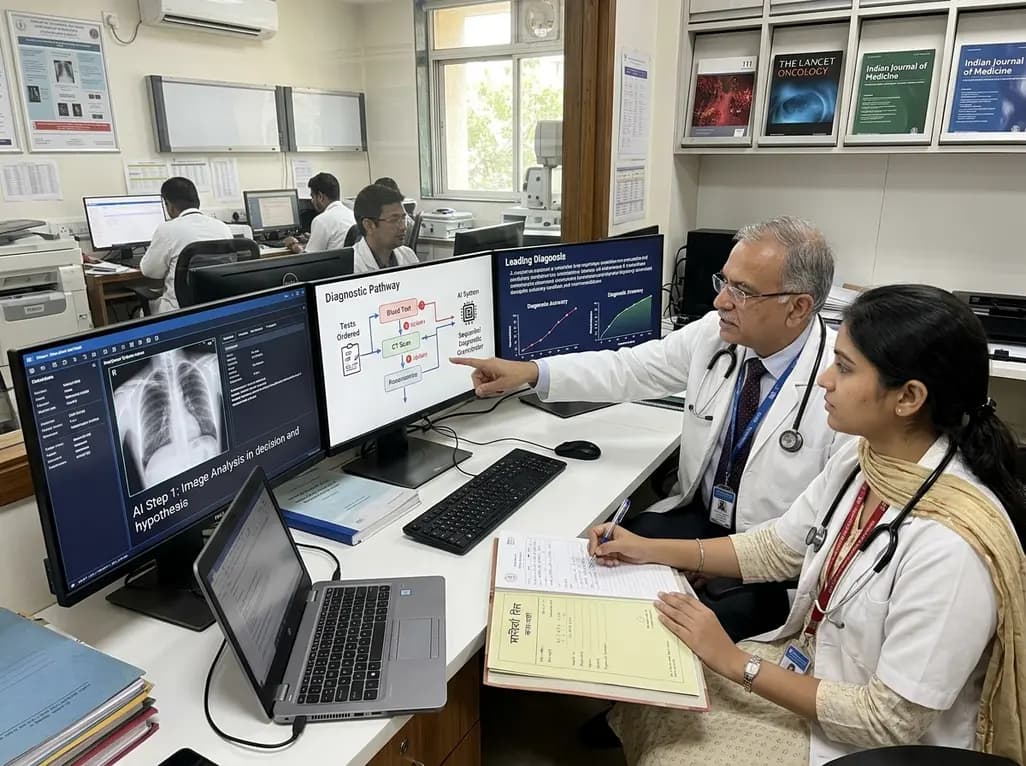
A breakthrough peer-reviewed study demonstrates that a sequential AI diagnosis system can mirror real-world clinical reasoning. By ordering stepwise tests and updating hypotheses dynamically, this multi-agent orchestrator achieved superior diagnostic accuracy while reducing investigative costs.
Today

A prenatal case highlights severe glutaric acidemia type II presenting as bilateral hyperechoic cystic kidneys at 18 weeks. Whole-exome sequencing revealed a novel homozygous ETFDH frameshift variant, demonstrating the power of rapid genetic testing in fetal renal anomalies.
Today

Review how tailored exercise programs benefit frail older patients with heart failure. Explore pathophysiological mechanisms, individualized training prescriptions, and strategies to overcome adherence barriers in clinical practice.
Yesterday

This comparative study evaluates posterior labral tears with and without glenohumeral instability, highlighting distinct demographic patterns, MRI underestimation in stable shoulders, and successful arthroscopic repair outcomes.
Yesterday

A clinical study demonstrates that early intervention with tocilizumab, either as monotherapy or bridged with corticosteroids, achieves significant proptosis reduction and resolves active inflammation in treatment-naive thyroid eye disease.
Yesterday
