

Loading, please wait...
Loading, please wait...

Emerging epidemiological research highlights how environmental irritants trigger neuroinflammatory responses. Specifically, recent data demonstrate that petroleum lubricant exposure ms risk correlations represent an important occupational health concern. Clinicians recognize that pulmonary insults like cigarette smoke and chemical solvents provoke autoimmune neurodegeneration. However, researchers previously lacked comprehensive epidemiological data evaluating workplace mineral oils, hydraulic fluids, and cutting lubricants. To bridge this knowledge gap, investigators analyzed nationwide data from the Swedish Epidemiological Investigation of Multiple Sclerosis. The population-based case-control study evaluated 2,872 incident cases alongside 6,122 frequency-matched healthy controls. Neurologists verified each patient case according to McDonald criteria. Consequently, this rigorous methodology minimized diagnostic misclassification across participating clinical centers. The investigators systematically captured detailed employment records and chemical exposure histories before symptom onset. Ultimately, the findings confirm that airborne petroleum aerosols contribute to higher multiple sclerosis vulnerability. This association underscores the lungs as a critical immunological priming site for central nervous system autoimmunity.
The Swedish population study revealed compelling numerical associations between lubricant handling and demyelinating disease. Specifically, individuals with occupational contact exhibited a 38% increase in multiple sclerosis risk compared to unexposed peers. Furthermore, the statistical odds ratio remained robust at 1.38 after adjusting for age, sex, and residential region. Researchers also observed a noticeable dose-response gradient among industrial workers. For instance, each additional year of regular chemical contact raised disease odds by 2%. Similarly, every incremental hour of weekly workplace contact conferred an additional 2% increase in risk. To eliminate reverse causality, the investigators applied a rigorous seven-year exposure lag. Remarkably, the risk estimate strengthened under this sensitivity analysis, yielding an odds ratio of 1.55. This observation confirms that industrial exposure preceded the subclinical prodromal phase of demyelination by several years. Therefore, these statistical associations demonstrate that prolonged chemical exposure plays a measurable role in neurodegenerative disease pathogenesis.
Understanding the underlying biological mechanism requires examining how pulmonary tissues process airborne xenobiotics. Inhalation of petroleum-derived mists exposes delicate alveolar surfaces to complex aliphatic and aromatic hydrocarbons. Consequently, these volatile compounds induce local oxidative stress and disrupt alveolar epithelial integrity. Macrophages and dendritic cells inside lung tissue engulf these foreign chemical particles, initiating localized inflammation. Moreover, this inflammatory cascade promotes the release of pro-inflammatory cytokines and activates tissue-resident T cells. Translational models suggest that pulmonary inflammation triggers post-translational modifications of endogenous proteins. For example, lung irritation can generate neoantigens that cross-react with myelin basic protein. Once sensitized in pulmonary beds, autoreactive lymphocytes migrate through the bloodstream and cross the blood-brain barrier. Furthermore, these primed immune cells initiate targeted myelin destruction within the central nervous system. Thus, the respiratory system serves as an induction site where environmental hydrocarbons ignite systemic auto-aggression.
The investigation revealed striking additive interactions between hydrocarbon inhalation and cigarette smoking. Both environmental exposures irritate pulmonary tissue and recruit inflammatory lymphocytes to the bronchial tree. However, when workers combine regular smoking with petroleum lubricant contact, disease risk increases disproportionately. The researchers quantified this effect on an additive scale, establishing an attributable proportion due to interaction of 0.34. This metric confirms that roughly one-third of cases among doubly exposed workers arose solely from biological synergy. Cigarette smoke contains numerous toxic particulates that paralyze mucociliary clearance in airways. Consequently, inhaled petroleum mists remain trapped longer within the alveolar spaces of active smokers. This prolonged dwell time exacerbates mucosal barrier breakdown and amplifies antigen presentation. Furthermore, chronic particulate exposure dysregulates systemic immune tolerance mechanisms. Therefore, smoking transforms a modest workplace toxicological hazard into a severe predisposing factor for central demyelination.
Genetic background substantially modulates an individual's susceptibility to environmental toxic insults. Human leukocyte antigen alleles govern how effectively antigen-presenting cells display peptide fragments to circulating T cells. In the Swedish cohort, researchers evaluated HLA markers among 2,070 patients and 2,899 controls to elucidate gene-environment interactions. Notably, lubricant exposure interacted strongly with the absence of the protective HLA-A*02:01 allele, showing an attributable proportion of 0.32. This protective allele normally promotes immune tolerance and restrains autoreactive CD8+ T cells. Therefore, its absence leaves workers vulnerable to unchecked autoimmune cascades following chemical pulmonary damage. The team also evaluated the risk allele HLA-DRB1*15:01, identifying an interaction trend with an attributable proportion of 0.19. In fact, individuals carrying adverse genetic traits while facing industrial oil mists exhibited elevated disease frequencies. Consequently, genetic screening insights reaffirm that immune system architecture heavily dictates clinical vulnerability to environmental toxins.
These epidemiological insights carry vital clinical and occupational health implications across industrial settings. Thousands of factory employees, mechanics, and machinists encounter mineral oils and cutting fluids every working day. Nevertheless, workplace safety protocols frequently focus on dermal protection while overlooking respiratory aerosol protection. Occupational medicine teams must implement rigorous air quality monitoring and install localized exhaust ventilation in machining facilities. Furthermore, employers should provide certified respiratory protective equipment designed specifically to filter airborne hydrocarbons. Physicians treating patients in industrial sectors should routinely incorporate chemical exposure histories into preventative assessments. When encountering workers with a positive family history of autoimmune disorders, doctors should emphasize aggressive risk reduction. Most importantly, clinicians must prioritize smoking cessation interventions for individuals exposed to oil mists. In conclusion, combining proactive industrial hygiene with targeted clinical counseling will protect vulnerable individuals from debilitating neuroinflammatory conditions.
Industrial workers face frequent exposure in machining, automotive repair, metal milling, and heavy mechanical maintenance. In these settings, individuals commonly handle cutting oils, hydraulic fluids, and engine lubricants. Moreover, aerosolized oil mists generate significant inhalational exposure. Consequently, personnel working in poorly ventilated manufacturing shops experience the highest occupational burden of these hydrocarbon agents.
Cigarette smoke induces chronic pulmonary inflammation and mucosal irritation. When workers encounter both cigarette smoke and petroleum lubricant mists, these exposures act synergistically within alveolar tissue. Consequently, the combined irritants amplify pro-inflammatory cytokine cascades and neoantigen presentation. This intense pulmonary immune activation markedly increases the likelihood of systemic central nervous system autoimmunity.
Clinicians should encourage strict adherence to workplace respiratory protection, including certified vapor masks and enhanced ventilation systems. Furthermore, physicians must actively promote smoking cessation among industrial employees handling lubricants. Routine occupational history taking allows doctors to identify vulnerable individuals early, facilitating timely protective interventions before neuroinflammatory cascades become established.
Disclaimer: This content is for informational and educational purposes only, and does not constitute medical advice or establish a doctor-patient relationship. It is not intended to provide clinical guidance or alter professional healthcare judgment. Healthcare professionals must exercise their independent clinical decision-making and cross-reference information with relevant up-to-date guidelines and institutional protocols. This material should not be relied upon as a substitute for formal medical training, regulatory directives, or diagnostic manuals. The authors and publishers assume no liability for actions taken based on this content. Refer to the latest local and national guidelines for clinical practice.
References

Read summarized clinical updates, watch expert medical content, and earn CME certifications right from your smartphone.
Open your smartphone camera to scan and install.





A nationwide Swedish case-control study shows that occupational exposure to petroleum-derived lubricants increases multiple sclerosis risk by 38%. The risk rises substantially when combined with smoking and genetic susceptibility, highlighting the role of pulmonary immune activation in CNS autoimmunity.
Today

A comparative analysis of ChatGPT and Google Gemini reveals how generative AI models explain atrial fibrillation and treatment options. The study highlights vital perceptual gaps between cardiologists and laypersons regarding medical bias, formatting, and untreated clinical consequences.
Today
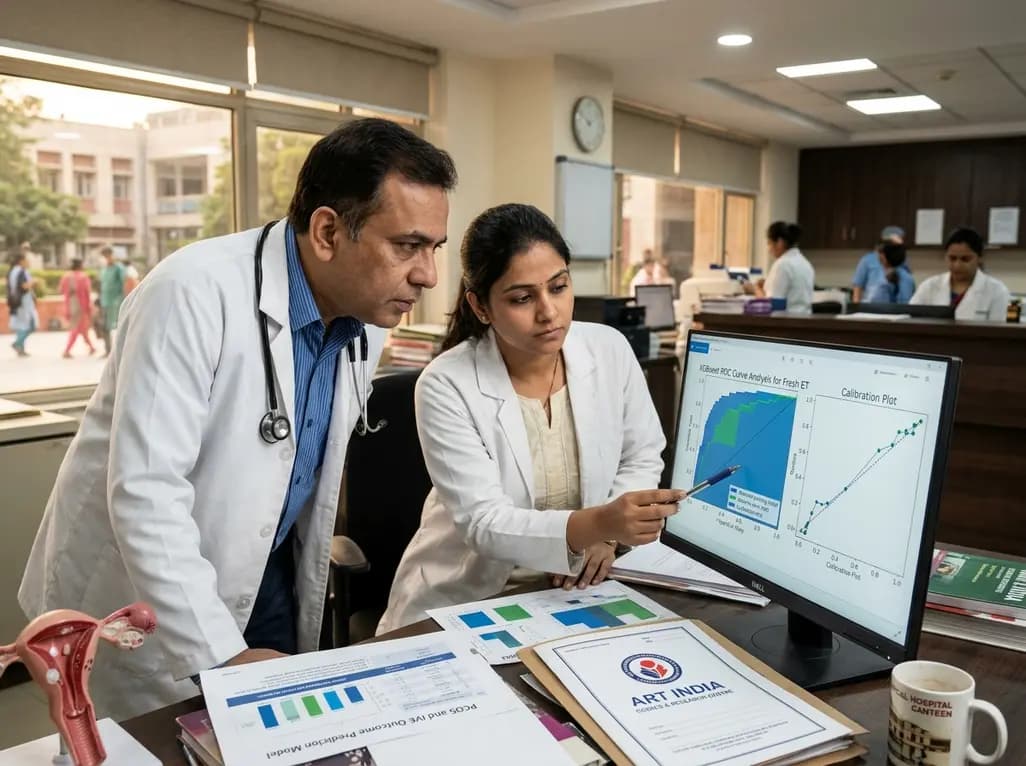
A multicenter study evaluates an XGBoost machine learning model to predict miscarriage risk in PCOS after fresh embryo transfer. While discrimination was strong internally, cross-cohort calibration drift emphasizes its role as a risk-ranking tool rather than a standalone diagnostic instrument.
Today

A landmark study reveals structured variation in daily emotional experiences using mobile cardiac monitoring and machine learning. Uncovering a many-to-many mapping between autonomic states and feelings, this research offers key insights for managing psychosomatic and psychiatric conditions in clinical practice.
Today

Engineered 3D piezoelectric PHBV scaffolds generate electrical charges during mechanical strain, mimicking native muscle electromechanics to promote cellular alignment, myogenic differentiation, and functional tissue repair in severe volumetric muscle loss.
Today

A study in aged rats reveals that caloric restriction broadly upregulates adipose macrophage genes, whereas concurrent endurance training buffers this response. Despite these tissue-level transcriptional changes, systemic glycemic and lipid markers remain unchanged, highlighting the complexity of geriatric metabolism.
Today
