.webp&w=384&q=75)

Loading, please wait...
Loading, please wait...

Personalizing airway clearance techniques remains a cornerstone of care for children with primary ciliary dyskinesia (PCD). Healthcare providers currently tailor these regimens to meet the unique needs of each young patient. However, the exact decision-making process often involves navigating complex physical and psychosocial cues. Expert physiotherapists frequently encounter uncertainty when modifying these regimens. They use their vast experience to recognize familiar patterns while simultaneously adapting to unexpected patient responses. This dual approach ensures that the chosen treatment fits both the physical condition and the psychosocial environment.
When selecting the best approach, physiotherapists evaluate multiple critical factors. These include physical characteristics like age, disease severity, and current medications. Furthermore, they consider non-pulmonary symptoms and pulmonary function tests. Psychosocial elements such as lifestyle, adherence potential, and the child's ability to engage are also vital. Consequently, the clinician\'s decision depends on a holistic view of the patient's life. Additionally, treatment-related factors like regimen burden and patient preference play a major role in the final plan.
Most experts perform mental or physical simulations of their proposed actions before final implementation. This simulation step often leads to immediate modifications of the regimen. Therefore, the personalization process is highly dynamic rather than static. This highlights a significant need for objective tools to support clinical decisions in pediatric respiratory care. Since clinicians lack highly sensitive outcome data, they must currently rely on iterative clinical judgment to manage uncertainty.
Effective management of primary ciliary dyskinesia requires highly specialized and adaptive airway clearance plans. Identifying how physiotherapists navigate this complexity is the first step toward better standardization. Improving objective assessment tools might reduce uncertainty and enhance the precision of treatments for young patients.
Personalization ensures the treatment matches the child\'s physical needs and lifestyle, which significantly improves long-term treatment adherence and clinical effectiveness.
They evaluate physical health, age, disease severity, and psychosocial factors like the child\'s daily routine, ability to engage, and personal preferences.
Disclaimer: This content is for informational and educational purposes only. It does not constitute medical advice or establish a doctor-patient relationship. Always seek the advice of a qualified healthcare provider regarding any medical condition or treatment. Refer to the latest local and national guidelines for clinical practice.
References
Schofield L et al. How physiotherapists personalize airway clearance in children with primary ciliary dyskinesia. Physiother Theory Pract. 2026 Apr 11. doi: 10.1080/09593985.2026.2654032. PMID: 41964363.
Schofield LM et al. Personalising airway clearance in chronic suppurative lung diseases: a scoping review. ERJ Open Res. 2023;9(2):00010-2023. doi: 10.1183/23120541.00010-2023.
Lucas JS et al. European Respiratory Society guidelines for the management of primary ciliary dyskinesia. Eur Respir J. 2017;50(3):1701090. doi: 10.1183/13993003.01090-2017.

Read summarized clinical updates, watch expert medical content, and earn CME certifications right from your smartphone.
Open your smartphone camera to scan and install.





Physiotherapists use iterative simulations to personalize airway clearance for children with PCD, considering physical, psychosocial, and treatment factors....
6 months ago
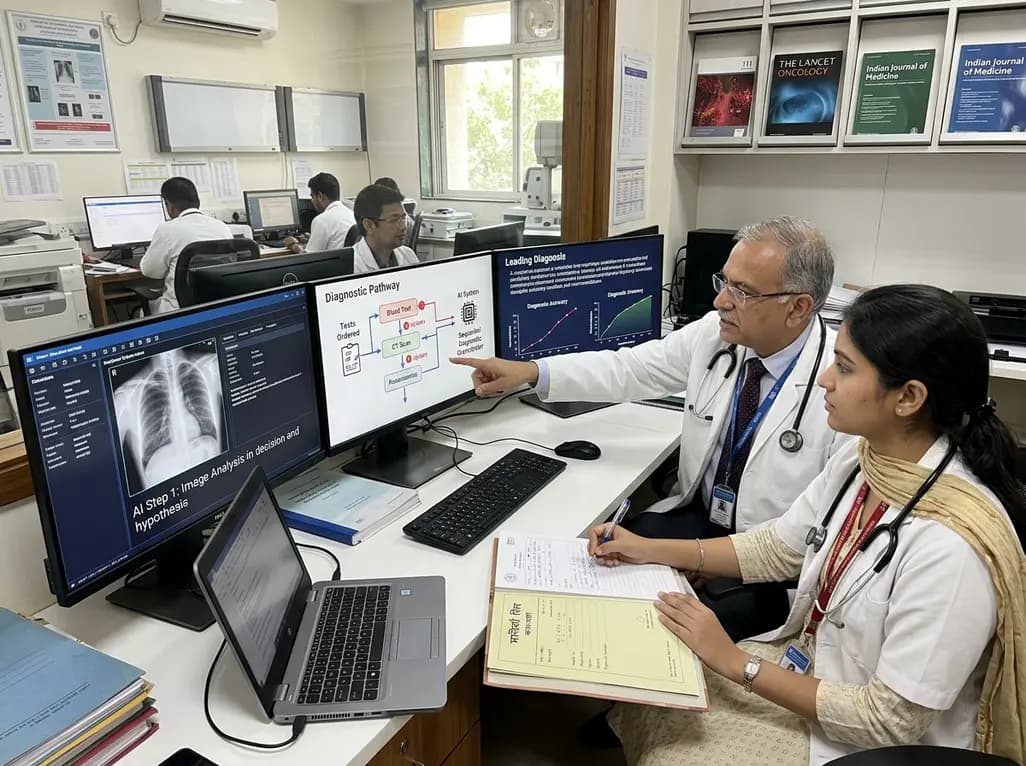
A breakthrough peer-reviewed study demonstrates that a sequential AI diagnosis system can mirror real-world clinical reasoning. By ordering stepwise tests and updating hypotheses dynamically, this multi-agent orchestrator achieved superior diagnostic accuracy while reducing investigative costs.
Today

A prenatal case highlights severe glutaric acidemia type II presenting as bilateral hyperechoic cystic kidneys at 18 weeks. Whole-exome sequencing revealed a novel homozygous ETFDH frameshift variant, demonstrating the power of rapid genetic testing in fetal renal anomalies.
Today

Review how tailored exercise programs benefit frail older patients with heart failure. Explore pathophysiological mechanisms, individualized training prescriptions, and strategies to overcome adherence barriers in clinical practice.
Yesterday

This comparative study evaluates posterior labral tears with and without glenohumeral instability, highlighting distinct demographic patterns, MRI underestimation in stable shoulders, and successful arthroscopic repair outcomes.
Yesterday

A clinical study demonstrates that early intervention with tocilizumab, either as monotherapy or bridged with corticosteroids, achieves significant proptosis reduction and resolves active inflammation in treatment-naive thyroid eye disease.
Yesterday
