.webp&w=384&q=75)

Loading, please wait...
Loading, please wait...

Managing end-stage renal disease requires a careful choice of renal replacement therapy. Consequently, the choice of modality directly shapes patient outcomes and survival. Today, clinicians increasingly recognize peritoneal dialysis as a highly viable alternative to conventional hemodialysis.
Preserving residual kidney function is a vital priority in managing renal disease. Specifically, patients utilizing peritoneal dialysis are much more likely to retain this function over a longer duration. In contrast, those on hemodialysis often experience a rapid decline in urine output. Furthermore, sustained residual function is strongly associated with improved survival. Therefore, choosing a continuous therapy offers a clear clinical advantage.
Cardiovascular complications remain the leading cause of mortality among dialysis patients. However, peritoneal dialysis presents several distinct cardiac advantages. Because it is a continuous, gentle process, it minimizes rapid fluid shifts. Additionally, it helps maintain stable blood pressure and reduces fluid overload. Consequently, patients face a lower risk of sudden cardiac strain compared to those using arteriovenous fistulas.
Ultimately, a successful kidney transplant is the primary goal for many patients. Recent evidence shows that peritoneal dialysis supports a smoother transition to transplantation. For instance, these patients often experience lower rates of delayed graft function. Moreover, the home-based nature of this therapy fosters independence. Subsequently, patients develop the health literacy necessary for post-transplant care.
Q1: Why does peritoneal dialysis preserve residual kidney function better than hemodialysis?
Peritoneal dialysis provides gentle, continuous fluid and toxin removal, avoiding the dramatic blood pressure and fluid fluctuations typical of intermittent hemodialysis.
Q2: How does pre-transplant peritoneal dialysis reduce the risk of delayed graft function?
The continuous nature of peritoneal dialysis maintains hemodynamic stability and preserves urine output, which ensures a smoother transition for the newly transplanted organ.
Disclaimer: This content is for informational and educational purposes only. It does not constitute medical advice or replace professional judgment. Refer to the latest local and national guidelines for clinical practice.
References

Read summarized clinical updates, watch expert medical content, and earn CME certifications right from your smartphone.
Open your smartphone camera to scan and install.





A detailed clinical review of why peritoneal dialysis offers significant advantages over conventional hemodialysis for end-stage renal disease patients, helping preserve residual kidney function and preparing them for transplant.
4 months ago
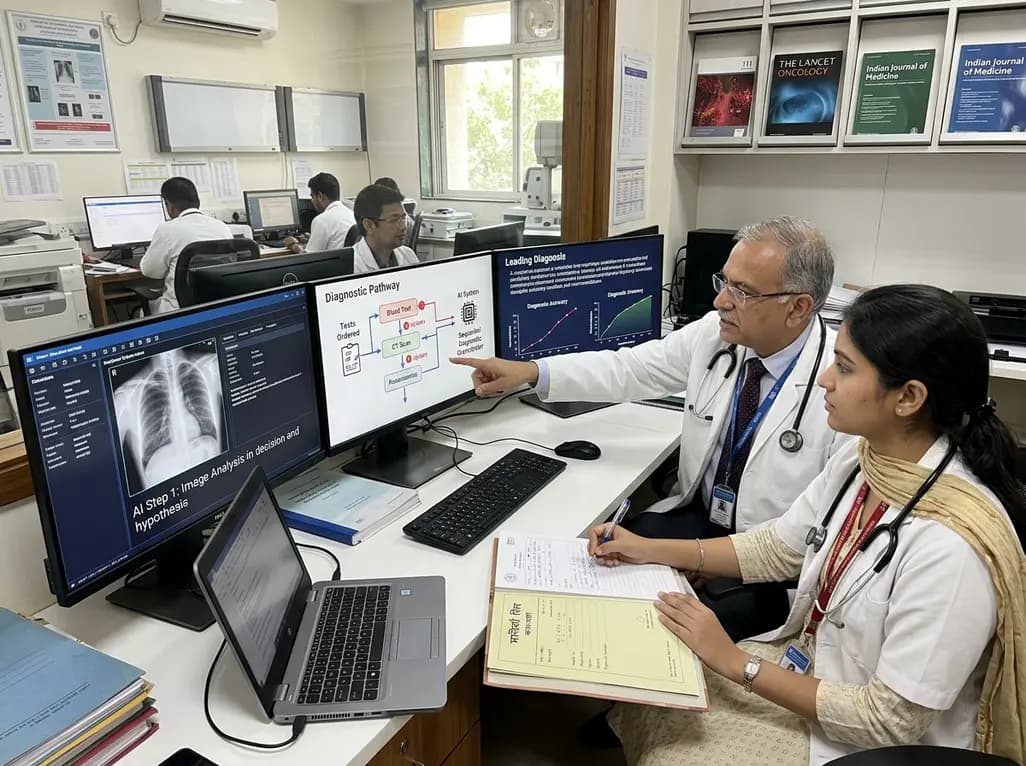
A breakthrough peer-reviewed study demonstrates that a sequential AI diagnosis system can mirror real-world clinical reasoning. By ordering stepwise tests and updating hypotheses dynamically, this multi-agent orchestrator achieved superior diagnostic accuracy while reducing investigative costs.
Today

A prenatal case highlights severe glutaric acidemia type II presenting as bilateral hyperechoic cystic kidneys at 18 weeks. Whole-exome sequencing revealed a novel homozygous ETFDH frameshift variant, demonstrating the power of rapid genetic testing in fetal renal anomalies.
Today

Review how tailored exercise programs benefit frail older patients with heart failure. Explore pathophysiological mechanisms, individualized training prescriptions, and strategies to overcome adherence barriers in clinical practice.
Yesterday

This comparative study evaluates posterior labral tears with and without glenohumeral instability, highlighting distinct demographic patterns, MRI underestimation in stable shoulders, and successful arthroscopic repair outcomes.
Yesterday

A clinical study demonstrates that early intervention with tocilizumab, either as monotherapy or bridged with corticosteroids, achieves significant proptosis reduction and resolves active inflammation in treatment-naive thyroid eye disease.
Yesterday
