.webp&w=384&q=75)

Loading, please wait...
Loading, please wait...

Perioperative Visual Loss POVL remains one of the most catastrophic, albeit rare, complications associated with major spinal procedures. While surgical techniques and anesthetic management have advanced significantly, the occurrence of postoperative blindness continues to pose a formidable challenge to clinical teams. It is often a life-altering event for the patient, frequently characterized by permanent and bilateral vision impairment. Given its profound impact on quality of life, the professional responsibility to communicate this risk effectively is paramount. However, recent evidence suggests that the approach to discussing this complication varies widely across surgical and anesthetic disciplines. Understanding the nuances of this risk is the first step in bridging the gap between clinical reality and patient expectations. Therefore, medical educators emphasize the need for a unified voice among specialists to ensure that patients are fully informed before undergoing complex interventions. This requires a deep dive into the incidence data and the specific clinical scenarios where POVL is most likely to manifest, allowing for more precise risk stratification during the preoperative phase.
The pathophysiology of Perioperative Visual Loss POVL is multifactorial, primarily involving Ischemic Optic Neuropathy (ION). This condition is often categorized into anterior and posterior forms, with Posterior Ischemic Optic Neuropathy (PION) being the most prevalent in the context of spine surgery. It occurs when the delicate blood supply to the optic nerve is compromised, often due to a combination of physiological stressors. Another significant cause is Central Retinal Artery Occlusion (CRAO), which is frequently linked to direct pressure on the globe during prone positioning. Consequently, clinicians must distinguish between these etiologies to implement targeted preventive strategies. While cortical blindness represents a rarer cause, it typically arises from embolic events or severe global hypoperfusion. Understanding these mechanisms is vital because they highlight why certain surgical factors, such as operative duration and blood loss, play such a critical role. Moreover, the lack of effective treatment options for established POVL underscores the absolute necessity of prevention. Identifying high-risk profiles, such as male patients undergoing long-segment fusion, allows teams to heighten their vigilance and adapt their intraoperative management accordingly.
A recent national survey has brought to light striking differences in how various specialists perceive the frequency and significance of POVL. Interestingly, anaesthetists tend to estimate the incidence of this complication at a much higher rate than their surgical counterparts. Specifically, many anaesthetists cite rates between 0.03% and 0.2%, whereas a majority of surgeons believe the risk is as low as 0.0001%. This discrepancy is not merely academic; it fundamentally alters how each specialist approaches the consent process. Furthermore, while nearly 80% of anaesthetists view POVL as a material risk that must be disclosed, only about 58% of surgeons share this perspective. Such variations can lead to inconsistent messaging, which may confuse patients during high-stakes consultations. Therefore, aligning these views is essential for maintaining professional standards and legal compliance, especially following landmark rulings like the Montgomery case, which redefined material risk. If one specialist emphasizes a risk that the other downplays, the validity of the patient\'s informed consent may be called into question. Consequently, there is an urgent need for multi-disciplinary consensus on how to present these statistics to patients accurately.
The timing of risk disclosure is just as critical as the information being shared. The consensus among clinicians overwhelmingly favors discussing POVL in an outpatient or pre-assessment clinic setting rather than on the day of surgery. Over 80% of surgeons and over 90% of anaesthetists agree that the pre-assessment clinic provides the optimal environment for these sensitive conversations. Discussions held on the morning of surgery are often rushed and coincide with peak patient anxiety, which can hinder the comprehension of complex risks. By moving these discussions earlier in the surgical pathway, clinicians allow patients the necessary time to reflect and ask questions. Additionally, this approach facilitates a more collaborative atmosphere where both the surgeon and the anaesthetist can contribute to the discussion. In fact, three-quarters of anaesthetists believe that both specialties should take part in disclosing the risk of POVL. This shared responsibility ensures that the patient receives a holistic view of the potential complications from both a procedural and a physiological standpoint, thereby strengthening the therapeutic alliance.
Preventing Perioperative Visual Loss POVL requires meticulous attention to intraoperative variables that contribute to optic nerve ischemia. Key strategies include maintaining hemodynamic stability and avoiding prolonged periods of hypotension, which can decrease ocular perfusion pressure. Moreover, the management of fluid balance is crucial; excessive use of crystalloids has been associated with interstitial edema, potentially compromising blood flow to the optic nerve. Many experts now advocate for a higher ratio of colloids in high-risk, long-duration cases. Positioning is another critical factor, particularly when patients are in the prone position. Clinicians must ensure that the head is kept in a neutral position, ideally at or above the level of the heart, to facilitate venous drainage. Frequent checks to ensure there is no direct pressure on the globes are mandatory, as even brief periods of ocular compression can lead to CRAO. Furthermore, the use of specialized headrests, like Mayfield pins, may be considered to eliminate pressure on the face entirely. By integrating these physiological safeguards into standard anesthesia and surgical protocols, the medical community can actively work toward reducing the incidence of this devastating outcome.
The current lack of uniformity in POVL consent and management suggests a pressing need for standardized national guidance. Such protocols would provide clinicians with a clear framework for identifying high-risk patients and determining the appropriate level of risk disclosure. Moreover, national societies should encourage the routine discussion of POVL as a material risk in all complex spine cases. The survey results indicate that for a significant minority of clinicians, exposure to these findings will lead to a direct change in their clinical practice. This highlights the power of educational initiatives in driving quality improvement. As we move forward, integrating POVL risk assessment tools into electronic health records could help prompt clinicians to initiate these vital conversations in the outpatient setting. Additionally, ongoing research into the genetic predispositions to ischemic neuropathy may one day allow for even more personalized risk stratification. Ultimately, the goal is to foster a culture of transparency and safety where every patient undergoing spine surgery is fully aware of the potential risks and every clinician is equipped with the best strategies to prevent them.
The primary risk factors for Perioperative Visual Loss POVL include prolonged surgical duration, typically exceeding six hours, and substantial intraoperative blood loss. Patient-specific factors such as male sex, obesity, and hypertension also contribute. Prone positioning and the use of Wilson frames are specifically associated with increased intraocular and venous pressure, which may compromise optic nerve perfusion.
While practices vary, recent surveys indicate that 75% of anaesthetists believe both the surgeon and the anaesthetist should discuss POVL risk. Traditionally, surgeons handle procedural risks while anaesthetists discuss physiological complications. However, a collaborative approach ensures the patient understands how surgical positioning and anesthesia-related blood pressure management collectively influence the risk of visual loss.
Risk mitigation involves maintaining adequate mean arterial pressure, avoiding excessive crystalloid administration, and keeping the head in a neutral or slightly elevated position to aid venous return. Constant monitoring to ensure no direct pressure is applied to the eyes is essential. In high-risk cases, staging long procedures into two separate operations may also be considered.
Disclaimer: This content is for informational and educational purposes only. It is not intended to be a substitute for professional medical advice, diagnosis, or treatment. Always seek the advice of your physician or other qualified health provider with any questions you may have regarding a medical condition. Refer to the latest local and national guidelines for clinical practice.
References
Pitsika M et al. [object Object] Br J Neurosurg. 2025 Aug. doi: 10.1080/02688697.2023.2275621. PMID: 37943103.
Lee LA, Roth S, Posner KL, et al. The American Society of Anesthesiologists Postoperative Visual Loss Registry: analysis of 93 spine surgery cases with postoperative visual loss. Anesthesiology. 2006;105(4):652-659. doi: 10.1097/00000542-200610000-00007.
Rubin DS, Parakati I, Lee LA, et al. Perioperative visual loss in spine fusion surgery: ischemic optic neuropathy in the United States from 1998 to 2012 in the nationwide inpatient sample. Anesthesiology. 2016;125(3):457-464. doi: 10.1097/ALN.0000000000001223.
"
Read summarized clinical updates, watch expert medical content, and earn CME certifications right from your smartphone.
Open your smartphone camera to scan and install.





A survey of spine surgeons and anaesthetists highlights significant disparities in the perception of Perioperative Visual Loss (POVL) as a material risk, prompting calls for standardized consent protocols and collaborative risk disclosure in outpatient settings to improve patient safety.
3 months ago
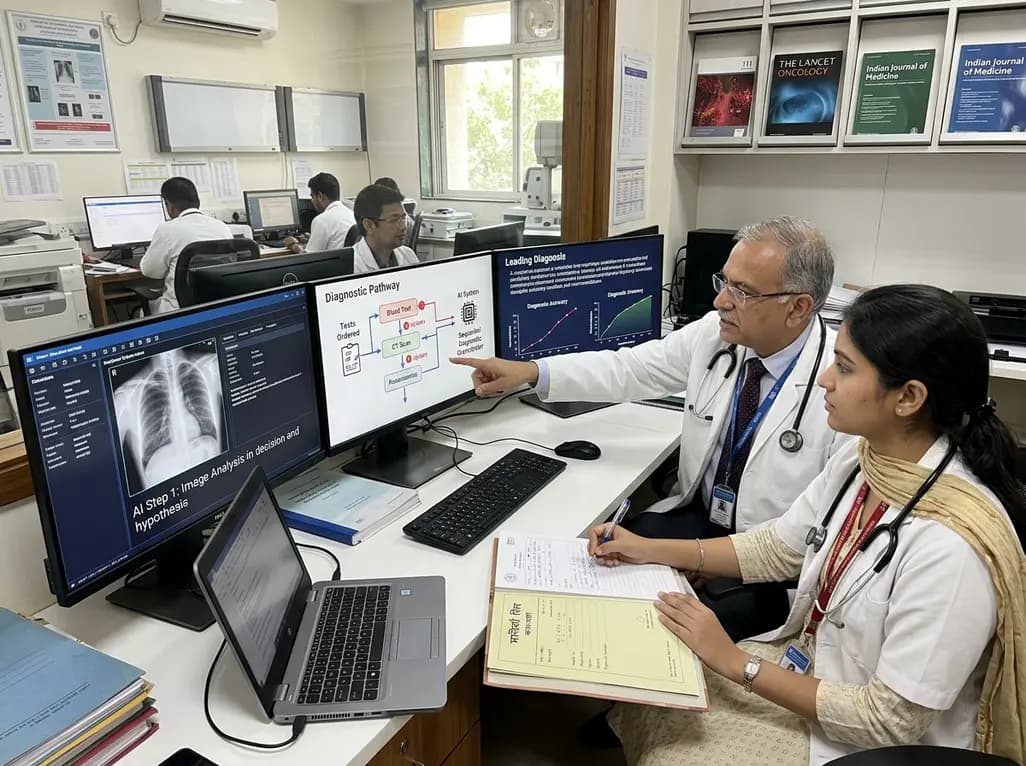
A breakthrough peer-reviewed study demonstrates that a sequential AI diagnosis system can mirror real-world clinical reasoning. By ordering stepwise tests and updating hypotheses dynamically, this multi-agent orchestrator achieved superior diagnostic accuracy while reducing investigative costs.
Today

A prenatal case highlights severe glutaric acidemia type II presenting as bilateral hyperechoic cystic kidneys at 18 weeks. Whole-exome sequencing revealed a novel homozygous ETFDH frameshift variant, demonstrating the power of rapid genetic testing in fetal renal anomalies.
Today

Review how tailored exercise programs benefit frail older patients with heart failure. Explore pathophysiological mechanisms, individualized training prescriptions, and strategies to overcome adherence barriers in clinical practice.
Yesterday

This comparative study evaluates posterior labral tears with and without glenohumeral instability, highlighting distinct demographic patterns, MRI underestimation in stable shoulders, and successful arthroscopic repair outcomes.
Yesterday

A clinical study demonstrates that early intervention with tocilizumab, either as monotherapy or bridged with corticosteroids, achieves significant proptosis reduction and resolves active inflammation in treatment-naive thyroid eye disease.
Yesterday
