.webp&w=384&q=75)

Loading, please wait...
Loading, please wait...

Identifying the etiology of pregnancy loss is vital for clinical management and family closure. Unfortunately, many contributors to perinatal demise genetic testing remain undiagnosed because of logistical and clinical barriers. A recent multidisciplinary study introduces a structured workflow designed to streamline evaluation and increase diagnostic success for intrauterine fetal demise, stillbirth, and early neonatal death.
To address these challenges, experts from clinical genetics, maternal-fetal medicine, neonatology, and pathology collaborated to design a unified protocol. This working group developed specific tools, including testing algorithms and specimen collection guides. These resources ensure that clinicians handle samples correctly regardless of the time of delivery or specialty involved. Furthermore, the integration of these protocols into electronic health records (EHR) helps reduce administrative delays and standardizes care across hospital departments.
One of the primary goals of the multidisciplinary workflow is to clarify roles and responsibilities. Consequently, the team identified scenario-specific algorithms for stillbirth and neonatal death. These guidelines provide clear instructions on the timing of consultations and specimen-testing matrices. This systematic approach ensures that the most appropriate tests, such as chromosomal microarray or exome sequencing, are selected based on the clinical presentation and available sample types.
Moreover, the study demonstrated that early communication between specialties significantly improves sample collection rates. When the medical team identifies potential genetic contributors early, they can prioritize high-quality fetal or placental samples. This proactive stance directly translates into a higher diagnostic yield. As a result, healthcare providers can offer more precise counseling regarding recurrence risks for future pregnancies, which is a critical concern for affected families.
Implementation success relies heavily on institutional education and centralized resources. For example, clinicians in India and elsewhere can adapt this model to navigate local resource constraints. While advanced testing like whole-exome sequencing may not be universally available, a clear specimen-handling protocol prevents the loss of valuable diagnostic material. Additionally, iterative refinement based on stakeholder feedback ensures that the workflow remains practical and effective in real-world clinical settings.
Common barriers include fragmented communication between specialties, lack of standardized specimen collection protocols, and delays in genetic consultations. This multidisciplinary workflow addresses these by defining clear roles and providing accessible specimen-handling guides.
Placental pathology often provides essential context for genetic findings. In many cases, examination of the placenta and fetal membranes can identify structural or vascular issues that complement genetic data, leading to a more comprehensive diagnosis of the cause of death.
By increasing the likelihood of a definitive diagnosis, the workflow provides families with clearer answers. This information is crucial for understanding the risk of recurrence in future pregnancies and helps parents navigate the emotional recovery process with more certainty.
Disclaimer: This content is for informational and educational purposes only. It does not constitute medical advice or establish a doctor-patient relationship. Healthcare providers should always exercise their professional judgment. Refer to the latest local and national guidelines for clinical practice.
References
Mosera M et al. Facilitating Genetic Testing for Perinatal Demise: Development of a Multidisciplinary Workflow. Am J Med Genet A. 2026 Feb 08. doi: 10.1002/ajmga.70075. PMID: 41656515.
Stillbirth Society of India. Consensus Statement 2023 for Safe Baby Bundle - Investigation and Management of Stillbirth. 2023.
National Health Mission (NHM), Government of India. Operational Guidelines for Establishing Sentinel Stillbirth Surveillance System. 2024.

Read summarized clinical updates, watch expert medical content, and earn CME certifications right from your smartphone.
Open your smartphone camera to scan and install.





A new multidisciplinary workflow enhances genetic evaluation consistency in perinatal demise, improving diagnostic yield and recurrence risk counseling....
8 months ago
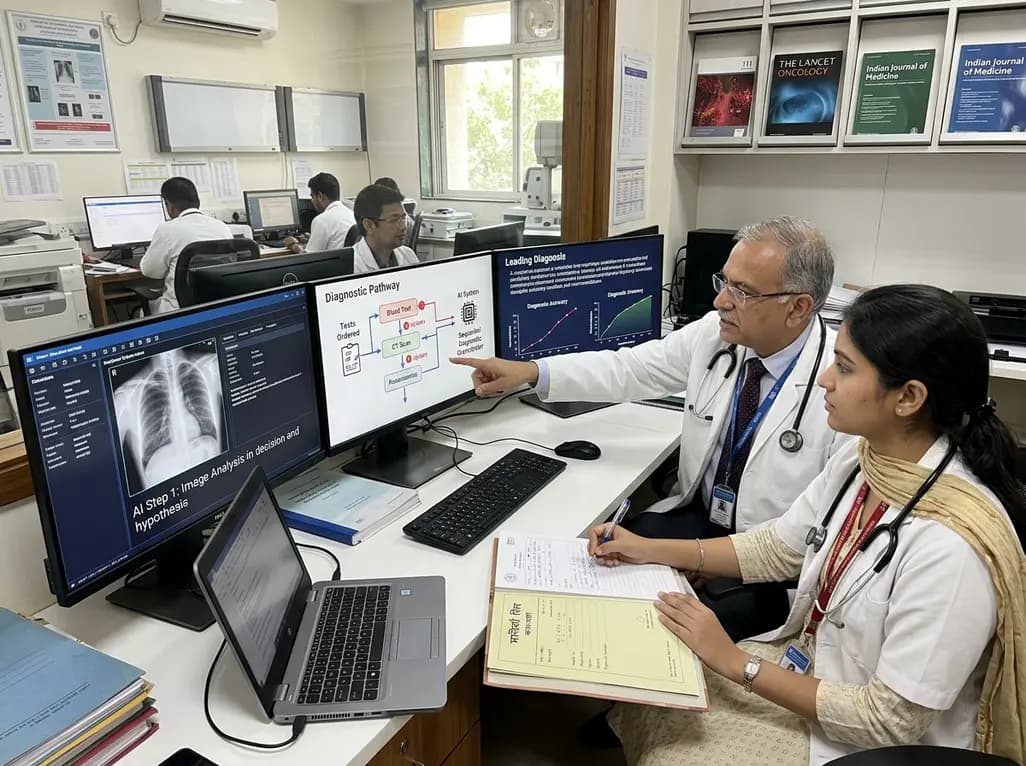
A breakthrough peer-reviewed study demonstrates that a sequential AI diagnosis system can mirror real-world clinical reasoning. By ordering stepwise tests and updating hypotheses dynamically, this multi-agent orchestrator achieved superior diagnostic accuracy while reducing investigative costs.
Today

A prenatal case highlights severe glutaric acidemia type II presenting as bilateral hyperechoic cystic kidneys at 18 weeks. Whole-exome sequencing revealed a novel homozygous ETFDH frameshift variant, demonstrating the power of rapid genetic testing in fetal renal anomalies.
Today

Review how tailored exercise programs benefit frail older patients with heart failure. Explore pathophysiological mechanisms, individualized training prescriptions, and strategies to overcome adherence barriers in clinical practice.
Yesterday

This comparative study evaluates posterior labral tears with and without glenohumeral instability, highlighting distinct demographic patterns, MRI underestimation in stable shoulders, and successful arthroscopic repair outcomes.
Yesterday

A clinical study demonstrates that early intervention with tocilizumab, either as monotherapy or bridged with corticosteroids, achieves significant proptosis reduction and resolves active inflammation in treatment-naive thyroid eye disease.
Yesterday
