.webp&w=384&q=75)

Loading, please wait...
Loading, please wait...

Road traffic collisions represent a significant global health challenge, especially for younger populations. A recent 10-year study highlights how pediatric trauma transportation outcomes vary significantly between ambulance services and private vehicles. Researchers analyzed data from the Abu Dhabi Trauma Registry to compare 466 patients transported by ambulance with 47 patients brought by private vehicles. Consequently, the findings suggest that the choice of transport mode directly impacts survival for severely injured children.
The study revealed that caregivers often use private vehicles for the most severely injured children. Specifically, patients in the private vehicle group were younger and had lower Glasgow Coma Scale (GCS) scores. They also displayed higher Injury Severity Scores (ISS) compared to those transported by ambulances. Initially, univariate analysis showed a mortality rate of 23.4% in the private vehicle group versus 6% in the ambulance group. Furthermore, multivariate analysis confirmed that a low GCS score remains the strongest predictor of death. Nevertheless, professional pre-hospital care provides critical stabilization that private transport lacks.
Professional ambulance crews provide more than just speed. They offer advanced airway management and fluid resuscitation. Moreover, they communicate vital patient data to trauma centers before arrival. This preparation allows surgical teams to mobilize earlier. In contrast, bystanders often lack the training to manage severe hemorrhage or spinal injuries. Therefore, public education is essential to encourage ambulance use. Additionally, training bystanders in basic trauma management can bridge the gap when ambulances are delayed. Ultimately, the integration of professional EMS and educated bystanders is vital for improving survival rates.
Ambulances provide professional stabilization, including airway support and bleeding control, which private vehicles cannot offer. Additionally, paramedics alert the hospital in advance, ensuring the trauma team is ready upon arrival.
Bystanders should focus on basic life-saving measures like applying direct pressure to wounds. However, they should avoid moving the patient unless there is an immediate danger, such as a fire, to prevent potential spinal cord injuries.
Disclaimer: This content is for informational and educational purposes only. It does not constitute medical advice or establish a doctor-patient relationship. Refer to the latest local and national guidelines for clinical practice.
References
Abu-Zidan FM et al. Impact of transportation methods on pediatric and adolescent severely injured vehicle occupants. World J Emerg Surg. 2026 Apr 27. doi: 10.1186/s13017-026-00699-7. PMID: 42045940.
Demetriades D et al. Paramedic vs private transportation of trauma patients. Effect on outcome. Arch Surg. 1996;131(2):133-138.
Seidenberg PH et al. The care and transport of trauma victims by layperson emergency medical systems: a qualitative study in Delhi, India. BMJ Open. 2019;9:e030248.

Read summarized clinical updates, watch expert medical content, and earn CME certifications right from your smartphone.
Open your smartphone camera to scan and install.





A 10-year trauma registry study highlights the critical role of ambulance transport in improving survival for severely injured pediatric vehicle occupants....
5 months ago
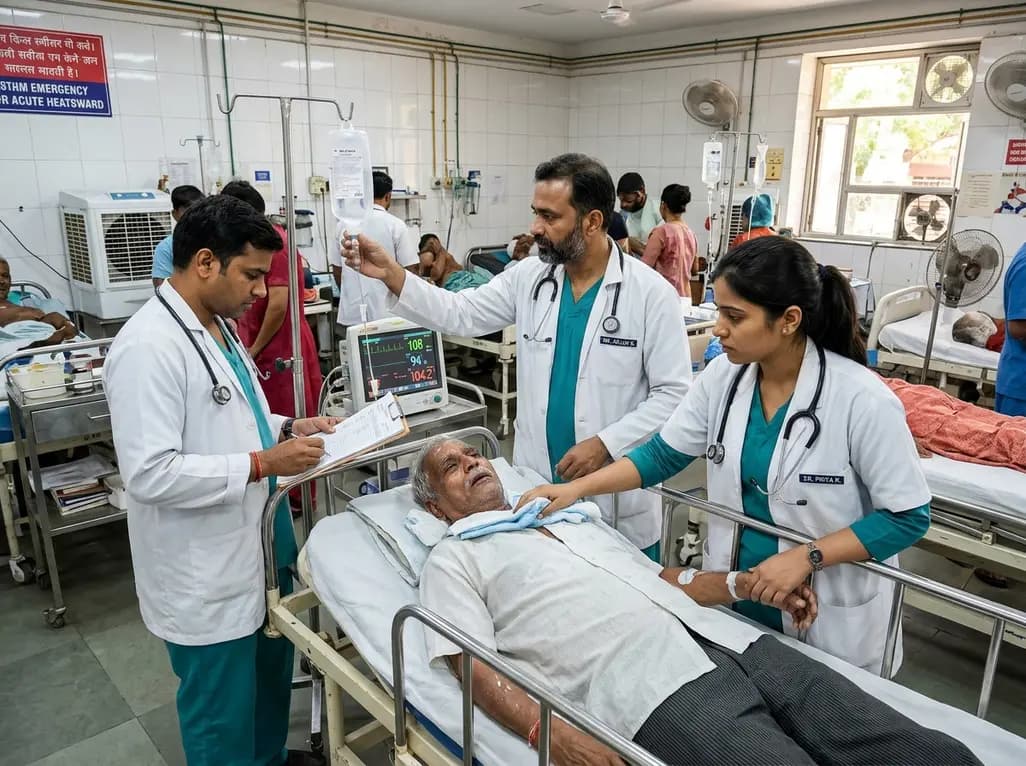
Recent epidemiological data reveals a dramatic surge in summer heat mortality driven by human-induced climate warming. This analysis explores the pathophysiological impacts on cardiac and renal systems, diagnostic dilemmas in death certification, and essential emergency cooling protocols for acute clinical care.
Today

Odisha has established India's first state-level clinical protocol specifically tailored for pregnant women with sickle cell disease. Developed with NHM and UNICEF, the framework provides structured antenatal screening, crisis mitigation, standardized referral pathways, and specialized interdisciplinary care.
Today

India is advancing preventive healthcare by integrating genomics, artificial intelligence, and quantum technologies. With the SANGAM programme sequencing one million Indian genomes, clinicians can unlock personalized therapies, detect cardiometabolic risks early, and curb the burden of diabetes and heart disease.
Today
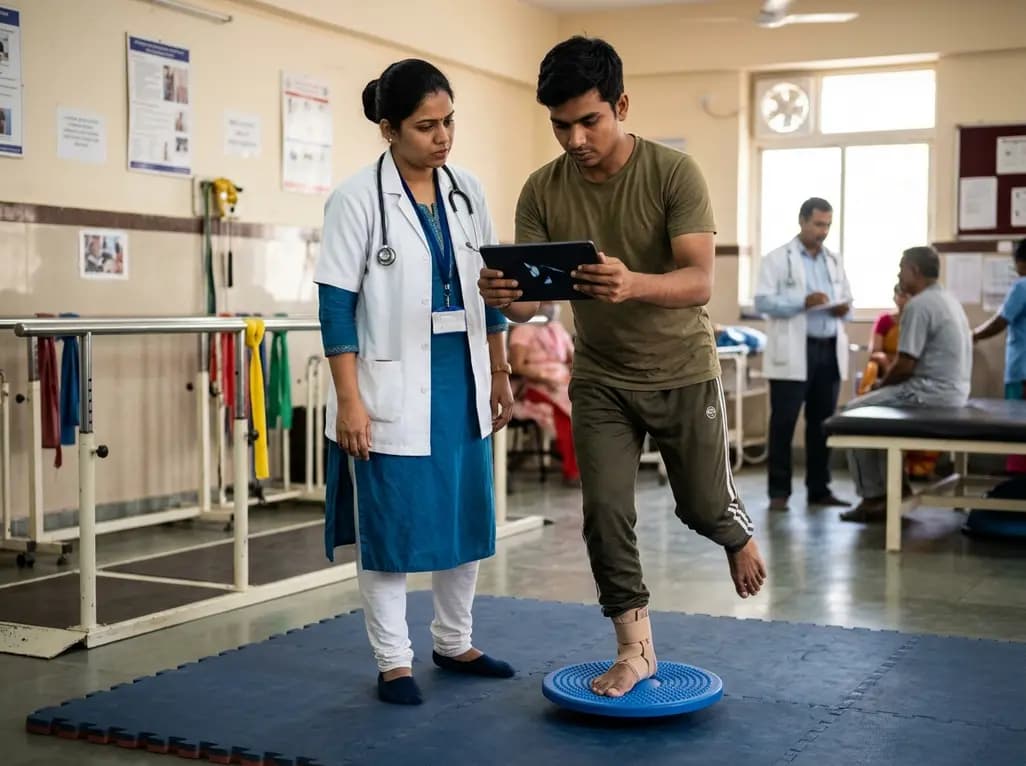
A randomized controlled trial demonstrates that an eight-week dual-task training intervention significantly improves static and dynamic postural control over standard balance exercises in individuals with chronic ankle instability, addressing critical neurocognitive deficits during athletic and daily activities.
Today

A retrospective cohort study of 7,716 ICU patients from the MIMIC-IV database demonstrates that Gradient Boosting Decision Trees significantly outperform traditional SOFA scores in predicting in-hospital mortality among patients with sepsis and diabetes, with SHAP analysis providing clinical interpretability.
Today
