.webp&w=384&q=75)

Loading, please wait...
Loading, please wait...

Primary genetic pediatric dystonia represents a severe hyperkinetic movement disorder characterized by sustained or intermittent involuntary muscle contractions. These muscle spasms produce repetitive twisting movements and abnormal postures, affecting approximately 16.4 per 100,000 children globally. When dystonic storms escalate rapidly, patients may develop status dystonicus, a life-threatening medical emergency requiring prompt neurocritical care. Pharmacological therapies frequently fail to control severe exacerbations, making advanced interventions necessary. In such refractory situations, pediatric status dystonicus DBS targeting the bilateral globus pallidus interni (GPi) has emerged as a crucial lifesaving therapeutic intervention. Consequently, early clinical recognition and timely surgical evaluation are vital for reducing morbidity and preventing multi-organ complications in young children.
Managing status dystonicus in toddlers presents unique challenges due to rapid clinical progression and limited physiologic reserve. Standard medical regimens, including high-dose sedatives and continuous muscle relaxant infusions, often prove inadequate or cause severe respiratory depression. Therefore, clinicians must consider surgical modulation when aggressive medical management fails. Bilateral pallidal deep brain stimulation provides a targeted neurosurgical approach to suppress excessive motor output. However, executing this procedure in very young children requires specialized preoperative planning, precise anatomical mapping, and tailored postoperative programming parameters to ensure both safety and optimal functional recovery.
Primary dystonia in pediatric patients often stems from specific pathogenic genetic variants that disrupt normal basal ganglia circuitry. Among the most widely recognized genetic causes is DYT-TOR1A dystonia, historically termed DYT1 dystonia. This autosomal dominant condition arises from a specific three-base-pair deletion, c.907_909del (p.Glu303del), in the TOR1A gene located on chromosome 9q34. The mutation leads to the loss of a single glutamic acid residue in the torsinA protein, impairing nuclear envelope structure and neuronal protein trafficking. Although penetrance remains incomplete at approximately 30%, affected individuals typically develop limb-onset dystonia during childhood or early adolescence.
In rare instances, young children harboring the TOR1A mutation present with an atypical, fulminant course. Maternally inherited or de novo variants can trigger rapidly progressive generalized dystonia that swiftly degenerates into status dystonicus. Consequently, immediate molecular genetic testing is essential when toddlers exhibit rapid motor deterioration. Identifying the underlying TOR1A mutation provides crucial diagnostic clarity and helps guide long-term prognosis. Moreover, confirming a genetic diagnosis enables clinicians to counsel families regarding inheritance patterns, expected therapeutic responses, and the potential efficacy of deep brain stimulation interventions.
Status dystonicus, also known as dystonic storm, is characterized by relentless, generalized muscular contractions that cause severe pain, metabolic crisis, rhabdomyolysis, and autonomic instability. In young toddlers, the condition rapidly escalates, leading to respiratory compromise and severe hyperthermia. Managing this crisis requires urgent admission to a pediatric intensive care unit and immediate administration of aggressive pharmacological agents. First-line treatments typically include high-dose anticholinergics like trihexyphenidyl, GABAergic agonists such as baclofen and benzodiazepines, and antidopaminergic agents. However, many pediatric patients prove entirely refractory to optimized enteral medications and continuous intravenous sedative infusions.
When continuous infusions of midazolam, propofol, or dexmedetomidine fail to abort continuous dystonic activity, clinicians face significant management dilemmas. Prolonged deep sedation carries substantial risks, including prolonged mechanical ventilation, hemodynamic instability, secondary infections, and prolonged ICU length of stay. Furthermore, escalation of oral and intravenous medications often induces severe adverse effects without providing meaningful motor control. Consequently, early identification of medication refractolerance is paramount. Recognizing the limits of medical therapy allows multidisciplinary teams to transition promptly toward surgical options like bilateral globus pallidus interni stimulation before catastrophic physical exhaustion occurs.
Implementing bilateral GPi pediatric status dystonicus DBS in toddlers requires specialized neurosurgical strategies tailored to immature cranial anatomy. Young children possess thinner skull bones, smaller subcortical nucleus volumes, and incomplete myelination, which complicate lead placement and hardware anchoring. Standard adult stereotactic frames may not securely fit a toddler's skull, necessitating customized microdrive frames or advanced frameless robotic-guided stereotactic systems. Additionally, neurosurgeons must meticulously plan trajectories using high-resolution magnetic resonance imaging to accurately target the internal segment of the globus pallidus while avoiding critical surrounding structures.
Hardware fixation and pulse generator placement present further engineering and anatomical challenges in young pediatric patients. Because toddlers undergo significant growth, surgeons must leave adequate lead slack in the neck to prevent traction injuries during physical development. Moreover, limited subcutaneous tissue over the chest or abdominal wall complicates implantable pulse generator placement. Surgical teams often elect to place miniaturized or rechargeable devices in subcutaneous pockets with meticulous soft-tissue coverage to reduce skin breakdown and hardware erosion risks. Therefore, rigorous preoperative multidisciplinary planning involving pediatric neurosurgeons, neurologists, and anesthesiologists remains imperative for achieving successful surgical outcomes.
Bilateral GPi deep brain stimulation effectively interrupts aberrant basal ganglia-thalamocortical circuitry, leading to substantial clinical improvement in refractory pediatric status dystonicus. Postoperatively, patients typically experience a gradual cessation of acute dystonic storms, allowing successful weaning from continuous sedative infusions and mechanical ventilation. Although full motor recovery often requires several months of iterative neuromodulation adjustments, immediate symptomatic control of status dystonicus frequently occurs within days to weeks following initial stimulation onset. Consequently, GPi DBS functions both as an acute rescue therapy and a durable long-term neuromodulatory treatment.
Optimizing DBS programming parameters in young pediatric patients demands patience and clinical precision. Clinical neurophysiologists carefully adjust pulse width, stimulation frequency, and voltage amplitudes to maximize dystonia control while avoiding stimulation-induced side effects like dysarthria or corticospinal tract activation. In patients with TOR1A-related dystonia, long-term stimulation typically yields dramatic reductions in dystonia severity scores and improvements in functional independence. Furthermore, effective pallidal stimulation allows clinicians to significantly taper oral polypharmacy, thereby reducing chronic sedative burden, improving alertness, and enhancing overall developmental progression in affected toddlers.
Managing complex pediatric movement disorders requires sustained multidisciplinary collaboration among pediatric neurologists, neurosurgeons, intensive care specialists, physical therapists, and genetic counselors. Because status dystonicus carries high morbidity, establishing clear clinical protocols for rapid rescue DBS referral is essential. Clinicians must provide comprehensive anticipatory guidance to families, managing expectations regarding postoperative recovery timelines and device maintenance. Additionally, genetic counseling plays a critical role in addressing familial inheritance, evaluating recurrence risks, and supporting parents through the emotional burden of caring for a child with a severe genetic condition.
Future advancements in sensing-enabled DBS technology and adaptive neuromodulation hold substantial promise for improving pediatric dystonia management. Emerging research indicates that local field potential biomarkers, such as pathologically elevated pallidal beta-band oscillations, correlate directly with status dystonicus severity. Monitoring these intracranial biomarkers could enable closed-loop stimulation systems that automatically adjust therapeutic delivery during impending dystonic exacerbations. Overall, integrating rapid molecular diagnostics, precise surgical interventions, and personalized neuromodulation strategies will significantly optimize outcomes for young children facing life-threatening status dystonicus.
Status dystonicus can be triggered by systemic infections, metabolic derangements, surgical stress, sudden medication adjustments, or environmental stressors. In children with genetic dystonias such as TOR1A mutations, acute exacerbations may also occur without an identifiable trigger due to progressive neurological disease activity requiring urgent intensive care and neuromodulation interventions.
The globus pallidus interni serves as a primary output nucleus of the basal ganglia motor circuit. Abnormal hyperactive signals originating in this region drive systemic dystonic spasms. Electrical stimulation of the bilateral GPi suppresses these aberrant neuronal firing patterns, effectively restoring motor circuit balance and relieving severe muscle contractions.
Primary surgical risks in toddlers include intracranial hemorrhage, infection, hardware erosion through thin pediatric skin, lead displacement secondary to skeletal growth, and anesthetic complications. Meticulous preoperative planning, frameless robotic navigation, and specialized pediatric hardware fixation techniques significantly mitigate these procedural risks in clinical practice.
Disclaimer: This content is for informational and educational purposes only and does not constitute medical advice, diagnosis, or treatment. Always seek the advice of a qualified healthcare provider with any questions you may have regarding a medical condition. Refer to the latest local and national guidelines for clinical practice.
References

Read summarized clinical updates, watch expert medical content, and earn CME certifications right from your smartphone.
Open your smartphone camera to scan and install.





Status dystonicus in toddlers presents acute clinical challenges. This report examines bilateral GPi deep brain stimulation as a lifesaving treatment for refractory pediatric dystonia.
last month

A new PPMI cohort study demonstrates that combining blood microRNA-7-5p with CSF alpha-synuclein seed amplification assay significantly improves the prediction of Parkinson's disease phenoconversion, offering clinicians and researchers a powerful tool for patient risk stratification and clinical trial enrichment.
Today

A large retrospective study evaluates the screening accuracy, positive predictive value, and test failure rates of noninvasive prenatal testing (NIPT) in assisted reproductive technology (ART) pregnancies compared to spontaneous conceptions, highlighting key considerations for pretest counseling.
Today
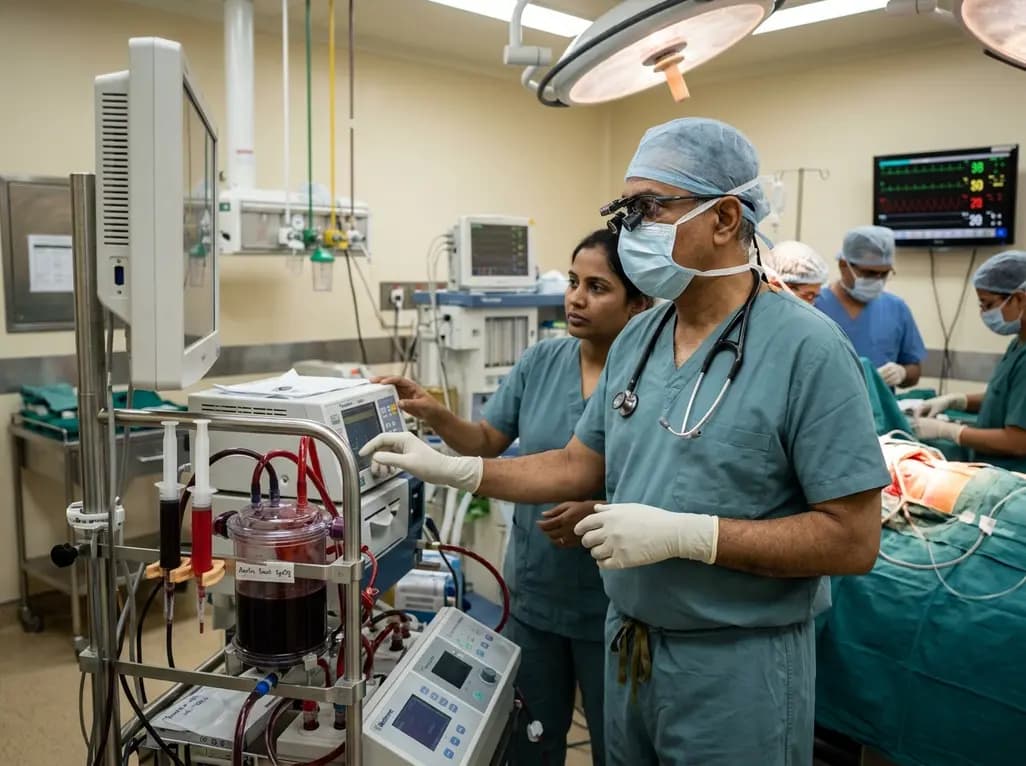
Differential oxygenation during peripheral TA-NRP can cause undetected coronary hypoxemia due to arch vessel clamping. A novel circuit with continuous aortic root monitoring detects desaturation early, facilitating left ventricular unloading and preventing allograft dysfunction and unnecessary heart discard.
Today

A randomized controlled trial compared ultrasound-guided intra-articular injections of PRP, hydrolyzed type I collagen, and hyaluronic acid in knee osteoarthritis. All therapies demonstrated significant improvements in WOMAC and pain scores at six months, supporting hydrolyzed collagen as a viable biological option.
Today

A scoping review evaluates 116 studies on AI in women's reproductive health, finding that 83.6% carry high risk of bias. While ensemble models show promise, disparities and lack of validation hinder LMIC deployment.
Today
