.webp&w=384&q=75)

Loading, please wait...
Loading, please wait...

Pediatric myopia has rapidly emerged as a formidable public health issue worldwide, demanding proactive clinical vigilance from pediatricians, ophthalmologists, and nursing professionals. Effective pediatric myopia prevention requires an accurate understanding of daily visual habits, physical environments, and behavioral motivators. Although public educational initiatives have expanded visual health awareness, clinicians continually encounter a substantial disconnect between knowledge and daily action. Recent hospital-based epidemiological findings reveal that youth frequently understand refractive risks yet fail to maintain protective routines. Consequently, clinical teams must move beyond passive advice and adopt structured behavioral interventions to safeguard pediatric vision.
The global surge in childhood refractive errors poses severe challenges for outpatient healthcare delivery. In rapidly developing urban regions, extensive educational near work and persistent digital device immersion accelerate axial elongation among young demographics. Epidemiologists predict that nearly half of urban Asian school-age children will experience myopia in upcoming decades, reflecting a profound environmental shift. While genetic susceptibility establishes individual vulnerability, modern lifestyle pressures trigger rapid disease onset and acceleration. Unfortunately, severe myopia introduces lifelong risks of devastating ocular conditions, including retinal detachment, choroidal degeneration, and open-angle glaucoma. Therefore, medical professionals cannot regard childhood refractive error as merely an inconvenience that spectacle lenses can correct. Instead, early axial elongation represents an irreversible anatomic alteration requiring aggressive early prevention. Primary care physicians, community optometrists, and pediatric nurses frequently observe children presenting only after visual deterioration advances. Because clinical damage accumulates silently, healthcare networks must prioritize early screening and proactive lifestyle interventions. Multi-specialty collaboration remains essential to identify vulnerable individuals before irreversible structural shifts develop.
A notable cross-sectional investigation conducted among 1059 hospital-attended children and adolescents in Changsha, China, illuminates the practical challenges of ocular health promotion. Using a validated questionnaire, researchers evaluated knowledge, attitude, and practice (KAP) scores across pediatric clinical attendees. Overall, participants achieved an aggregate KAP score representing 76.61% of the maximum potential score. However, comprehensive statistical evaluation revealed an acute imbalance among the individual domains. While young patients and their guardians exhibited strong theoretical knowledge and maintained positive attitudes toward eye care, their everyday preventive practices scored notably lower. This disparity proves that possessing accurate information does not automatically guarantee routine adherence to healthy visual behaviors. Children understood the dangers of poor ambient illumination and prolonged device use, yet they routinely studied without taking visual rest breaks. Furthermore, high-volume hospital consultations often restrict time for interactive lifestyle guidance, leaving families without practical behavior-change strategies. Consequently, healthcare providers must recognize that distributing educational leaflets alone cannot overcome established academic routines and domestic study habits.
The Changsha study identified several influential demographic, economic, and biological determinants that shape preventive practices among youth. Multivariate linear regression demonstrated that urban residency, higher socioeconomic status, and favorable family routines strongly correlate with improved KAP outcomes. Crucially, researchers uncovered a significant inverse relationship between pediatric body mass index (BMI) and preventive practice scores. Specifically, children with lower BMI values demonstrated significantly superior preventive visual practices compared to their heavier peers. This metabolic connection reflects shared lifestyle determinants, where prolonged sedentary screen viewing concurrently fosters physical inactivity, weight gain, and progressive axial lengthening. Conversely, youth who regularly participate in outdoor sports maintain healthier body weights while enjoying abundant natural daylight. Sunlight stimulates retinal dopamine release, which physiologically curtails abnormal scleral expansion. Furthermore, economically advantaged households often provide dedicated study spaces and ergonomic lighting, facilitating better ocular hygiene. Nevertheless, pediatricians cannot assume that affluent families consistently follow optimal preventive routines. Clinicians must evaluate physical fitness and visual habits simultaneously to deliver targeted, holistic preventative counseling.
To control axial elongation effectively, clinicians must recommend concrete behavioral protocols alongside emerging optical and pharmacological interventions. In the realm of pediatric myopia prevention, maximizing daily outdoor sunlight exposure serves as the most effective non-pharmacological defense. Robust clinical studies demonstrate that children who spend at least two hours outdoors every day experience significantly lower myopia rates. Additionally, healthcare providers must reinforce the well-established 20-20-20 rule during sustained near-work activities. Patients should pause every twenty minutes to focus on an object twenty feet away for twenty seconds. Clinicians should also instruct parents to maintain reading distances greater than thirty-three centimeters under bright, glare-free ambient lighting. When axial progression accelerates despite behavioral modifications, ophthalmologists may introduce low-dose atropine drops, orthokeratology lenses, or peripheral defocus spectacles. However, optical and pharmacological modalities work best when combined with disciplined daily habits. Therefore, clinicians must routinely review lifestyle behaviors during pediatric examinations, ensuring families actively integrate protective visual habits into their daily routines.
Pediatric nursing professionals occupy a vital vantage point to bridge the knowledge-practice divide within outpatient and inpatient hospital environments. Because nurses interact closely with families across clinical visits, they can deliver structured behavioral coaching that reinforces physician recommendations. Rather than depending on static printed flyers, nurses can apply motivational interviewing techniques to identify practical barriers to healthy habits. For instance, nursing staff can help parents establish realistic screen-time rules and schedule mandatory outdoor recreation intervals. Furthermore, pediatric nurses can demonstrate optimal desk posture, book positioning, and domestic task illumination during clinic appointments. Implementing standardized nursing checklists during routine pediatric visits ensures early identification of high-risk visual practices before refractive progression becomes severe. Although the Changsha findings derive from a single tertiary institution, their practical implications resonate globally, including in urban Indian pediatric clinics facing similar myopia trends. Ultimately, integrating nursing-led behavioral programs into standard pediatric care represents an essential step toward turning parental awareness into durable, protective visual behaviors.
Natural outdoor sunlight stimulates retinal amacrine cells to produce and release dopamine, an important neurochemical that actively inhibits excessive axial elongation of the eyeball. Furthermore, expansive outdoor environments prompt distance viewing and spatial awareness, which relaxes the eye accommodation apparatus after intense near work. Therefore, pediatric guidelines advise that children spend at least two hours outside daily to maintain normal refractive development and protect lifelong ocular health.
A higher body mass index frequently associates with sedentary indoor lifestyles, prolonged screen exposure, and reduced participation in outdoor physical activities. Consequently, children with elevated body mass index miss out on the protective benefits of natural daylight while subjecting their eyes to persistent near-work strain. Addressing childhood nutrition and encouraging active outdoor play simultaneously fosters healthy weight management and supports optimal refractive development in vulnerable pediatric populations.
Pediatricians should instruct children to follow the 20-20-20 rule during study sessions. Specifically, youth should take a twenty-second break every twenty minutes by viewing an object twenty feet away. Furthermore, parents must ensure that children maintain a reading distance of at least thirty-three centimeters, work under bright ambient light, and avoid reading in recumbent postures, as these simple behavioral habits substantially alleviate ciliary muscle tension and accommodative fatigue.
Disclaimer: This content is for informational and educational purposes only and should not be considered as medical advice. Healthcare professionals must use their clinical judgment, consider individual patient factors, and refer to current clinical guidelines and expert consensus when making treatment decisions. Patient circumstances can vary, and treatment plans should be tailored to each individual. Consult relevant medical literature, manufacturer instructions, and institutional protocols before administering any medication or treatment. Refer to the latest local and national guidelines for clinical practice.
References

Read summarized clinical updates, watch expert medical content, and earn CME certifications right from your smartphone.
Open your smartphone camera to scan and install.





A study in Changsha reveals a significant gap between myopia knowledge and daily preventive practice among hospital-attended children. Addressing this divide requires nurse-led behavioral interventions, daylight exposure, and lifestyle modifications to protect long-term pediatric visual health.
Today
Modern renal nutrition is shifting toward additive-aware dietary guidance. This paradigm differentiates between intrinsic nutrients in whole foods and hyper-bioavailable inorganic additives, offering practical strategies to mitigate additive stacking and toxicity without restricting nutritious whole foods.
Today

A multiparametric MRI approach combining quantitative T2 shading, apparent diffusion coefficient (ADC) measurements, and morphological signs provides superior diagnostic accuracy over subjective evaluation to differentiate ovarian endometriomas from benign hemorrhagic cysts.
Today
A landmark case report reveals a donor heart beating for a century in a 63-year-old recipient, challenging conventional age limits in cardiac transplantation and offering critical lessons on organ longevity, donor selection, and long-term graft survival.
Today
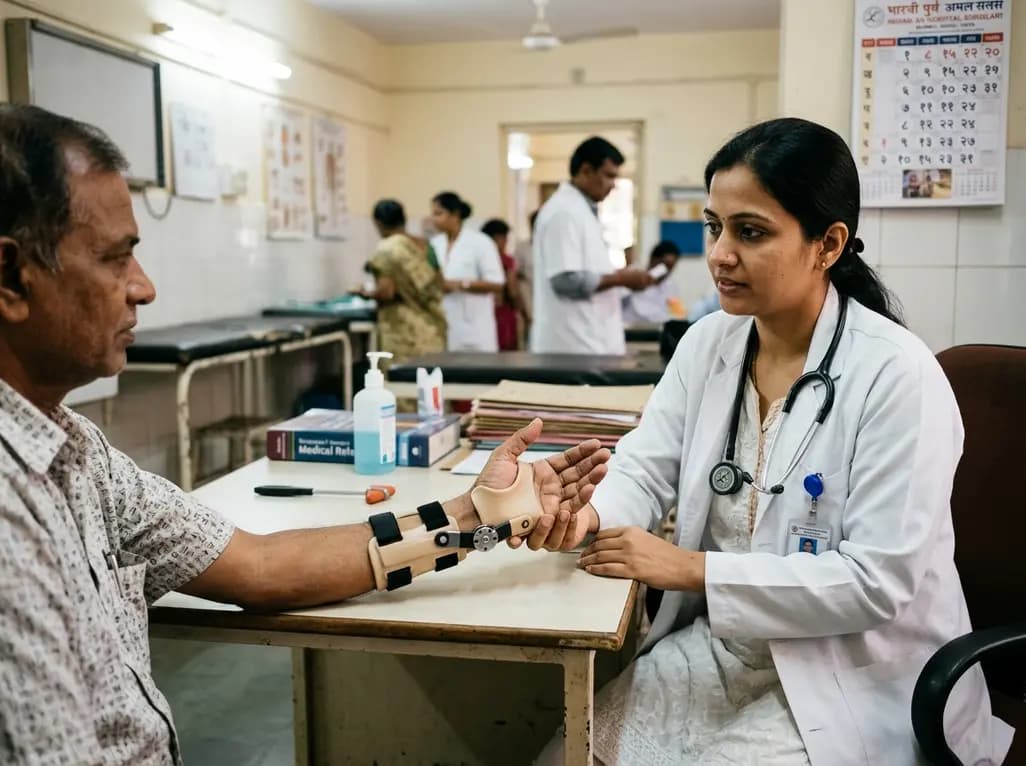
A new randomized crossover trial reveals that a hinged ulnar gutter orthosis significantly improves hand function and weight-bearing tolerance compared to standard volar splints in patients with degenerative triangular fibrocartilage complex lesions, supporting functionally permissive orthotic designs.
Today
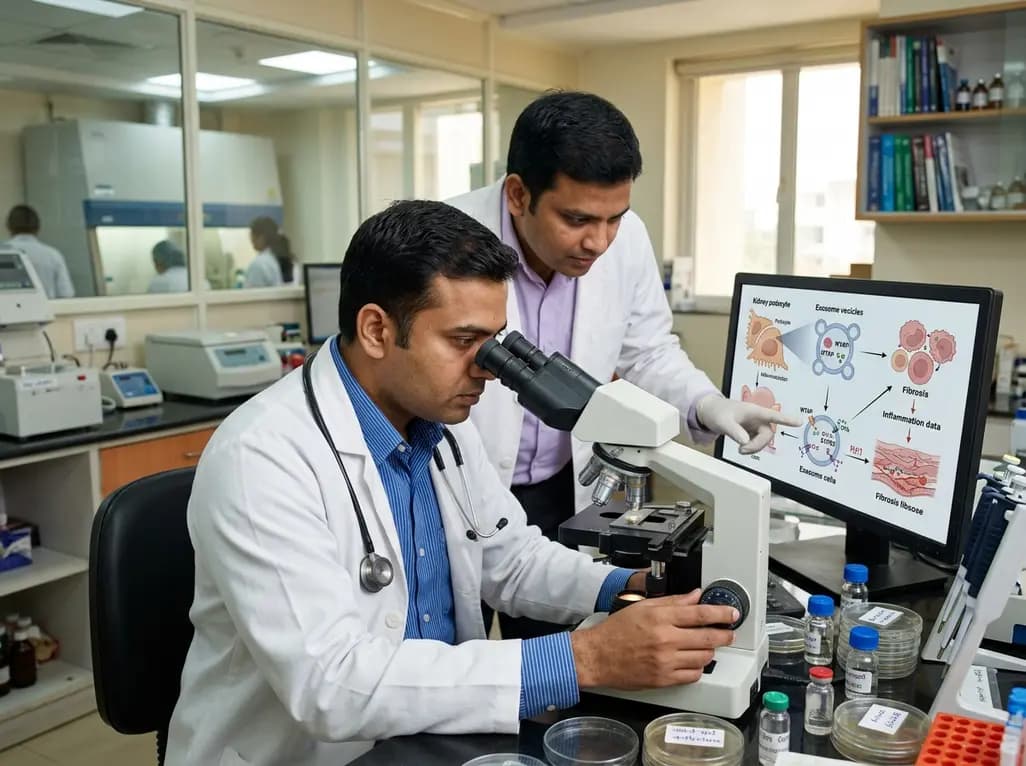
New research reveals that M1 macrophage-derived exosomes aggravate diabetic nephropathy by transferring WTAP to stabilize S1PR2 mRNA. Silencing WTAP in these vesicles attenuates endothelial injury and renal fibrosis, pointing toward innovative nanomedicine therapies.
Yesterday
