

Loading, please wait...
Loading, please wait...
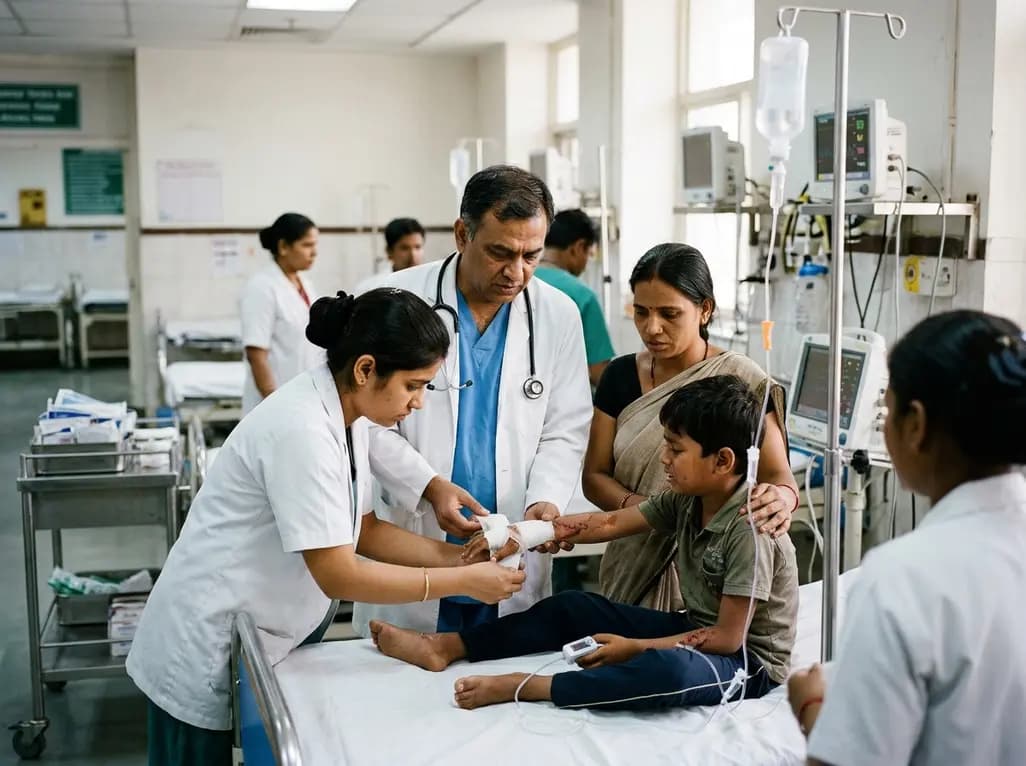
Festival celebrations across India often trigger a dramatic surge in emergency room visits. During recent festive days, tertiary centers in New Delhi treated hundreds of patients suffering from severe thermal and blast trauma. Notably, firecracker burn injuries disproportionately affected children and adolescents, leaving many with life-altering physical impairment. Clinicians must maintain a heightened state of readiness to assess, stabilize, and manage these multifaceted injuries during such seasonal peaks.
Epidemiological surveillance during festive periods reveals striking injury patterns across urban tertiary centers. For instance, Safdarjung Hospital documented 135 outpatient burn cases and seven major admissions over two days. Similarly, the All India Institute of Medical Sciences recorded 42 acute burn cases, with eleven patients requiring immediate inpatient care. Furthermore, four critically injured individuals required intensive care monitoring due to extensive physiological compromise.
Male patients consistently represent the majority of presenting cases in emergency units. Specifically, young males often experiment with unstable chemical mixtures or stand too close to ignition points. While handmade explosives like potash compounds contribute to severe limb damage, standard ground fireworks produce most casualties. For example, conical fountains known as anaars frequently explode prematurely. Consequently, unsuspecting spectators and handlers sustain rapid thermal flashes combined with penetrating shrapnel trauma. Emergency departments must therefore implement structured triage protocols to categorize superficial injuries from life-threatening blast events quickly.
Children face exceptionally high risks during festive pyrotechnic handling. In recent hospital audits, minors under 18 years accounted for nearly half of all major admissions. Moreover, younger children often lack the motor coordination and risk awareness required to evade sudden explosions. For example, an eight-year-old patient sustained critical full-thickness burns over 45 percent of total body surface area after an unexpected blast.
Anatomically, pediatric skin has a significantly thinner epidermal layer than adult tissue. Therefore, brief exposure to high-temperature fireworks causes rapid dermal necrosis. Additionally, children possess a higher body surface area to mass ratio, which accelerates evaporative fluid loss. Hypothermia also develops swiftly in young burn victims during initial emergency exposure. Furthermore, curiosity often drives children to pick up delayed unexploded devices. When these fireworks detonate unpredictably, the resulting shockwave inflicts severe localized trauma to digits, palmar surfaces, and facial features. Clinicians must prioritize pediatric-specific physiological monitoring immediately upon emergency arrival.
Initial medical management demands adherence to standard trauma resuscitation pathways. Clinicians must first secure the pediatric airway, particularly if facial burns or inhalation injuries exist. Hot gas inhalation induces swift supraglottic edema, which can progress to complete obstruction. Therefore, emergency teams should secure endotracheal intubation early whenever deep facial burns or hoarseness occur.
Simultaneously, physicians must quantify the total body surface area affected using the modified Lund-Browder chart. The traditional adult Rule of Nines frequently miscalculates pediatric burn proportions. Consequently, fluid resuscitation formulas must use precise weight-based algorithms, such as the Parkland or Galveston protocols. Care teams initiate balanced crystalloids, preferably Ringer's lactate, to counteract massive capillary extravasation. In addition, practitioners must strictly monitor hourly urine output to maintain renal perfusion. Clinicians must also avoid common community first-aid mistakes. Applying ice, toothpaste, or greasy ointments deepens tissue necrosis and increases infection risk. Instead, immediate irrigation with ambient clean water provides effective thermal mitigation before hospital arrival.
Deep thermal trauma and explosive force necessitate decisive surgical intervention. Blast injuries rarely present as isolated thermal damage; rather, they combine mechanical rupture, foreign body contamination, and thermal charring. Thus, reconstructive surgeons often operate immediately to debride devitalized tissue and relieve compartmental swelling. When circumferential burns encircle extremities or digits, surgeons must perform emergency escharotomies to prevent ischemic necrosis.
Furthermore, blast pressure causes extensive neurovascular and tendon damage across the hands. Hand burns represent the most frequent presentation among adolescents and young adults handling ground devices. Therefore, hand surgeons advocate meticulous debridement alongside conservative preservation of functional skin flaps. Following surgical cleaning, teams apply antimicrobial dressings like silver sulfadiazine or nanocrystalline silver mesh to control bacterial proliferation. Early passive mobilization remains crucial to counteract debilitating cicatricial contractures. Consequently, multidisciplinary rehabilitation involving physical therapists must begin as soon as the patient achieves hemodynamic stability.
Ocular emergencies constitute a devastating component of pyrotechnic morbidity. Specialized eye centers documented over a hundred presentations during recent festivities, with dozens requiring emergency ophthalmic surgery. Projectile fragments, unburned chemical gunpowder, and intense thermal flash combine to injure delicate orbital structures. Consequently, patients present with corneal abrasions, traumatic hyphema, chemical keratitis, and open globe perforations.
Emergency physicians must examine the eye without applying direct external pressure. If globe rupture occurs, pressure can cause irreversible extrusion of intraocular contents. Instead, clinicians must protect the orbit using a rigid, clear eye shield. Furthermore, alkaline residues from pyrotechnic powders require copious irrigation with sterile saline until physiological pH returns. When corneal lacerations or intraocular foreign bodies appear on slit-lamp evaluation, ophthalmologists perform immediate primary micro-repair. Timely structural closure within 24 hours drastically reduces the likelihood of post-traumatic endophthalmitis and permanent blindness.
Q1: What immediate first aid should clinicians recommend for pediatric firecracker burns?
Clinicians must advise immediate cooling of the burn wound using clean, running tap water for 15 to 20 minutes. This action halts thermal transfer and reduces deep tissue ischemia. Families must avoid ice, ghee, or toothpaste, as these home remedies worsen skin maceration and promote bacterial contamination. Afterward, caregivers should cover the injury with a sterile, non-adherent dressing and seek prompt medical attention.
Q2: Why are blast injuries from anaar fireworks especially devastating to teenagers?
Anaar devices contain tightly packed chemical propellant inside a conical earthenware or cardboard casing. If the nozzle clogs or ignition occurs unevenly, internal pressure spikes rapidly. This turns the casing into high-velocity shrapnel. Because adolescents frequently lean over the device during lighting, unexpected explosions inflict severe full-thickness burns to the hands, neck, and face, often combined with deep penetrating ocular trauma.
Q3: How do fluid resuscitation calculations differ for pediatric burn patients?
Pediatric fluid resuscitation requires precise calculation using the Lund-Browder chart because children have larger heads and smaller limbs relative to adults. Clinicians calculate fluid replacement using protocols like the Parkland formula alongside standard maintenance fluids containing dextrose. Because children deplete glycogen reserves rapidly and suffer sudden hypovolemia, clinicians must continuously titrate fluids against an hourly urine output goal of 1 mL/kg/hour.
Disclaimer: This content is for informational and educational purposes only. It does not constitute medical advice or replace professional judgment. Refer to the latest local and national guidelines for clinical practice.
References

Read summarized clinical updates, watch expert medical content, and earn CME certifications right from your smartphone.
Open your smartphone camera to scan and install.





Recent hospital data highlights a sharp increase in pediatric burn and blast injuries from ground fireworks like anaars. Emergency clinicians must rapidly triage thermal trauma, initiate accurate fluid resuscitation, manage severe ocular perforations, and coordinate urgent surgical care.
Today
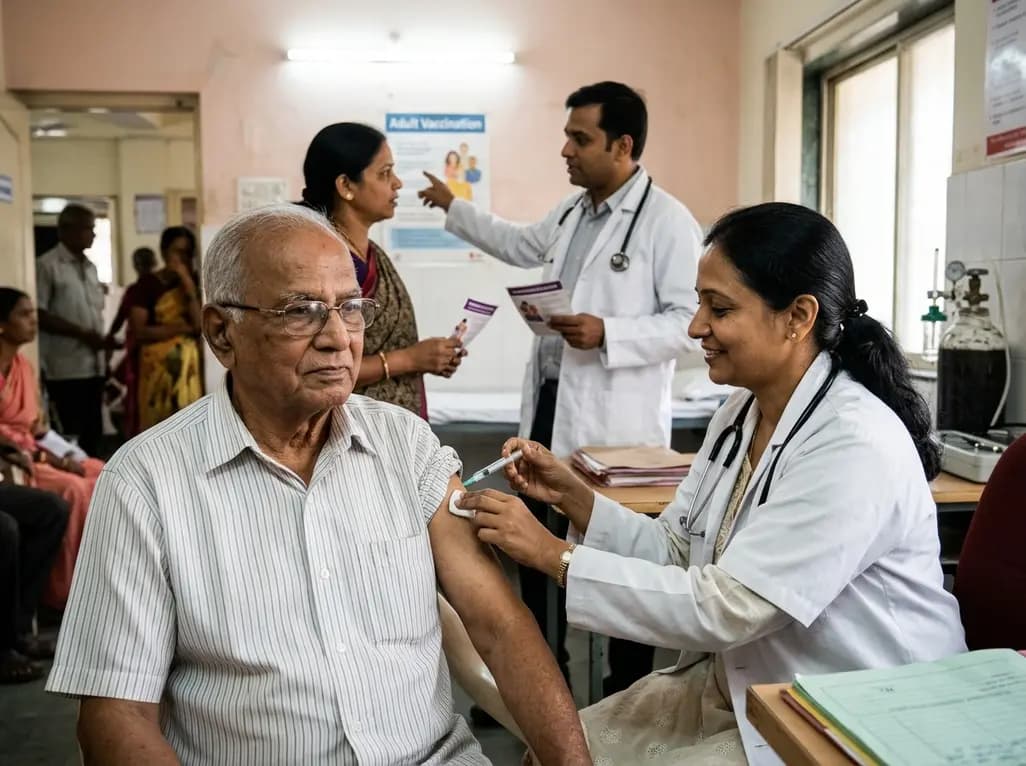
Despite proven efficacy in preventing severe morbidity and mortality, adult immunization coverage among Indian seniors remains below two percent. Pulmonologists and geriatricians urge widespread adoption of seasonal influenza, pneumococcal conjugate, and recombinant zoster vaccines to curb preventable hospitalizations.
Today

An intracranial EWSR1::CREM fusion sarcoma in a 31-year-old female manifested as a paraneoplastic inflammatory syndrome with anemia and secondary infertility. The dural mass mimicked meningioma, but gross-total resection resolved her systemic inflammation and restored natural fertility within one month.
Today

The DOMINO study protocol presents a multidisciplinary implementation mapping approach to overcome provider, patient, and payer barriers to antiobesity medications, offering vital insights for Indian clinicians managing the growing diabesity burden.
Today

A comprehensive analysis of MAP therapy resistance in osteosarcoma, examining canonical and non-canonical mechanisms across damage avoidance, enhanced DNA repair, and replication stress tolerance to identify novel vulnerabilities.
Today

Near-infrared autofluorescence provides real-time label-free optical guidance during endoscopic transsphenoidal pituitary surgery. By highlighting stark signal contrasts between normal pituitary gland and adenomas, this technique aids gross-total tumor resection while safeguarding critical endocrine function.
Today
