

Loading, please wait...
Loading, please wait...
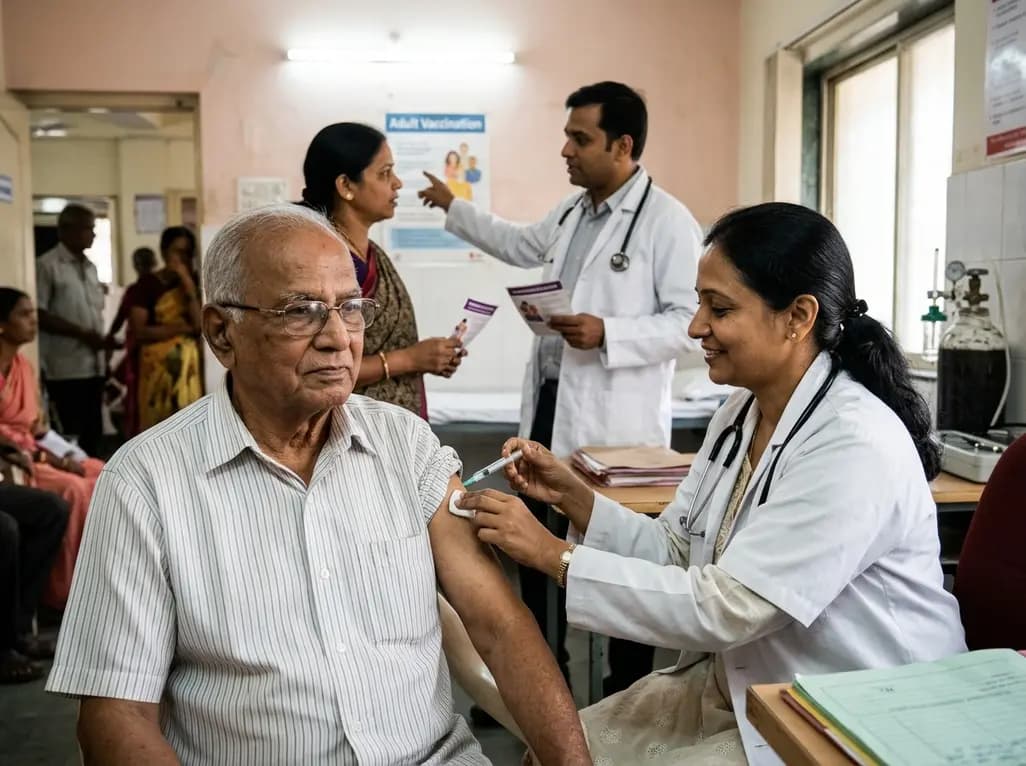
Preventive healthcare has transformed pediatric medicine across the globe, yet adult immunization continues to face severe neglect. In particular, adult vaccination in India remains critically low among geriatric populations and vulnerable cohorts. While routine immunization safeguards millions of infants, elderly citizens face substantial risks from respiratory and viral infections. Consequently, healthcare providers must address this massive clinical gap to prevent avoidable hospitalizations and fatalities.
Aging naturally weakens the human immune system through a progressive process called immunosenescence. As a result, older adults struggle to mount effective defenses against common respiratory pathogens. In India, seasonal influenza and invasive pneumococcal disease impose a tremendous public health burden on families and hospitals. Recent epidemiological estimates indicate that influenza causes over 5.3 million respiratory infections in Indian seniors annually. Furthermore, the viral infection triggers more than 36,000 hospitalizations and nearly 85,000 preventable deaths every single year. Together, influenza and pneumococcal infections claim approximately 1.2 lakh elderly Indian lives annually.
In addition, respiratory pathogens frequently destabilize preexisting chronic illnesses in older patients. For instance, an acute influenza episode significantly elevates the immediate risk of acute myocardial infarction and stroke. Similarly, secondary bacterial pneumonia often causes severe respiratory failure in vulnerable individuals. Patients with diabetes, asthma, heart failure, and chronic obstructive pulmonary disease suffer disproportionately worse clinical outcomes. Therefore, physicians must recognize that these respiratory infections represent life-threatening emergencies rather than benign seasonal illnesses. Proactive clinical surveillance remains essential to mitigate these catastrophic complications. Routine preventive counseling should begin at the primary care level.
Despite undeniable therapeutic benefits, adult vaccination in India faces pervasive clinical, social, and cultural barriers. A multicentre study across Chennai, Ballabgarh, Kolkata, and Pune revealed startling gaps in preventive coverage. Specifically, only 1.4% of surveyed older adults had ever received a seasonal influenza vaccine. Furthermore, fewer than 20% of participants had even heard of influenza as a distinct clinical entity. Only 35.9% viewed adult vaccines as safe medical interventions. Additionally, over 65% of older respondents expressed strong unwillingness to pay out-of-pocket expenses for these preventive inoculations.
However, the study also revealed a clear opportunity for impactful clinical intervention. Vaccine uptake surged to 29.7% when health workers offered free vaccines during community health camps. This finding proves that financial hurdles and poor accessibility severely restrict patient compliance. Moreover, many busy healthcare professionals fail to actively recommend adult immunizations during routine outpatient visits. Patients frequently assume that vaccines belong exclusively to childhood wellness programs. Consequently, bridging this massive knowledge gap requires continuous clinical advocacy and structured counseling across all primary care settings. Systematic doctor recommendations can immediately alter patient behavior.
Extensive clinical evidence demonstrates that routine adult immunizations deliver profound individual and public health benefits. For example, annual influenza vaccination reduces influenza-associated pneumonia cases by 52% among older adults. In addition, timely influenza immunization cuts related geriatric deaths by an impressive 70%. These vaccines reliably prevent severe lower respiratory tract complications and minimize emergency department visits. Clinicians must advise annual administration because influenza surface antigens mutate continuously through antigenic drift. Annual shots therefore provide renewed immune defense before peak seasonal viral transmission begins.
Similarly, pneumococcal vaccination provides vital protection against invasive disease, bacteremia, and lobar pneumonia. High-quality data confirm that pneumococcal immunization lowers hospitalizations by nearly 27% and reduces mortality by 34%. Furthermore, recent pharmacoeconomic studies highlight the cost-effectiveness of next-generation conjugate vaccines. Specifically, a single dose of the 20-valent pneumococcal conjugate vaccine offers robust serotype coverage for high-risk adults. Because both influenza and pneumococcal vaccines are non-live formulations, physicians can safely co-administer them to frail elderly patients with multiple coexisting comorbidities. This simultaneous approach significantly optimizes clinical protection.
Herpes zoster represents another debilitating viral threat that disproportionately attacks the aging demographic. The varicella-zoster virus remains dormant within sensory dorsal root ganglia following childhood chickenpox infection. However, waning cell-mediated immunity permits viral reactivation during later decades of life. In India, public health experts estimate that approximately 45 lakh shingles cases occur every year. The resulting dermatomal rash causes acute pain, cutaneous blistering, and secondary bacterial infections. More importantly, many patients develop post-herpetic neuralgia, a devastating neuropathic complication characterized by persistent, intractable nerve pain.
Fortunately, advanced recombinant zoster vaccines offer powerful defense against reactivation and severe nerve damage. Recent Indian phase-3 clinical trial data demonstrated an outstanding immune response in 85.7% of participants aged 50 and above. Globally, this two-dose recombinant adjuvant vaccine provides over 90% protection against shingles and post-herpetic neuralgia. In addition, the formulation maintains high efficacy across older cohorts regardless of underlying chronic medical conditions. Therefore, specialists strongly recommend this non-live vaccine for all adults aged 50 and above to preserve physical autonomy and patient quality of life. Timely vaccination protects patients against months of debilitating agony.
To overcome widespread immunization gaps, Indian healthcare systems must adopt a comprehensive life-course immunization framework. Historically, public health initiatives focused almost exclusively on maternal and child health goals. Consequently, preventive protocols for aging citizens received minimal national infrastructure support and funding. Encouragingly, promising policy shifts are finally emerging at regional administrative levels. For example, Goa recently launched its pioneering Life-course Immunisation Policy spanning 2026 to 2036. This progressive framework explicitly prioritizes influenza, pneumococcal, and hepatitis B vaccines for elderly individuals and high-risk workers.
Furthermore, medical societies emphasize that comprehensive adult protection extends beyond respiratory and zoster inoculations. Clinicians should routinely evaluate patients for decennial tetanus, diphtheria, and pertussis booster doses. In addition, selected older adults require targeted immunization against hepatitis B, respiratory syncytial virus, and coronavirus. Routine outpatient consultations present an ideal opportunity to review vaccination status alongside blood glucose and blood pressure metrics. Ultimately, direct physician recommendations serve as the single most powerful driver of vaccine acceptance. By proactively prescribing recommended immunizations, medical practitioners can protect thousands of older citizens from preventable suffering. Preventive geriatrics must become standard clinical practice.
Q1: Why do older adults require annual influenza vaccination if they already received a dose last year?
Older adults require an annual influenza shot because influenza viruses continually alter their surface antigens through antigenic drift. Consequently, previous vaccine formulations lose protective efficacy against newly circulating seasonal strains. Furthermore, age-related immunosenescence causes antibody concentrations to decline within six to twelve months post-vaccination. An annual booster recalibrates immune defenses, which drastically reduces the risk of severe pneumonia, ischemic cardiac events, and hospital admission during peak respiratory seasons.
Q2: Can elderly patients with chronic comorbidities safely receive multiple adult vaccines together?
Yes, elderly individuals with chronic conditions like diabetes, kidney disease, or cardiovascular disorders can safely receive recommended adult vaccines. Modern non-live vaccines, including recombinant zoster, conjugate pneumococcal, and inactivated influenza formulations, demonstrate excellent safety profiles without inducing live infection. In fact, clinical guidelines encourage simultaneous co-administration at separate anatomical injection sites during a single visit. This approach ensures prompt therapeutic coverage, minimizes clinical visits, and protects high-risk patients against debilitating complications.
Q3: How effective is the recombinant zoster vaccine in preventing post-herpetic neuralgia?
The two-dose recombinant zoster vaccine delivers remarkable clinical efficacy, providing over 90% protection against shingles across adults aged 50 and older. More importantly, it dramatically reduces the incidence of post-herpetic neuralgia, a persistent neuropathic pain condition that often resists standard analgesics. Clinical trial data confirm that the vaccine maintains strong cell-mediated immunity for nearly a decade. Consequently, expert medical societies strongly recommend vaccination to preserve daily functional independence and prevent chronic nerve agony.
Disclaimer: This content is for informational and educational purposes only. It does not constitute medical advice or replace professional judgment. Refer to the latest local and national guidelines for clinical practice.
References

Read summarized clinical updates, watch expert medical content, and earn CME certifications right from your smartphone.
Open your smartphone camera to scan and install.





Despite proven efficacy in preventing severe morbidity and mortality, adult immunization coverage among Indian seniors remains below two percent. Pulmonologists and geriatricians urge widespread adoption of seasonal influenza, pneumococcal conjugate, and recombinant zoster vaccines to curb preventable hospitalizations.
Today

An intracranial EWSR1::CREM fusion sarcoma in a 31-year-old female manifested as a paraneoplastic inflammatory syndrome with anemia and secondary infertility. The dural mass mimicked meningioma, but gross-total resection resolved her systemic inflammation and restored natural fertility within one month.
Today

The DOMINO study protocol presents a multidisciplinary implementation mapping approach to overcome provider, patient, and payer barriers to antiobesity medications, offering vital insights for Indian clinicians managing the growing diabesity burden.
Today

A comprehensive analysis of MAP therapy resistance in osteosarcoma, examining canonical and non-canonical mechanisms across damage avoidance, enhanced DNA repair, and replication stress tolerance to identify novel vulnerabilities.
Today

Near-infrared autofluorescence provides real-time label-free optical guidance during endoscopic transsphenoidal pituitary surgery. By highlighting stark signal contrasts between normal pituitary gland and adenomas, this technique aids gross-total tumor resection while safeguarding critical endocrine function.
Today
