.webp&w=384&q=75)

Loading, please wait...
Loading, please wait...
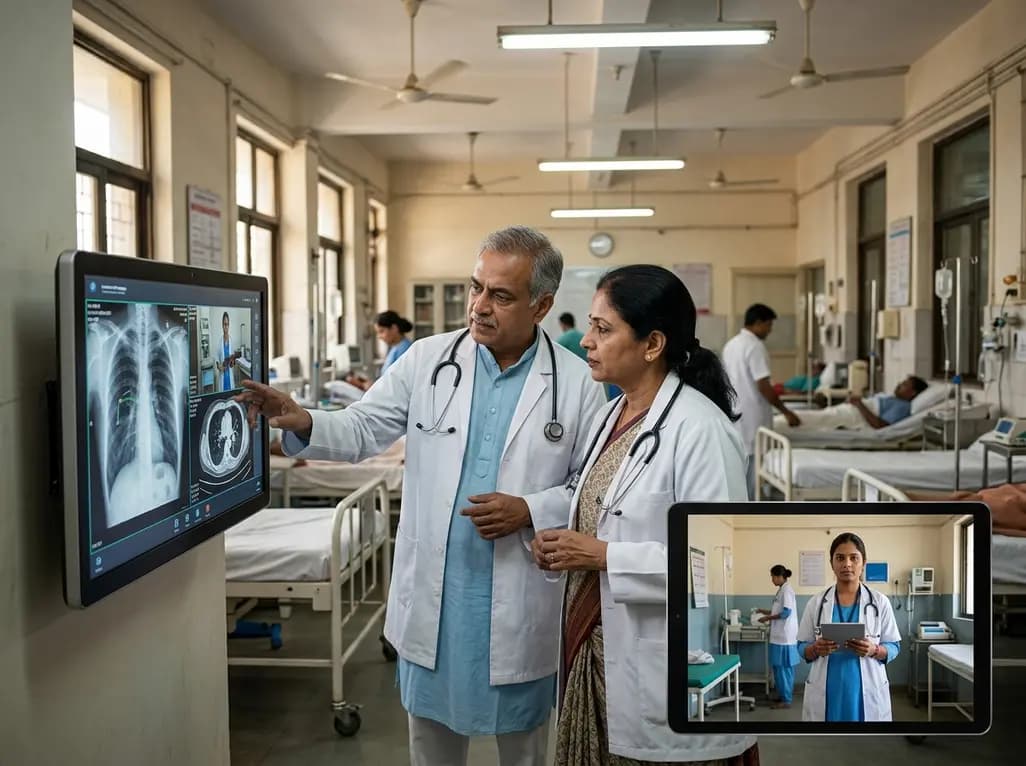
As India aggressively pursues its Smart Cities Mission, the integration of connected vehicle (CV) technology has become a cornerstone of urban planning. These systems promise to reduce road traffic accidents by providing drivers with real-time alerts about vulnerable road users. However, a significant threat looms over this progress: pedestrian safety cyberattacks. These malicious interventions specifically target the communication protocols between vehicles and infrastructure, often suppressing critical warnings that should appear on a driver's dashboard. When these safety alerts are removed, the interaction between the driver and the pedestrian changes fundamentally. This shift is not merely a technical failure but a direct threat to human life. Furthermore, understanding these dynamics is essential for medical professionals in India, where pedestrian fatalities account for nearly 20% of all road-related deaths. Consequently, healthcare providers must recognize that the future of emergency medicine will be intertwined with the security of vehicular networks.
Researchers recently employed a Hidden Markov Model (HMM)-based generative framework to explore these complex interactions. This sophisticated mathematical approach allows scientists to model sequences of observable events that depend on internal, unobservable states. Specifically, the study focused on the vehicle-pedestrian interaction trajectories that occur when a driver is suddenly deprived of a pedestrian warning. By using an HMM, the team could augment limited experimental data from driving simulators to create a more robust picture of real-world risks. Moreover, the model integrates surrogate safety measurements (SSM), such as 'time to collision,' to quantify the danger levels in various scenarios. This methodology is particularly relevant for the Indian context, where high variability in pedestrian motion and mixed traffic patterns make traditional safety analysis difficult. Therefore, these models provide a crucial predictive tool for urban planners and emergency response coordinators aiming to mitigate the impact of technology-driven accidents.
The core of the research involved a controlled driving-simulator experiment with 32 human participants. In the benchmark scenario, the CV system functioned normally, providing timely warnings of nearby pedestrians. However, in the pedestrian safety cyberattacks scenario, the system suppressed these alerts. The results were startling: the removal of warnings led to a significant reduction in the time to collision (TTC), indicating a much higher risk of immediate impact. Specifically, during the warning phase, the safety of 'stop dynamic types' degraded significantly. Drivers who would normally decelerate or yield were found to increase their speed over time when the expected warning was missing. Additionally, the lack of information creates a false sense of security, preventing the driver from initiating the necessary evasive maneuvers. Consequently, the transition from a safe approach to a high-risk conflict happens much faster than a human can typically compensate for without technological assistance.
One of the most vital findings from the HMM-generated trajectories is the sensitivity of safety measurements to pedestrian speed. The study demonstrated that increasing pedestrian speed consistently reduces overall safety in both normal and cyberattack scenarios. However, the safety measurement was found to be particularly sensitive when pedestrians were moving at low speeds. Furthermore, the data suggests that when a cyberattack occurs, the window for a driver to react becomes dangerously narrow. If a pedestrian increases their crossing speed while a driver is unaware of their presence due to a suppressed warning, the likelihood of a fatal collision spikes. Therefore, the combination of unpredictable human behavior and compromised technological safeguards creates a 'perfect storm' for traffic fatalities. For Indian paramedics and trauma surgeons, this highlights the necessity of preparing for high-velocity impact injuries even in urban intersections that are theoretically 'smart' and safe.
The rise of pedestrian safety cyberattacks presents a new frontier for public health policy in India. With the Ministry of Road Transport and Highways reporting over 35,000 pedestrian deaths annually, the introduction of vulnerable CV systems could inadvertently exacerbate the crisis if cybersecurity is not prioritized. Medical educators must now consider the role of 'infrastructure-induced trauma' in their curricula. Specifically, emergency physicians should be aware that technological failures might lead to specific patterns of accidents that differ from traditional human-error collisions. Furthermore, multisectoral collaboration between automotive engineers, cybersecurity experts, and health professionals is required to develop resilient systems. By advocating for 'security-by-design' in smart city infrastructure, the medical community can help ensure that the transition to connected mobility does not come at the cost of increased mortality among the most vulnerable road users.
A suppressed warning cyberattack involves the malicious interference with a vehicle's communication network to prevent safety alerts from reaching the driver. Specifically, the system fails to display warnings regarding pedestrians or other hazards on the dashboard. This leads to a breakdown in driver-pedestrian interaction, as the driver remains unaware of the risk, significantly increasing the probability of a high-speed collision in urban environments.
Research indicates that 'time to collision' (TTC) is significantly reduced during a cyberattack. Because the driver does not receive the expected alert, they fail to decelerate or yield in time. Consequently, the safety margin disappears much faster than in normal conditions. This reduction in TTC means that collisions are more likely to occur at higher speeds, resulting in more severe injuries for the pedestrians involved.
Pedestrian speed is a critical variable because it determines the reaction window for both the driver and the CV system. The study found that as pedestrian speed increases, safety levels drop sharply. Even at low speeds, the safety measurements are highly sensitive. When a cyberattack suppresses a warning, the driver’s inability to adjust for the pedestrian's speed makes the intersection environment exponentially more dangerous.
Disclaimer: This content is for informational and educational purposes only and does not constitute professional medical advice, diagnosis, or treatment. The technological risks discussed are based on current research models and may vary in real-world applications. Refer to the latest local and national guidelines for clinical practice and road safety protocols.
References
Chen C et al. How are pedestrian safety compromised under suppressed warning cyberattacks at a connected intersection? - Exploring vehicle-pedestrian interactions using a hidden markov model-based approach. Accid Anal Prev. 2026 Jun 27. doi: undefined. PMID: 42364296.
Ministry of Road Transport and Highways. Road Accidents in India 2023. Government of India. 2024.
World Health Organization. Global Status Report on Road Safety: India Context. 2023.
"
Read summarized clinical updates, watch expert medical content, and earn CME certifications right from your smartphone.
Open your smartphone camera to scan and install.





New research explores how cyberattacks that suppress pedestrian warnings in connected vehicles significantly reduce 'time to collision.' This study, utilizing Hidden Markov Models, highlights critical risks for vulnerable road users, emphasizing the need for robust smart city infrastructure in India.
3 months ago
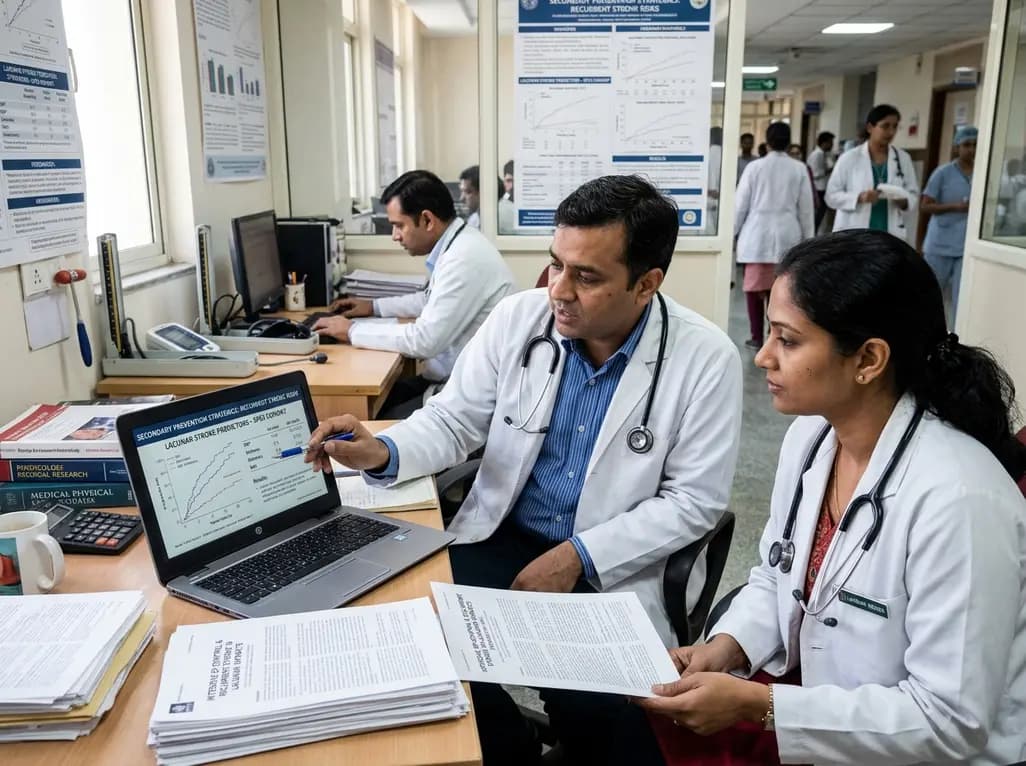
Explore vital recurrent stroke predictors in lacunar stroke patients managed with intensive blood pressure lowering. This analysis examines trial findings from SPS3 to uncover residual vascular risks, metabolic factors, and targeted secondary prevention strategies for high-risk neurological patients.
Today

Odisha has established India's first state-level clinical protocol specifically tailored for pregnant women with sickle cell disease. Developed with NHM and UNICEF, the framework provides structured antenatal screening, crisis mitigation, standardized referral pathways, and specialized interdisciplinary care.
Today

The Directorate General of Health Services directs Indian states to halt the hazardous reuse and reprocessing of single-use medical devices. Discover regulatory implications under the Drugs and Cosmetics Act, critical infection risks, legal liabilities, and operational changes required across clinical specialties.
Today

Mitochondria-targeted nanoparticles self-assembled from EGCG and L-glutamic acid effectively restore mitochondrial homeostasis, suppress synovial inflammation, and attenuate chondrocyte senescence in osteoarthritis, offering a promising disease-modifying nanotherapy.
Today

India is advancing preventive healthcare by integrating genomics, artificial intelligence, and quantum technologies. With the SANGAM programme sequencing one million Indian genomes, clinicians can unlock personalized therapies, detect cardiometabolic risks early, and curb the burden of diabetes and heart disease.
Today
