.webp&w=384&q=75)

Loading, please wait...
Loading, please wait...

The pay-it-forward testing strategy is emerging as a powerful tool to bridge significant healthcare gaps. Hepatitis B virus (HBV) and hepatitis C virus (HCV) remain critical global health burdens. This is especially true in low- and middle-income countries where resources are often limited. Notably, international migrants residing in urban centers often face substantial barriers to routine screening. Consequently, researchers in China launched a cluster randomized controlled trial to address this challenge. The project utilizes social innovation to foster mutual aid within migrant communities. Ultimately, this approach aims to increase the uptake of life-saving medical tests for vulnerable groups.
The core of this intervention relies on the concept of upstream reciprocity and community support. Specifically, the pay-it-forward testing strategy provides participants with free screening that previous participants donated. During the trial, the intervention group watches a short educational video about viral hepatitis risks. Furthermore, they receive printed materials detailing how testing can prevent long-term liver damage. After receiving their free tests, participants have the voluntary opportunity to donate to support a future participant. In contrast, the control group pays out-of-pocket for standard medical services at the hospital. Because financial cost is a major deterrent, this model effectively removes immediate economic hurdles.
Implementation of the protocol began in late 2024 in Guangzhou, China. Early baseline findings indicate a high representation of male participants, primarily from African nations. Many of these individuals reside in the region for business purposes. Although some earn stable incomes, a significant portion still lacks regular access to viral hepatitis screening. As a result, the study will measure the proportion of participants who complete both HBV and HCV tests. Moreover, the data analysis will account for clustering effects to ensure the accuracy of the intervention’s impact.
This study is innovative because it targets an understudied and often marginalized population. The pay-it-forward testing strategy does more than just lower costs; it builds a sense of community responsibility. Previous studies in China have shown that this model works effectively for sexually transmitted infections. Consequently, applying it to hepatitis could redefine outreach for chronic viral infections. Healthcare providers in India can also look at this model to address screening gaps in urban migrant populations. Finally, the findings will provide evidence for future public health policies and more sustainable screening programs.
It is a social innovation model where an individual receives a health service for free, which was funded by a previous participant. The recipient is then invited to donate to support the next person.
It overcomes financial barriers and reduces stigma by framing medical testing as a community-supported act of reciprocity rather than just an individual medical requirement.
Disclaimer: This content is for informational and educational purposes only. It does not constitute professional medical advice, diagnosis, or treatment. Always seek the advice of your physician or other qualified health provider with any questions you may have regarding a medical condition. Refer to the latest local and national guidelines for clinical practice.
References
Xiong M et al. Evaluating Pay-It-Forward Strategy to Promote Hepatitis B Virus and Hepatitis C Virus Testing Among International Migrants From Low- and Middle-Income Countries in China: Protocol for a Cluster Randomized Controlled Trial. JMIR Res Protoc. 2026 May 21. doi: 10.2196/87165. PMID: 42166794.
Tucker JD et al. Pay-it-forward to promote HIV and Chlamydia testing among men who have sex with men in China: a cluster randomized trial. Lancet Infect Dis. 2017;17(12):1234-1241.
World Health Organization. Global Hepatitis Report 2024: Action for access in low- and middle-income countries. Geneva: WHO; 2024.

Read summarized clinical updates, watch expert medical content, and earn CME certifications right from your smartphone.
Open your smartphone camera to scan and install.





Researchers evaluate a pay-it-forward testing strategy to increase HBV and HCV screening among international migrants, addressing financial and social barri...
5 months ago
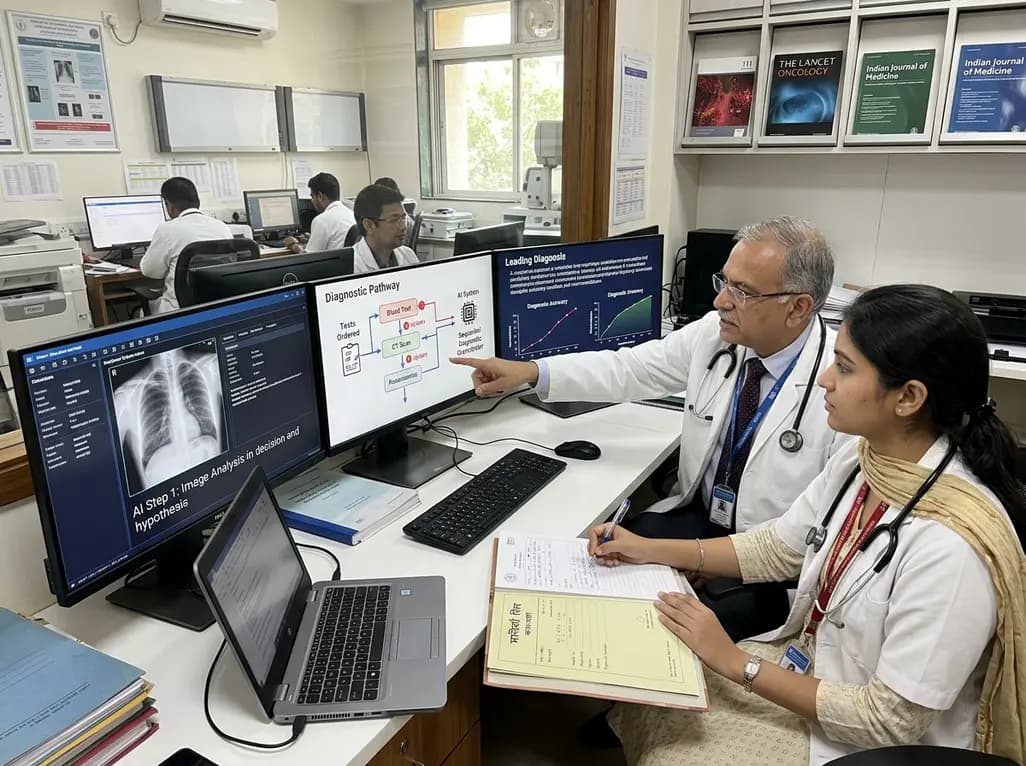
A breakthrough peer-reviewed study demonstrates that a sequential AI diagnosis system can mirror real-world clinical reasoning. By ordering stepwise tests and updating hypotheses dynamically, this multi-agent orchestrator achieved superior diagnostic accuracy while reducing investigative costs.
Today

A prenatal case highlights severe glutaric acidemia type II presenting as bilateral hyperechoic cystic kidneys at 18 weeks. Whole-exome sequencing revealed a novel homozygous ETFDH frameshift variant, demonstrating the power of rapid genetic testing in fetal renal anomalies.
Today

Review how tailored exercise programs benefit frail older patients with heart failure. Explore pathophysiological mechanisms, individualized training prescriptions, and strategies to overcome adherence barriers in clinical practice.
Yesterday

This comparative study evaluates posterior labral tears with and without glenohumeral instability, highlighting distinct demographic patterns, MRI underestimation in stable shoulders, and successful arthroscopic repair outcomes.
Yesterday

A clinical study demonstrates that early intervention with tocilizumab, either as monotherapy or bridged with corticosteroids, achieves significant proptosis reduction and resolves active inflammation in treatment-naive thyroid eye disease.
Yesterday
