.webp&w=384&q=75)

Loading, please wait...
Loading, please wait...
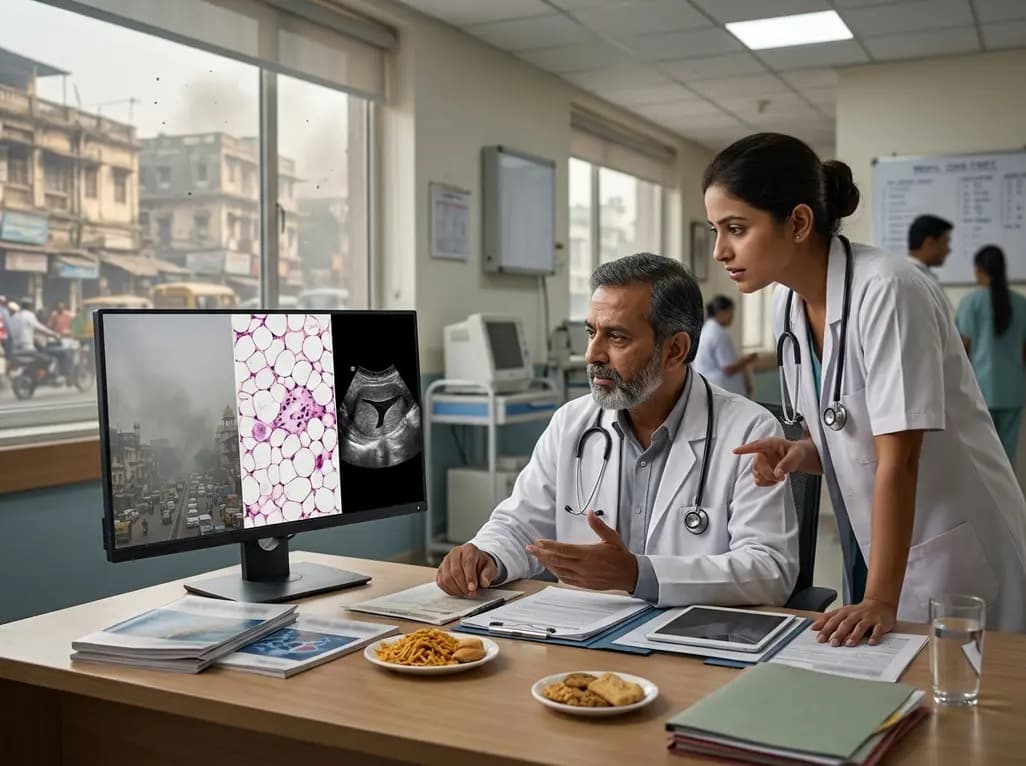
Recent scientific evidence highlights a concerning link between environmental pollutants and reproductive success. Specifically, the relationship between particulate matter and infertility has gained significant attention as global pollution levels rise. A new study published in Molecular Human Reproduction explores how particulate matter (PM) exposure alters fat metabolism, thereby impairing endometrial function and reducing fertility outcomes.
Researchers investigated how PM exposure, particularly when combined with a high-fat diet (HFD), affects the uterine environment. In animal models, PM exposure led to increased visceral adiposity despite a lower overall weight gain. This shift in fat distribution is critical because visceral adipose tissue (VAT) acts as an endocrine organ. Consequently, the study observed a significant increase in pro-inflammatory cytokines such as p-NF-κB and p-c-jun in both adipose and endometrial tissues. These inflammatory markers create a hostile environment for embryo implantation.
Moreover, the study revealed a distinct dysregulation of adipokines. PM exposure resulted in elevated leptin levels and reduced adiponectin expression. This imbalance is particularly pronounced in the presence of a high-fat diet. Because these hormones regulate reproductive functions, their disruption likely contributes to the observed reduction in fertility. Furthermore, the researchers identified tissue-specific hormonal receptor changes, including altered estrogen receptor ratios, which further destabilize endometrial receptivity.
Beyond inflammation, PM exposure triggers cellular stress and apoptosis. In vitro co-culture models showed increased levels of p-Nrf2, p-ERK, and p-p38. These signaling pathways indicate that oxidative stress plays a central role in PM-induced damage. Therefore, clinicians should consider environmental exposure as a potential cofactor in metabolic and reproductive disorders. Reducing the combined impact of poor diet and air pollution may be essential for improving reproductive outcomes in high-exposure regions.
Particulate matter triggers systemic inflammation and oxidative stress. These processes increase pro-inflammatory cytokines and alter hormone receptor expression in the endometrial tissue, making it less receptive to embryo implantation.
Yes. Research indicates that a high-fat diet can exacerbate the negative effects of particulate matter. The combination leads to more severe metabolic dysregulation and higher levels of inflammation compared to air pollution exposure alone.
Studies show that exposure to fine particles can disrupt the production of adipokines like leptin and adiponectin. It also affects the ratio of androgen and estrogen receptors in reproductive tissues.
Disclaimer: This content is for informational and educational purposes only. It does not constitute medical advice or a professional diagnosis. Always seek the advice of a qualified healthcare provider with any questions you may have regarding a medical condition. Refer to the latest local and national guidelines for clinical practice.
References
Jung GS et al. Effects of changes in fat metabolism by particulate matter on endometrium and infertility. Mol Hum Reprod. 2026 Jun 05. doi: undefined. PMID: 42249709.
Times of India. Toxic air, water affect women's reproductive health, says IIPS study. Published April 2026.

Read summarized clinical updates, watch expert medical content, and earn CME certifications right from your smartphone.
Open your smartphone camera to scan and install.





New research reveals how particulate matter exposure combined with a high-fat diet impairs endometrial function through inflammation and altered fat metabol...
4 months ago

Novel diimide and hydrazone scaffolds, particularly compound #C4, synergistically reactivate latent HIV-1 when combined with JQ1 or PKC activators. Demonstrating donor-matched proviral transcription ex vivo and non-canonical signaling, these findings advance shock and kill strategies toward reservoir eradication.
Today

A comparative cohort study evaluates vNOTES vs TLH hysterectomy for benign conditions, demonstrating shorter operative duration, faster return to daily activities, and equivalent female sexual function scores without increased dyspareunia.
Today

Review how tailored exercise programs benefit frail older patients with heart failure. Explore pathophysiological mechanisms, individualized training prescriptions, and strategies to overcome adherence barriers in clinical practice.
Yesterday

This comparative study evaluates posterior labral tears with and without glenohumeral instability, highlighting distinct demographic patterns, MRI underestimation in stable shoulders, and successful arthroscopic repair outcomes.
Yesterday

A clinical study demonstrates that early intervention with tocilizumab, either as monotherapy or bridged with corticosteroids, achieves significant proptosis reduction and resolves active inflammation in treatment-naive thyroid eye disease.
Today
