.webp&w=384&q=75)

Loading, please wait...
Loading, please wait...
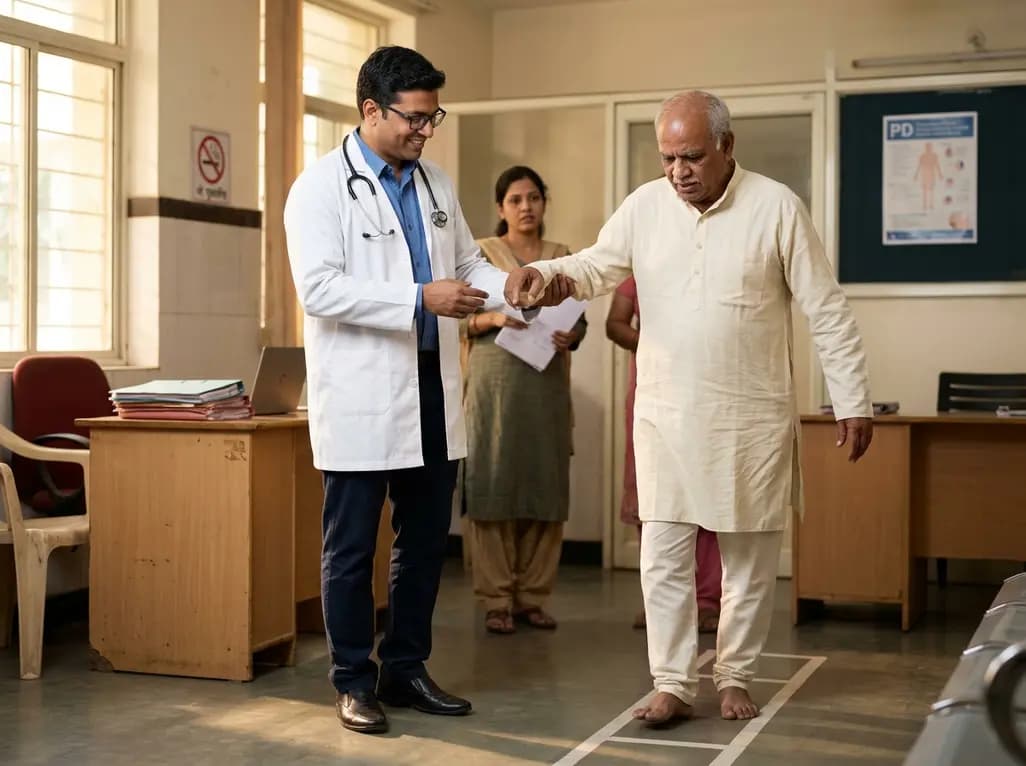
Understanding resilience in neurodegenerative disorders is crucial for improving patient care. Cognitive reserve (CR) and motor reserve (MR) represent the brain's ability to cope with pathology. Recent research explores how these Parkinson's disease reserves influence clinical outcomes. While both constructs aim to explain why some patients remain functional longer than others, their specific roles often differ across cognitive and motor domains.
A recent study involving fifty individuals with Parkinson's disease (PD) utilized specific questionnaires to measure these reserves. Specifically, researchers employed the Cognitive Reserve Index questionnaire (CRIq) and the Motor Reserve Index questionnaire (MRIq) to assess resilience. Additionally, the Current Physical Activity questionnaire (CPAq) tracked ongoing lifestyle habits. The results provided significant insights into how the brain manages progressive neurodegeneration.
The study found that cognitive reserve plays a dominant role in maintaining global functioning. High CRIq scores successfully predicted global cognitive performance and executive abilities. Furthermore, these scores correlated with a later age of onset and shorter disease duration. Interestingly, the total motor reserve index did not show the same predictive strength for clinical motor outcomes. However, specific sub-indices of the MRIq did correlate with both cognitive and motor measures, suggesting that reserve mechanisms are not entirely isolated.
Physical activity emerged as a vital factor in this resilience framework. Total scores from the CPAq predicted better executive functions and a lower disease stage. Consequently, this indicates that ongoing physical activity provides immediate, cross-domain protective effects. Such findings emphasize that staying active does more than just support muscles; it actively preserves brain health and executive control.
For clinicians in India, these findings highlight the need for early intervention. Moreover, promoting a lifestyle rich in cognitive and physical stimulation can enhance a patient's natural resilience. Therefore, integrating reserve assessments into routine practice could help personalize long-term management strategies.
Cognitive reserve refers to the brain's ability to use alternative neural pathways to maintain mental function despite damage. Motor reserve describes a similar resilience in movement control. While both are important, cognitive reserve appears to have broader predictive value for overall functioning in PD patients.
Yes, ongoing physical activity has demonstrated cross-domain benefits. Research shows it can predict better executive functions and help slow the progression of the disease stage, regardless of initial reserve levels.
Disclaimer: This content is for informational and educational purposes only and does not constitute medical advice. Always seek the advice of a qualified healthcare provider regarding a medical condition. Refer to the latest local and national guidelines for clinical practice.
References
Anzuino I et al. Cognitive and motor reserve in Parkinson's disease: Two sides of the same coin? J Neuropsychol. 2026 Jun 02. doi: 10.1111/jnp.70056. PMID: 42227225.
Hindle JV, et al. Cognitive reserve in Parkinson's disease: A systematic review and meta-analysis. Parkinsonism Relat Disord. 2014;20(2):131-139.
Hoenig MC. Parkinson's disease and the concept of resilience, cognitive, and motor reserve. J Parkinsons Dis. 2026 Apr 28. doi: 10.1177/1877718X261444486.

Read summarized clinical updates, watch expert medical content, and earn CME certifications right from your smartphone.
Open your smartphone camera to scan and install.





Study explores how cognitive and motor reserves predict clinical outcomes in Parkinson's disease, highlighting the role of physical activity in resilience....
4 months ago

Review how tailored exercise programs benefit frail older patients with heart failure. Explore pathophysiological mechanisms, individualized training prescriptions, and strategies to overcome adherence barriers in clinical practice.
Today

Recent clinical studies reveal maternal autoantibodies targeting IL-1RA as potential triggers for preterm labor, opening avenues for targeted cytokine therapies. Concurrently, new perioperative findings show inhaled cannabis increases propofol requirements during upper endoscopy compared to oral edible consumption.
Today

In high-risk pulmonary embolism complicated by severe anemia and active uterine bleeding, systemic thrombolysis is contraindicated. Large-bore aspiration thrombectomy provides rapid hemodynamic rescue without fibrinolysis, supported by inferior vena cava filter placement and multidisciplinary critical care.
Today

This comparative study evaluates posterior labral tears with and without glenohumeral instability, highlighting distinct demographic patterns, MRI underestimation in stable shoulders, and successful arthroscopic repair outcomes.
Today

A clinical study demonstrates that early intervention with tocilizumab, either as monotherapy or bridged with corticosteroids, achieves significant proptosis reduction and resolves active inflammation in treatment-naive thyroid eye disease.
Today
