.webp&w=384&q=75)

Loading, please wait...
Loading, please wait...
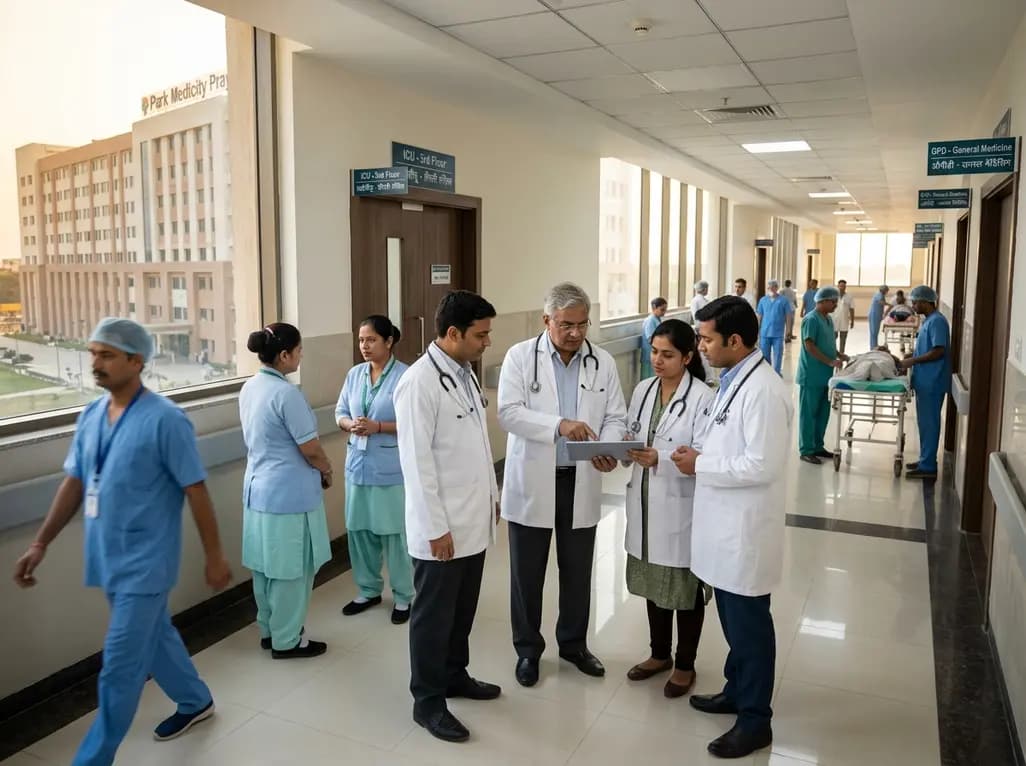
Northern India continues to face rapid shifts in clinical service demands and tertiary healthcare capacity. In a major strategic move, Park Medi World Limited recently announced the formal incorporation of a wholly-owned subsidiary, Park Medicity Prayagraj Limited. This corporate entity will develop, construct, and manage a state-of-the-art 550-bed multi-super-speciality hospital in Uttar Pradesh. Consequently, the establishment of this modern Prayagraj super-speciality hospital marks a substantial transition toward modernizing regional healthcare infrastructure. The enterprise will directly execute an extensive mandate awarded by the Prayagraj Municipal Corporation under a competitive Public-Private Partnership (PPP) framework. Healthcare administrators view this ambitious initiative as a vital milestone for public health resilience, clinical education, and specialized surgical care across the state.
To execute the complex municipal project, Park Medi World established the subsidiary with dedicated corporate equity. Specifically, the parent group subscribed to 1,50,000 equity shares at a par value of Rs 10 each, totaling Rs 15 lakh. Therefore, the company retains 100 percent direct equity shareholding in this newly formed operational vehicle. Furthermore, this deliberate corporate structure safeguards administrative focus, capital allocation, and rigorous statutory oversight. Financial filings reveal an estimated total capital outlay of approximately Rs 200 crore to construct the hospital within two years from the appointed date. In addition, the Prayagraj Municipal Corporation will reimburse Rs 76.52 crore towards core construction costs. Thus, this municipal support effectively de-risks roughly 38 percent of the initial capital deployment. The contractual arrangement operates under a long-term 45-year concession lease. In return, the operational entity will remit an annual concession fee of Rs 18.10 crore, with a scheduled 3 percent annual escalation. As a result, this clear financial engineering allows the company to deploy internal accruals efficiently while maintaining robust balance-sheet liquidity throughout the construction phase.
Healthcare delivery systems across Eastern Uttar Pradesh historically contend with acute structural deficits in tertiary clinical beds. Patients routinely travel vast distances to metro centers like Lucknow, Varanasi, or Delhi to access advanced medical interventions. However, the addition of 550 advanced beds significantly mitigates these deep regional inequities. The selected facility occupies a strategic 3.22-acre parcel directly behind Arail Ghat in Prayagraj. Significantly, this site lies approximately three kilometers from the sacred Sangam Ghat by road, placing comprehensive emergency and trauma infrastructure within immediate reach of dense residential clusters. The agreement also provides a decisive expansion option for an additional 2.47 acres starting in the fifth operational year. Consequently, hospital planners can scale inpatient capacity seamlessly as regional service demands intensify over the coming decades. Moreover, the project creates substantial clinical employment for doctors, nursing officers, surgical technicians, and allied medical professionals. By introducing cutting-edge infrastructure to tier-2 cities, the facility naturally curbs medical migration, reduces out-of-pocket patient expenditures, and establishes durable regional clinical self-sufficiency.
The facility plans to deliver comprehensive, multidisciplinary clinical programs designed to manage complex medical and surgical morbidities. Specifically, the hospital will house specialized centers for interventional cardiology, medical and surgical oncology, neurology, neurosurgery, nephrology, and orthopedics. Modern diagnostic suites will integrate multi-slice computed tomography, high-field magnetic resonance imaging, advanced digital radiography, and automated pathology laboratories. In addition, dedicated critical care units will feature advanced mechanical ventilation, invasive hemodynamic monitoring, and isolated infection-control cubicles. Emergency departments will run continuous, rapid-response trauma bays to treat acute cardiac events, polytrauma, and cerebrovascular accidents without delay. Surgical suites will incorporate laminar airflow systems, ergonomic modular interfaces, and high-definition laparoscopy towers to optimize surgical outcomes and minimize nosocomial infections. Furthermore, robust blood banking facilities and dialysis units will provide uninterrupted life-saving support to acutely ill inpatients. Consequently, local general practitioners and primary health centers will gain a dependable, high-tier referral institution, dramatically improving survival rates for critically ill patients across the district.
Public-Private Partnerships have emerged as indispensable instruments for modernizing Indian healthcare systems. Historically, municipal bodies and state governments face fiscal limits when constructing and managing capital-intensive tertiary medical complexes. Conversely, private operators contribute operational expertise, clinical governance, high recruitment standards, and efficient supply-chain administration. Through this joint framework, the municipal authority provides strategic land and financial grants, while the private partner manages design, construction, clinical operations, and facility maintenance. In addition, these collaborative agreements frequently establish clear mandates for treating underprivileged patients under state-sponsored insurance initiatives like Ayushman Bharat PM-JAY. Therefore, the hospital blends commercial viability with an essential social mission, delivering subsidized or cashless treatment to vulnerable populations. Meanwhile, independent statutory audits and regular municipal oversight ensure strict clinical compliance and patient safety. Ultimately, this cooperative model creates a sustainable blueprint for future public health investments in underserved municipal corridors across North India.
Founded in 2000, Park Medi World has rapidly grown into the second-largest private healthcare chain in North India by bed volume. The organization already commands market leadership in Haryana, operating a robust network of 16 multi-super-speciality hospitals across Haryana, Punjab, Rajasthan, Delhi, and Uttar Pradesh. Furthermore, the Prayagraj development represents the third strategic pillar of the organization's deliberate footprint expansion within Uttar Pradesh. The provider already operates a 360-bed tertiary hospital in Agra and is constructing a 400-bed facility in Gorakhpur. Consequently, upon commissioning the 550-bed Prayagraj facility, the group's aggregate operational capacity across Uttar Pradesh will reach 1,260 beds. Across North India, active pipeline projects will expand the network's collective capacity beyond 6,300 beds. Hospital management focuses consistently on disciplined, capital-efficient growth while securing premier NABH and NABL accreditations across its centers. As tertiary clinical demand surges, this coordinated regional presence positions the healthcare organization to negotiate better pharmaceutical procurement, standardize clinical pathways, and implement uniform clinical training programs across all operational sites.
Q1: What is the primary purpose of the newly incorporated Park Medicity Prayagraj Limited?
Park Medicity Prayagraj Limited was incorporated as a wholly-owned subsidiary special purpose vehicle to develop, construct, and operate a 550-bed multi-super-speciality hospital in Prayagraj, Uttar Pradesh. The parent entity holds complete equity ownership to ensure streamlined administrative governance, regulatory compliance, and focused financial execution under the formal Public-Private Partnership concession awarded by the Prayagraj Municipal Corporation.
Q2: What are the key financial terms and construction timelines for this hospital project?
The overall project entails an estimated capital investment of roughly Rs 200 crore, funded primarily through internal corporate accruals. The Prayagraj Municipal Corporation will reimburse Rs 76.52 crore toward construction expenditures, mitigating early capital risks. Under the agreement, the facility must reach completion within two years of the appointed date and will operate under a 45-year municipal concession lease.
Q3: How does this project impact clinical healthcare delivery in Eastern Uttar Pradesh?
The hospital significantly relieves severe regional tertiary bed deficits by offering 550 multi-speciality beds in one central facility. Patients gain localized access to advanced cardiology, oncology, neurosurgery, emergency trauma care, and intensive care services. Consequently, the facility dramatically curtails emergency medical transit times to distant metropolises, decreases out-of-pocket household expenditures, and elevates overall public health outcomes across surrounding districts.
Disclaimer: This content is for informational and educational purposes only. It does not constitute medical advice or replace professional judgment. Refer to the latest local and national guidelines for clinical practice.
References

Read summarized clinical updates, watch expert medical content, and earn CME certifications right from your smartphone.
Open your smartphone camera to scan and install.





Park Medi World has incorporated Park Medicity Prayagraj Ltd to build and manage a new tertiary care center under a public-private partnership with the local municipal body. This initiative aims to address regional bed shortages, expand critical clinical capacity, and boost healthcare delivery across Uttar Pradesh.
Today

Researchers have developed an innovative ultrasound-responsive nano-contrast agent that co-delivers CIITA-siRNA and rapamycin directly to inflamed thyroid tissue, significantly reducing autoimmune injury and thyroid autoantibodies in preclinical models of Hashimoto thyroiditis.
Today
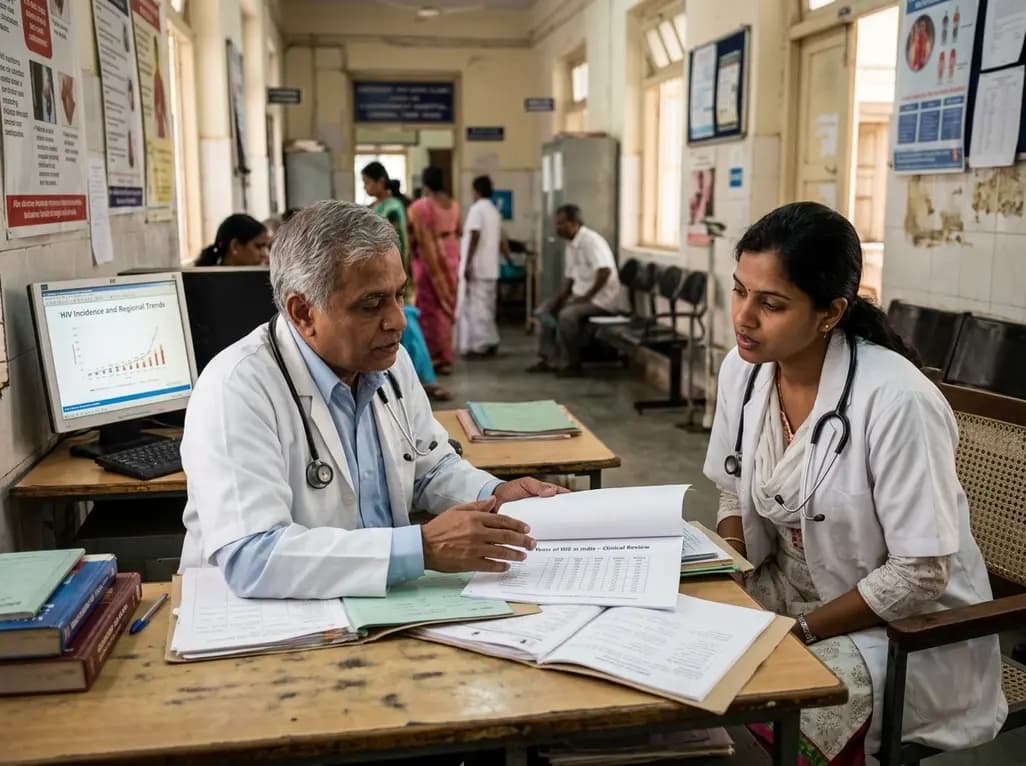
Four decades after India's first detected HIV case, national successes mask persistent regional disparities, maternal seroconversion, and late presentation. Clinicians must adapt strategies to match modern epidemiological realities.
Today
A landmark study of 1,333 patients demonstrates that aortic root preservation provides robust 10-year durability in acute type A aortic dissection, even with significant baseline aortic regurgitation. Preoperative regurgitation did not independently increase early mortality.
Today
A propensity-matched study reveals that patients with severe generalized ligamentous laxity experience a slower recovery trajectory after hip arthroscopy for femoroacetabular impingement. While final two-year outcomes remain favorable, tailored rehabilitation and capsular management are critical.
Today
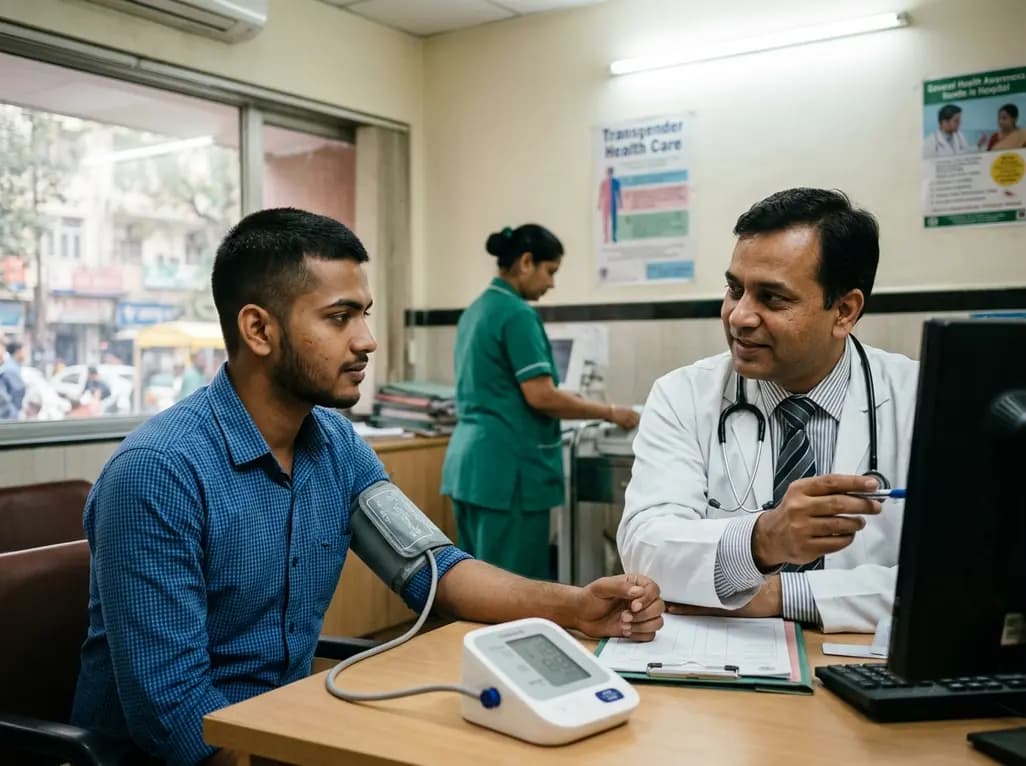
Groundbreaking research examines the distinct and combined effects of gender minority stress and testosterone therapy on acute blood pressure reactivity in transgender and nonbinary adults assigned female at birth, providing vital insights into cardiovascular risk stratification.
Today
