.webp&w=384&q=75)

Loading, please wait...
Loading, please wait...

Parental burnout impacts families in profound ways, often leading to a significant decline in caregiving quality. This condition involves chronic exhaustion, emotional distancing, and a sense of inadequacy in the parenting role. Specifically, researchers have identified that burnout exists as a distinct phenomenon, separate from general mental health issues like depression or anxiety. In families already at risk of child abuse or neglect, these stressors can exacerbate negative parenting behaviors. Consequently, clinicians must recognize the specific signs of burnout to provide targeted support to struggling caregivers.
A recent study focused on 140 Australian caregivers referred to parenting support programs. These families faced challenges such as substantiated child abuse or significant behavioral issues in their children. The results indicated that total burnout was uniquely associated with fewer positive parenting behaviors, such as warmth and involvement. Moreover, burnout was linked to an increase in negative behaviors, including coercion and hostility. These findings remained significant even after accounting for the parent's mental health status and the child's externalizing behaviors.
Medical professionals should understand that parental burnout acts as an independent obstacle to healthy parenting. While depression and anxiety certainly play a role, they do not fully explain the exhaustion that many parents feel. For instance, the study found that emotional distancing and a perceived decline in parenting capacity were the strongest predictors of reduced parental warmth. Furthermore, exhaustion and self-contrast were directly linked to more hostile parenting practices. Because of this, screening for burnout specifically is essential for effective family intervention.
In addition, the interaction between burnout and a child's externalizing behaviors did not significantly alter the outcome. This suggests that burnout impacts parenting regardless of how difficult the child's behavior might be. Therefore, practitioners in pediatrics and psychiatry should look beyond child-centered issues. They must address the caregiver's internal state of exhaustion to prevent further family dysfunction. Ultimately, early identification of burnout can help mitigate the risk of child abuse and neglect in vulnerable populations.
The primary signs include physical and emotional exhaustion related to parenting, emotional distancing from children, and a perceived loss of accomplishment or decline in parenting capacity.
Yes, research shows that parental burnout is a unique condition. While it can co-occur with depression, it is specifically tied to the parental role and can exist independently of general mental health symptoms.
Clinicians can support parents by conducting specific screenings for burnout, recommending peer support groups, and teaching stress-regulation techniques tailored to caregiving challenges.
Disclaimer: This content is for informational and educational purposes only. It is not intended to provide medical advice or to be a substitute for professional medical advice, diagnosis, or treatment. Refer to the latest local and national guidelines for clinical practice.
References
Ryan KM et al. Burnout as an obstacle to parenting in families at risk of child abuse or neglect: Associations unique from parent mental health symptoms and child externalizing. Child Abuse Negl. 2026 May 21. doi: undefined. PMID: 42166823.
Mikolajczak M, Roskam I. A Theoretical and Clinical Framework for Parental Burnout: The Balance Between Risks and Resources (BR2). Front Psychol. 2018;9:886.
Vigouroux S, Scola C. Differences in Parental Burnout: Influence of Demographic Factors and Personal Resources of the Parent. Frontiers in Psychology. 2018;9.

Read summarized clinical updates, watch expert medical content, and earn CME certifications right from your smartphone.
Open your smartphone camera to scan and install.





A study reveals that parental burnout uniquely drives negative parenting behaviors, independent of mental health issues, in families at risk of child abuse....
5 months ago
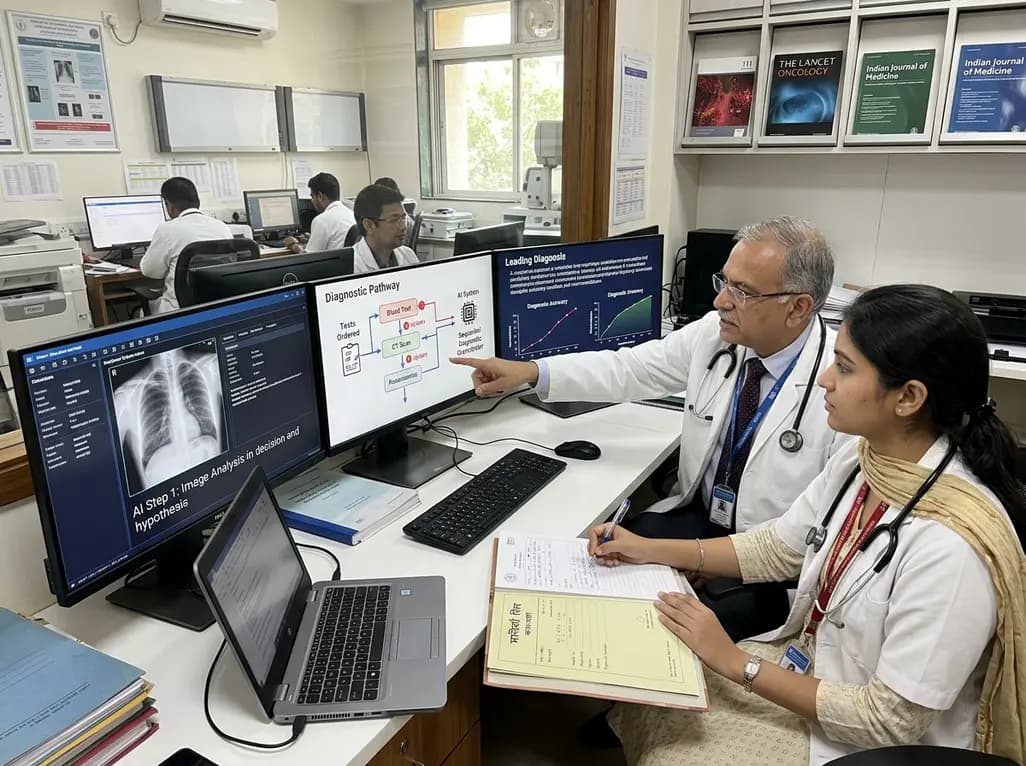
A breakthrough peer-reviewed study demonstrates that a sequential AI diagnosis system can mirror real-world clinical reasoning. By ordering stepwise tests and updating hypotheses dynamically, this multi-agent orchestrator achieved superior diagnostic accuracy while reducing investigative costs.
Today

A prenatal case highlights severe glutaric acidemia type II presenting as bilateral hyperechoic cystic kidneys at 18 weeks. Whole-exome sequencing revealed a novel homozygous ETFDH frameshift variant, demonstrating the power of rapid genetic testing in fetal renal anomalies.
Today

Review how tailored exercise programs benefit frail older patients with heart failure. Explore pathophysiological mechanisms, individualized training prescriptions, and strategies to overcome adherence barriers in clinical practice.
Yesterday

This comparative study evaluates posterior labral tears with and without glenohumeral instability, highlighting distinct demographic patterns, MRI underestimation in stable shoulders, and successful arthroscopic repair outcomes.
Yesterday

A clinical study demonstrates that early intervention with tocilizumab, either as monotherapy or bridged with corticosteroids, achieves significant proptosis reduction and resolves active inflammation in treatment-naive thyroid eye disease.
Yesterday
