

Loading, please wait...
Loading, please wait...

Parent-child separation represents a profound psychosocial disruption with lasting consequences for pediatric emotional and mental health. Modern economic pressures, rural-to-urban labor migration, and domestic crises frequently force parents to part with their dependent offspring. Consequently, millions of children navigate essential developmental milestones without immediate maternal or paternal guidance. This physical absence destabilizes primary attachment bonds and introduces chronic toxic stress during vulnerable formative years. Furthermore, healthcare providers encounter children presenting with psychosomatic complaints, severe depressive withdrawal, and heightened anxiety linked directly to prolonged separation. Although parental departure typically aims to improve household economic security, it unintentionally creates profound emotional vulnerabilities. Research shows that disrupted attachment alters neurobiological stress regulation systems in developing minds. Therefore, pediatric clinicians must view parental absence as a substantial clinical determinant of developmental pathology rather than an isolated social phenomenon. In addition, timely clinical recognition enables medical teams to formulate supportive strategies before maladaptive psychological patterns solidify.
To clarify these complex dynamics, investigators conducted a rigorous umbrella review of meta-analyses published through late 2023. The authors systematically searched five prominent international and regional literature databases, including PubMed, Web of Science, Scopus, EBSCO, and CNKI. Furthermore, the researchers utilized Comprehensive Meta-Analysis software to synthesize statistical evidence across diverse global cohorts. The final analysis identified 28 eligible meta-analyses comprising 746,175 pediatric participants and assessing 170 distinct outcome measures. Consequently, this expansive synthesis provides an unparalleled overview of mental health risks associated with familial disruption. Notably, the investigators systematically managed data overlap among the included reviews to eliminate redundant participant weighting. While a substantial proportion of primary studies originated from Chinese cohorts, the psychological mechanisms reflect universal attachment disruptions. Therefore, the compiled data supply primary care clinicians and pediatric specialists with a robust empirical baseline. These quantitative findings illuminate the widespread developmental impact of parental absence across various child age brackets.
The pooled results demonstrate significant, multifaceted psychiatric risks in children experiencing parent-child separation. Specifically, separated youth exhibited a higher susceptibility to emotional problems, yielding an effect size of d = 0.22. In addition, the umbrella review revealed elevated risks for cognitive impairment, with an effect size of d = 0.20. Behavioral dysregulation also posed a substantial threat to child well-being, demonstrating an effect size of d = 0.21. Furthermore, researchers identified an elevated risk for psychosis symptoms, which reached an effect size of d = 0.22. These parallel elevations across affective, cognitive, and perceptual domains indicate widespread neurodevelopmental strain. Notably, after investigators adjusted for overlapping study data, statistical disparities for certain emotional metrics attenuated. However, the overarching clinical burden across behavioral and cognitive spheres remained consistently elevated and clinically meaningful. Consequently, medical practitioners must avoid dismissing these symptoms as temporary developmental phases. Instead, clinicians should recognize these manifestations as interconnected expressions of developmental distress requiring structured evaluation.
A child's psychological vulnerability following separation depends on an intricate interplay of individual, familial, and community determinants. The review revealed that personal factors, including emotional reactivity and coping styles, correlate moderately with psychiatric distress. Similarly, social factors such as peer acceptance, school environment, and community resources show moderate positive correlations with problem behaviors. Meanwhile, familial variables exert distinct influences across different clinical symptom categories. Family dynamics exhibited a moderate positive correlation with emotional problems, demonstrating a correlation coefficient of z = 0.20. Conversely, family determinants showed a weaker positive correlation with overt behavioral infractions, yielding a coefficient of z = 0.13. Consequently, emotional dysregulation reflects intimate domestic distress, whereas externalizing behavioral challenges often stem from broader communal pressures. Furthermore, financial strain and caregiver exhaustion often diminish the quality of care provided by substitute guardians. Therefore, healthcare providers must evaluate the broader household and community ecosystem when assessing separated children.
Interpreting umbrella reviews requires thoughtful attention to methodological parameters and inherent epidemiological limitations. Notably, when researchers adjusted for overlapping cohorts across meta-analyses, differences in emotional problems between separated and non-separated children lost statistical significance. This adjustment underscores the presence of shared primary data among published meta-analyses, which can artificially inflate perceived effect sizes. Furthermore, the overwhelming majority of primary studies originated in China, reflecting rural-to-urban labor migration patterns. Consequently, clinicians must exercise caution when extrapolating these specific numerical findings to other global healthcare environments. Variations in cultural stigma, substitute caregiving traditions, and domestic legal systems influence how children adapt to parental absence. In addition, existing studies frequently rely on self-reported questionnaires rather than standardized, clinician-administered diagnostic interviews. Nevertheless, the consistent elevation across behavioral, cognitive, and psychotic outcomes highlights genuine clinical vulnerability. Understanding these methodological nuances prevents clinicians from either underestimating risks or adopting fatalistic diagnostic assumptions.
Mitigating the adverse psychological consequences of parent-child separation demands active collaboration across clinical, educational, and social systems. Pediatricians and family physicians should integrate routine psychosocial screenings into everyday clinical encounters with vulnerable children. Furthermore, medical practitioners must identify substitute caregivers, offering them practical education on trauma-informed discipline and emotional validation. Because persistent communication sustains emotional attachment, clinicians should encourage regular, scheduled phone calls or video interactions between parents and offspring. In addition, schools must establish structured counseling programs, anti-bullying initiatives, and peer-mentorship groups to support affected students. Community health centers can also provide targeted resources to alleviate caregiver strain among elderly grandparents. When children manifest escalating conduct issues, depressive withdrawal, or cognitive decline, providers must ensure rapid referral to child psychiatrists. Ultimately, proactive community-wide interventions create protective buffers that preserve neurodevelopmental resilience despite prolonged familial separation.
Prolonged parental separation disrupts emotional stability and foundational cognitive growth during critical developmental windows. Consequently, affected children frequently demonstrate executive dysfunction, reduced memory retention, and low classroom engagement. In addition, persistent psychological stress interferes with neural synaptic pruning, which ultimately impairs academic performance and increases school dropout rates among vulnerable youth.
Clinicians must proactively screen separated children for persistent withdrawal, unexplained somatic pains, sleep disturbances, and sudden drops in school grades. Furthermore, providers should identify externalizing symptoms such as aggression, oppositional behavior, or emotional volatility. Early structured screening tools help pediatric teams distinguish transient adjustment difficulties from severe depressive or anxiety disorders.
Effective community models combine school-based counseling programs with continuous caregiver training and structured peer support circles. Moreover, establishing regular telecommunication channels between migrant parents and children rebuilds attachment security. Community health workers also provide vital home visits, ensuring that local guardians receive practical resources to handle emerging behavioral and emotional difficulties.
Disclaimer: This content is for informational and educational purposes only and does not substitute for professional medical advice, diagnosis, or treatment. Refer to the latest local and national guidelines for clinical practice.
References

Read summarized clinical updates, watch expert medical content, and earn CME certifications right from your smartphone.
Open your smartphone camera to scan and install.





An umbrella review of 28 meta-analyses reveals that parent-child separated children face significantly elevated risks for emotional, cognitive, behavioral, and psychotic disorders. Clinicians and communities must implement proactive screenings and targeted psychosocial interventions to protect child development.
Today

A landmark study reveals that 20 minutes of moderate aerobic exercise shields episodic memory encoding as effectively as a 90-minute nap after 30 hours of sustained wakefulness, offering clinicians and shift workers a viable neuroprotective strategy against acute sleep loss.
Today

Biotechnology researchers in India are developing an automated liquid biopsy platform to detect cervical malignancy from blood samples. Supported by the MAHA MedTech Mission, this initiative applies nanopore sequencing and piRNA biomarker detection to eliminate invasive speculum exams and expand rural screening.
Today
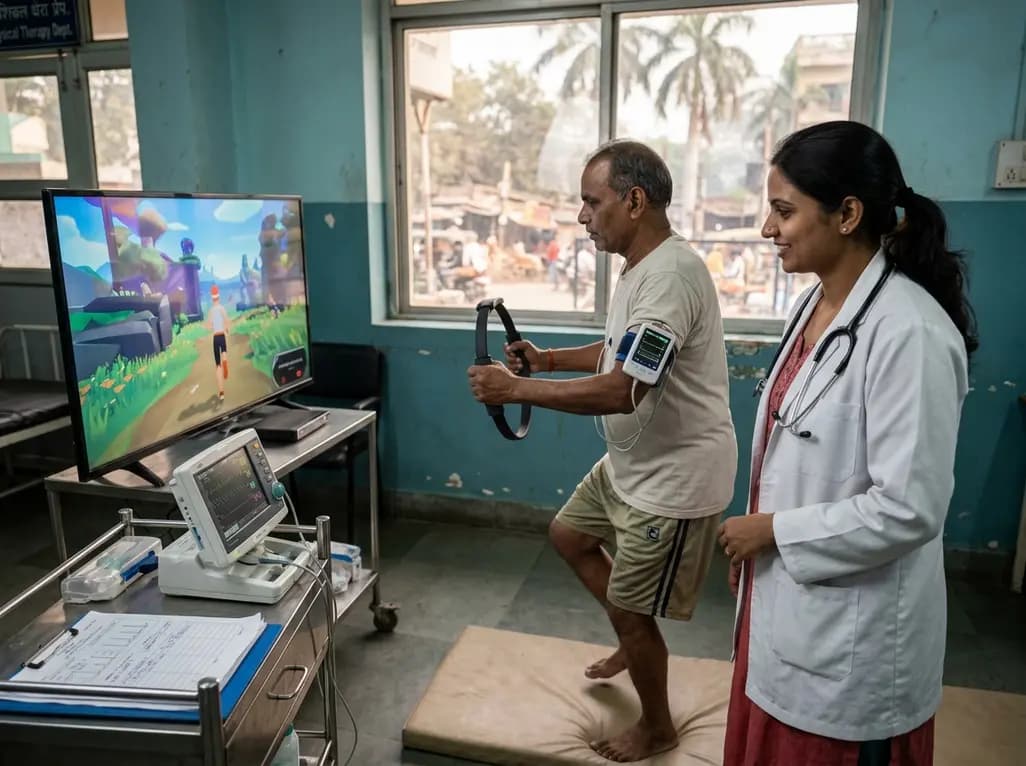
A clinical study evaluated Ring Fit Adventure in adults with chronic conditions, revealing that exergaming achieves moderate-to-vigorous exercise intensity while maintaining hemodynamic stability, high enjoyment, and zero adverse events.
Today

A retrospective cohort study reveals that selecting the touched vertebra as the lowest instrumented vertebra in thoracic adolescent idiopathic scoliosis yields a 20.8% distal add-on rate, driven by remnant motion segments and axial rotational discrepancies.
Today

A study evaluates a cardiometabolic HFpEF model combining metabolic stress with chronic mineralocorticoid excess. The findings reveal profound diastolic stiffness, endothelial dysfunction, and pulmonary hypertension, illuminating key pathophysiological mechanisms for targeted cardiopulmonary therapies.
Today
