

Loading, please wait...
Loading, please wait...

Sleep deprivation impairs neural plasticity and severely disrupts our ability to acquire new information. Consequently, clinicians, trainees, and night-shift workers frequently endure impaired recall and severe mental fatigue. Fortunately, emerging research indicates that aerobic exercise and memory preservation share an actionable physiological link. A recent clinical study published in the Proceedings of the National Academy of Sciences reveals that a short workout can protect cognitive encoding after extended wakefulness. Therefore, understanding this simple intervention offers practical tools for sustaining memory under extreme sleep debt. Moreover, adopting evidence-based fatigue mitigation strategies helps clinicians preserve cognitive function during demanding night calls.
Extended wakefulness imposes a severe biological toll on synaptic function and information processing. When individuals remain awake for 30 consecutive hours, the cerebral cortex experiences marked neural exhaustion. Specifically, prolonged wakefulness disrupts the delicate balance between synaptic potentiation and structural downscaling. Consequently, the brain struggles to encode novel episodic memories during sustained periods of sleep deprivation. Medical specialists routinely note that sleep loss causes prominent brain fog, persistent fatigue, and unpredictable mood dysregulation.
Moreover, deep non-rapid eye movement sleep typically consolidates factual episodic memories into permanent cortical storage. Similarly, rapid eye movement sleep stabilizes emotional processing and complex neurochemical pathways. Therefore, when people miss entire sleep cycles, hippocampal circuits fail to process incoming environmental stimuli efficiently. Clinical experts highlight that acute sleep loss degrades attention spans and significantly slows mental reaction times. As a result, critical details slip away before consolidation can occur. Furthermore, chronic sleep restriction creates cumulative cognitive deficits that heighten long-term neuropsychiatric vulnerabilities. In addition, healthcare providers must recognize that unmitigated sleep deficits erode diagnostic precision and patient communication. Understanding how to counteract this initial encoding breakdown remains vital for medical professionals and patients alike.
To evaluate non-pharmacological countermeasures, investigators designed a rigorous randomized controlled trial involving 53 healthy young adults. Participants remained awake under continuous laboratory monitoring for 30 consecutive hours. Afterward, researchers divided the cohort into three distinct experimental groups to measure cognitive resilience. The first cohort engaged in 20 minutes of moderate-to-vigorous cardiovascular exercise on a stationary bicycle. Meanwhile, the second group received an opportunity for a 90-minute therapeutic nap. In contrast, the control group sat quietly on stationary bicycles for 20 minutes without pedaling.
Immediately following these interventions, all participants viewed a complex series of novel visual images. Three days later, researchers administered an unexpected memory recognition test to quantify long-term retention. Remarkably, the exercise cohort correctly identified 56% of the target images despite extreme sleep loss. In comparison, the control group only achieved a 46% recognition accuracy rate. This difference represents a notable 22% improvement in episodic memory performance among exercising participants. Thus, aerobic exercise and memory protection demonstrated a powerful relationship under acute physiological stress. Additionally, testing memory three days later proved that exercise stimulated lasting memory consolidation rather than temporary alertness. Ultimately, the trial confirmed that brief physical exertion effectively safeguards memory formation after severe sleep deprivation.
Sleep medicine specialists frequently consider daytime naps the gold standard intervention for overcoming acute sleep deficits. In this landmark study, participants allocated to the 90-minute nap achieved a 57% image recognition rate. Consequently, their performance virtually matched the 56% success rate recorded in the exercise cohort. Statistical analysis revealed no significant difference between the benefits of napping and aerobic activity. Therefore, a brief workout served as a potent surrogate when sleep opportunity remained entirely absent.
However, clinical experts emphasize that these two strategies deliver distinct operational advantages depending on practical circumstances. While a 90-minute nap restores alertness, it requires dedicated sleeping facilities and significant uninterrupted time. Furthermore, naps can induce post-awakening sleep inertia, temporarily impairing cognitive speed and motor reflexes. In contrast, 20 minutes of cycling elevates heart rate immediately without producing grogginess. Hence, physical activity provides an accessible option during busy emergency rotations or demanding industrial work shifts. Nevertheless, sleep specialists caution that physical activity cannot fully substitute for genuine restorative slow-wave sleep. Instead, clinicians should view exercise as an acute rescue measure during unavoidable sleeplessness. Accordingly, physicians can tailor countermeasures to fit specific clinical environments and acute schedule constraints. Balancing physical movement with eventual recovery sleep remains essential for systemic health.
Although both interventions yielded nearly identical behavioural improvements, neuroimaging demonstrated fundamentally divergent underlying mechanisms. Researchers utilized electroencephalography to track cortical electrical oscillations before, during, and after information encoding. In the nap cohort, memory improvements correlated directly with reduced homeostatic sleep pressure. Specifically, slow-wave sleep dissipated accumulated adenosine and eased widespread neural fatigue across the frontal cortex. Thus, sleep refreshed cortical capacity by clearing metabolic strain and restoring baseline neural responsiveness.
Conversely, electroencephalography recordings from the exercise group indicated an entirely different neurophysiological adaptation. Exercise did not diminish subjective sleepiness or reduce homeostatic pressure in the brain. Instead, cardiovascular exertion heightened sensory processing efficiency while individuals observed new information. Increased systemic circulation enhances cerebral blood flow and stimulates neurotrophic factors like brain-derived neurotrophic factor. Consequently, these circulating biochemical signals optimize synaptic plasticity in the hippocampus and surrounding temporal structures. In addition, moderate exercise elevates central catecholamines, including dopamine and noradrenaline. These neurotransmitters sharpen attentional focus and facilitate effective cellular encoding despite high sleep pressure. Therefore, exercise empowers the sleep-deprived brain to process incoming data more efficiently through alternative pathways. Ultimately, this biological divergence highlights how physical movement acts as an independent cognitive modulator.
These experimental findings offer compelling insights for healthcare professionals working extended hospital duties and overnight call. In India, resident physicians and emergency personnel frequently endure continuous 24- to 36-hour shifts. Such chronic sleep debt significantly impairs clinical memory, decision-making, and diagnostic precision. However, hospital wards rarely offer adequate quiet zones for 90-minute restorative naps. Consequently, integrating 15 to 20 minutes of moderate aerobic exercise presents a practical, non-disruptive alternative. A brief bout of brisk walking, stationary cycling, or stair climbing can stimulate cerebral encoding right before rounds.
Nevertheless, medical leaders and sleep clinicians emphasize clear boundaries regarding this temporary physiological buffer. The study examined acute sleep deprivation in young, healthy volunteers under controlled conditions. Therefore, these results might not directly translate to chronic sleep insufficiency or older demographic groups. Furthermore, brief workouts cannot reverse systemic cardiovascular inflammation or endocrine disruptions caused by habitual sleep deficits. Indian medical experts stress that seven to eight hours of consolidated nocturnal sleep remains irreplaceable for long-term health. Hence, clinicians must view physical exercise solely as an acute tactical shield against unavoidable fatigue. Hospital administrators should continue exploring humane shift scheduling alongside supportive wellness interventions. Ultimately, prioritizing employee rest safeguards patient safety and prevents clinical burnout across high-stress departments.
Q1: How does a brief session of aerobic exercise preserve memory formation during acute sleep loss?
Aerobic exercise enhances memory encoding by stimulating central cerebral blood flow and accelerating catecholamine release across cortical regions. Although physical exertion does not diminish subjective tiredness, it sharpens how the brain registers novel external stimuli. Furthermore, exercise elevates neurotrophic factors such as brain-derived neurotrophic factor, which strengthens synaptic plasticity. Consequently, neural circuits in the hippocampus successfully encode incoming information despite the presence of profound systemic exhaustion and prolonged sleep debt.
Q2: Can 20 minutes of aerobic exercise completely replace nocturnal sleep for shift workers?
No, aerobic exercise cannot substitute for genuine nocturnal sleep under any circumstances. While a short workout temporarily preserves episodic memory encoding, it fails to clear cellular waste products or restore deeper neurochemical equilibrium. Furthermore, sustained sleep debt precipitates adverse metabolic effects, cardiovascular strain, and emotional distress. Therefore, clinicians must view exercise merely as an acute coping mechanism during demanding overnight shifts. Ultimately, restoring full neurocognitive function requires adequate slow-wave and rapid eye movement sleep.
Q3: How does the memory protection from exercise compare to a 90-minute therapeutic nap?
Both interventions produce remarkably similar memory preservation, improving delayed image recognition by roughly 22% compared to no intervention. However, their internal biological pathways diverge significantly. Electroencephalography shows that a 90-minute nap dissipates homeostatic sleep pressure and neural fatigue across the frontal cortex. In contrast, aerobic exercise enhances sensory processing and neural efficiency without reducing sleepiness. Thus, both strategies offer equivalent cognitive shielding through completely independent neurobiological pathways during acute wakefulness.
Disclaimer: This content is for informational and educational purposes only. It does not constitute medical advice or replace professional judgment. Refer to the latest local and national guidelines for clinical practice.
References

Read summarized clinical updates, watch expert medical content, and earn CME certifications right from your smartphone.
Open your smartphone camera to scan and install.





A landmark study reveals that 20 minutes of moderate aerobic exercise shields episodic memory encoding as effectively as a 90-minute nap after 30 hours of sustained wakefulness, offering clinicians and shift workers a viable neuroprotective strategy against acute sleep loss.
Today

Biotechnology researchers in India are developing an automated liquid biopsy platform to detect cervical malignancy from blood samples. Supported by the MAHA MedTech Mission, this initiative applies nanopore sequencing and piRNA biomarker detection to eliminate invasive speculum exams and expand rural screening.
Today
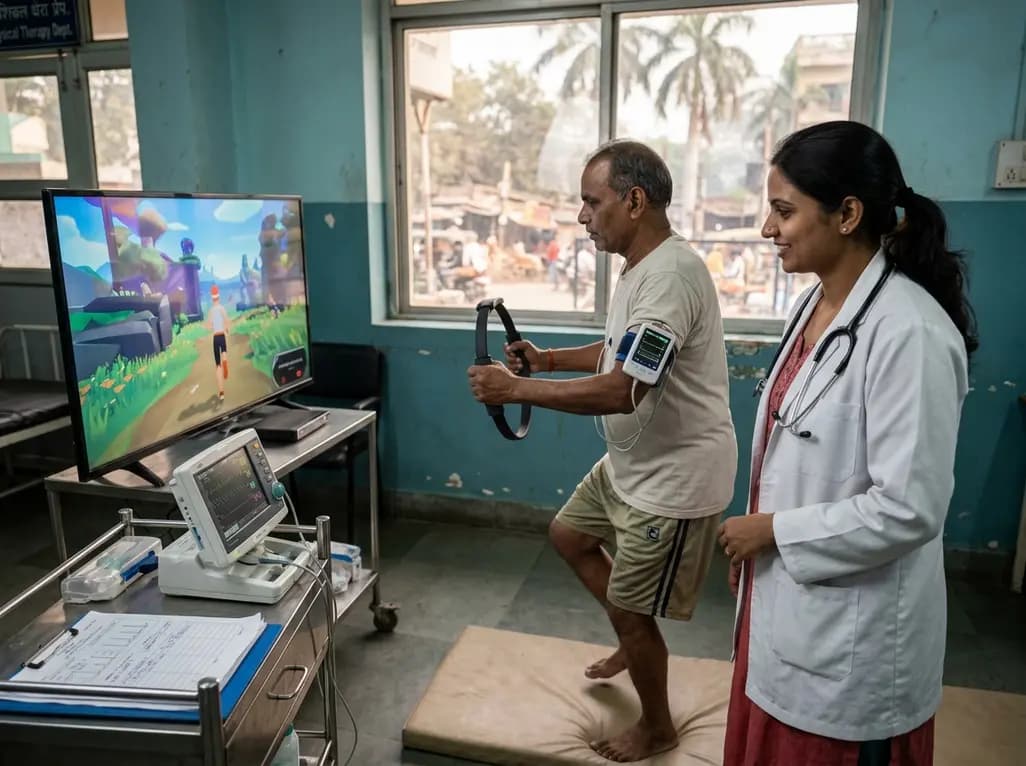
A clinical study evaluated Ring Fit Adventure in adults with chronic conditions, revealing that exergaming achieves moderate-to-vigorous exercise intensity while maintaining hemodynamic stability, high enjoyment, and zero adverse events.
Today

A retrospective cohort study reveals that selecting the touched vertebra as the lowest instrumented vertebra in thoracic adolescent idiopathic scoliosis yields a 20.8% distal add-on rate, driven by remnant motion segments and axial rotational discrepancies.
Today
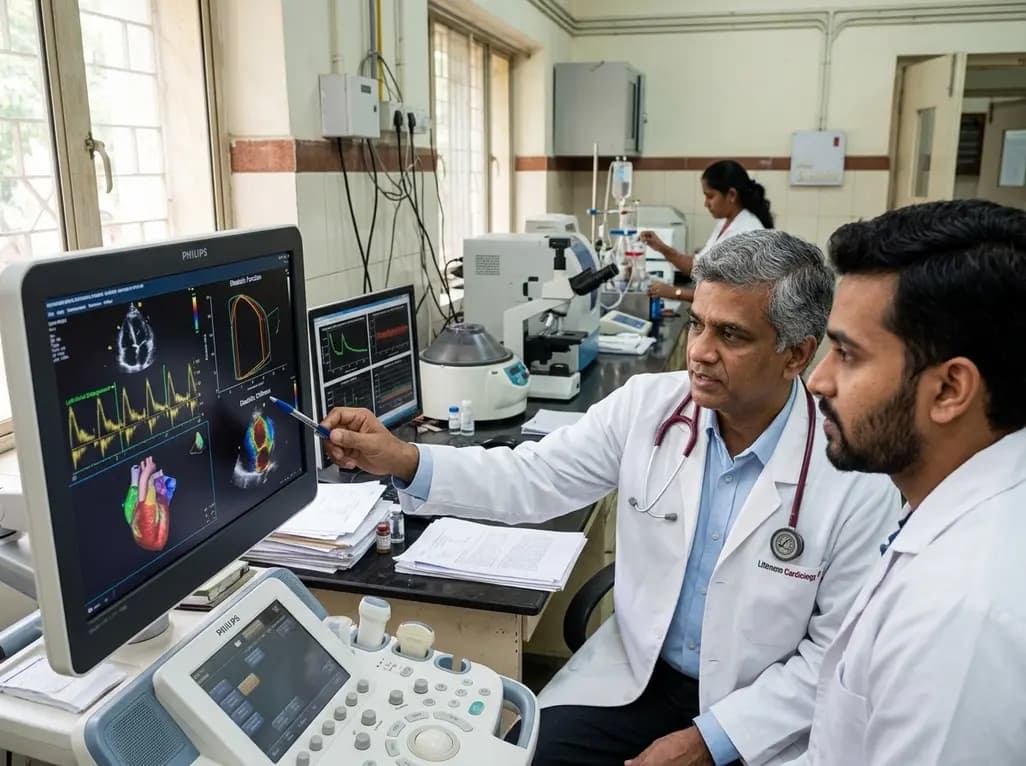
A study evaluates a cardiometabolic HFpEF model combining metabolic stress with chronic mineralocorticoid excess. The findings reveal profound diastolic stiffness, endothelial dysfunction, and pulmonary hypertension, illuminating key pathophysiological mechanisms for targeted cardiopulmonary therapies.
Today
