.webp&w=384&q=75)

Loading, please wait...
Loading, please wait...

The COVID-19 pandemic significantly intensified maternal mental health distress among diverse populations, as revealed by a longitudinal study in the Boston Birth Cohort. Researchers analyzed data from over 3,000 predominantly low-income, racially, and ethnically diverse mothers. They aimed to assess how the global crisis impacted both immediate and long-term clinical encounters. The results underscore a profound shift in how these women accessed healthcare during the most critical phases of the pandemic.
During 2020, mental health encounter incidence soared by 56% compared to pre-pandemic levels. This trend continued into 2021, showing a persistent 37% increase. In contrast, primary care and non-mental health subspecialty visits declined sharply in 2020. However, these services largely recovered by 2021. Emergency department visits remained low throughout both years, suggesting that patients actively avoided hospital settings. Telemedicine emerged as the primary modality for delivering mental health services, bridging the gap when in-person care was restricted.
The study findings highlight an urgent need for sustainable mental health strategies. Specifically, nearly 40% of the mothers reported significantly higher stress levels during the pandemic. Because this population faced unique socioeconomic stressors, the impact was particularly severe. Consequently, healthcare systems must now prioritize long-term preparedness to support vulnerable mothers. Telemedicine has proven to be an effective tool, but it requires further integration into standard care models.
Policy implications suggest that clinicians should focus on screening for lingering psychological impacts. Since the pandemic altered healthcare-seeking behaviors, identifying those who missed routine care is essential. Furthermore, the reliance on virtual care necessitates better digital infrastructure for low-income communities. Ultimately, addressing the disparities exposed by the pandemic will improve future resilience and maternal well-being.
While mental health encounters increased by 56% in 2020, visits for primary care and subspecialties initially dropped. Emergency department usage also saw a significant and sustained decline throughout the study period.
Telemedicine allowed for continuity of care during lockdowns and reduced the fear of infection. It became the dominant modality for mental health services, helping to address the surge in maternal mental health distress when in-person options were limited.
Disclaimer: This content is for informational and educational purposes only and does not constitute medical advice or a professional relationship. Always seek the advice of a qualified healthcare provider regarding any medical condition. Refer to the latest local and national guidelines for clinical practice.
References
1. Rusk SA et al. A Longitudinal Study of the COVID-19 Pandemic's Impact on Medical and Mental Health Care Encounters in the Boston Birth Cohort. J Womens Health (Larchmt). 2026 Mar 11. doi: 10.1177/15409996261428521. PMID: 41813596.
2. Ahrens KF et al. Utilization of mental health services during the first year of the COVID-19 pandemic – a systematic review and meta-analysis. European Psychiatry. 2026; 69(1): e10. doi: 10.1192/j.eurpsy.2025.10119.
3. Kaiser Family Foundation (KFF). Telehealth Has Played an Outsized Role Meeting Mental Health Needs During the COVID-19 Pandemic. Published March 15, 2022.

Read summarized clinical updates, watch expert medical content, and earn CME certifications right from your smartphone.
Open your smartphone camera to scan and install.





A longitudinal study finds a 56% surge in mental health encounters among diverse mothers during COVID-19, highlighting the shift toward telemedicine....
7 months ago
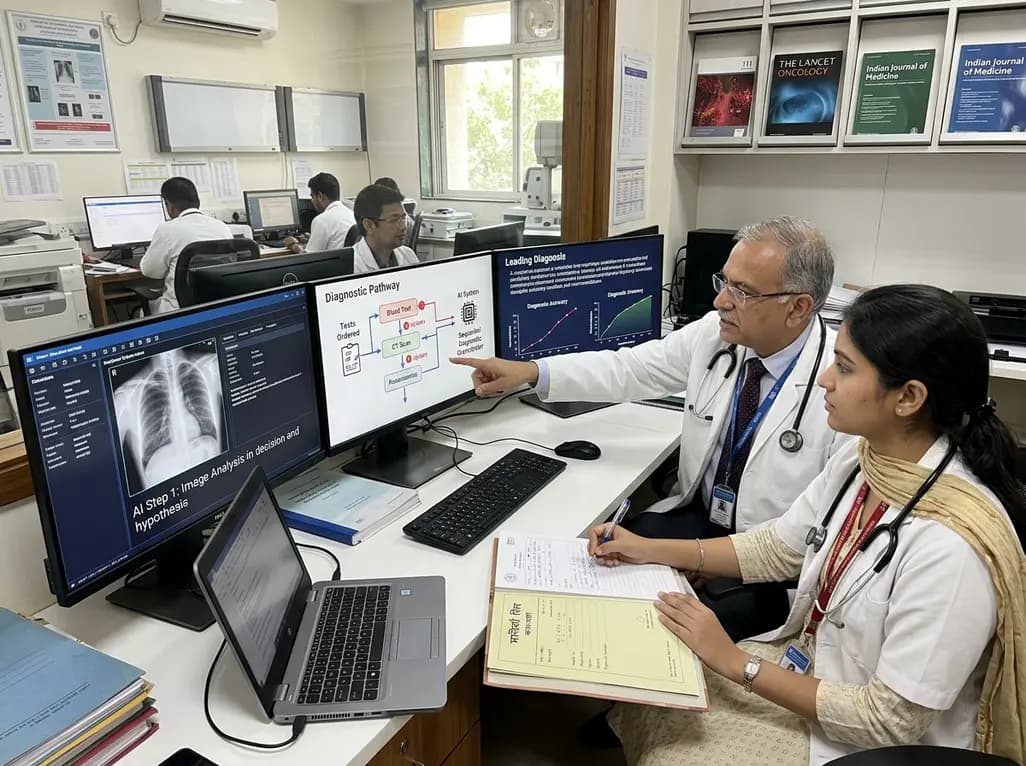
A breakthrough peer-reviewed study demonstrates that a sequential AI diagnosis system can mirror real-world clinical reasoning. By ordering stepwise tests and updating hypotheses dynamically, this multi-agent orchestrator achieved superior diagnostic accuracy while reducing investigative costs.
Today

A prenatal case highlights severe glutaric acidemia type II presenting as bilateral hyperechoic cystic kidneys at 18 weeks. Whole-exome sequencing revealed a novel homozygous ETFDH frameshift variant, demonstrating the power of rapid genetic testing in fetal renal anomalies.
Today

Review how tailored exercise programs benefit frail older patients with heart failure. Explore pathophysiological mechanisms, individualized training prescriptions, and strategies to overcome adherence barriers in clinical practice.
Yesterday

This comparative study evaluates posterior labral tears with and without glenohumeral instability, highlighting distinct demographic patterns, MRI underestimation in stable shoulders, and successful arthroscopic repair outcomes.
Yesterday

A clinical study demonstrates that early intervention with tocilizumab, either as monotherapy or bridged with corticosteroids, achieves significant proptosis reduction and resolves active inflammation in treatment-naive thyroid eye disease.
Yesterday
