.webp&w=384&q=75)

Loading, please wait...
Loading, please wait...

Integrating home-based palliative care (PC) allows patients to remain in familiar surroundings while significantly reducing healthcare costs. However, achieving high-quality outcomes depends heavily on palliative care nursing competence and self-efficacy. A recent cross-sectional study explored these constructs among home care nurses in Ontario. The findings indicate that while nurses feel capable in certain domains, significant gaps remain in others, particularly concerning holistic and spiritual support. Consequently, identifying these gaps is essential for improving end-of-life care delivery.
The research utilized two validated survey tools to assess nurses' perceptions. Specifically, researchers employed the Palliative Care Nursing Self-Competence scale and the Palliative Care Self-Efficacy scale. After analyzing data from registered nurses and registered practical nurses, several key trends emerged. Most participants reported high levels of confidence in functional care. In contrast, spiritual care was consistently identified as the most challenging domain for practitioners. Therefore, addressing these specific areas through targeted education is vital for the nursing workforce.
While functional tasks like physical assistance were viewed as strengths, symptom management presented more hurdles than psychosocial care. Furthermore, a strong positive correlation exists between perceived competence and self-efficacy. This suggests that as a nurse’s sense of professional ability grows, their confidence in handling complex clinical situations also increases. Notably, nurses often feel less prepared for the existential questions that arise during end-of-life care. This highlights a need for curriculum adjustments that emphasize the spiritual and psychological aspects of patient support.
Moreover, the integration of home-based PC fosters deeper family involvement. This involvement requires nurses to possess robust communication skills to manage family expectations effectively. In addition, providing care at home often involves higher autonomy for nurses compared to hospital settings. This independence necessitates a higher baseline of palliative care nursing competence to ensure patient safety and comfort. Future professional development should focus on these psychosocial dimensions to bridge the current gap in comprehensive care.
Continuous training remains the cornerstone of professional growth in palliative care. Because the study found that spiritual care is often neglected, specialized workshops could provide nurses with the tools to initiate meaningful conversations. In addition, mentors can help junior nurses develop self-efficacy in symptom management. Consequently, healthcare organizations must prioritize these educational resources to maintain a high standard of home-based services. By fostering both competence and confidence, home care teams can deliver more compassionate and effective end-of-life support.
Competence refers to the actual knowledge and skills a nurse possesses, while self-efficacy is the individual's belief in their ability to perform those skills successfully in various clinical situations. The two are strongly correlated.
Many nurses report that their formal education lacks sufficient training in existential and spiritual communication. This makes them feel less prepared to address a patient's spiritual distress or religious needs during end-of-life care.
Organizations can focus on longitudinal training programs that target psychosocial and spiritual care domains. Providing regular debriefing sessions and mentorship can also boost a nurse’s self-efficacy in managing complex symptoms at home.
Disclaimer: This content is for informational and educational purposes only. It does not constitute medical advice or establish a doctor-patient relationship. Always seek the advice of a qualified healthcare provider regarding any medical condition or treatment. Refer to the latest local and national guidelines for clinical practice.
References
Ta J et al. Exploring home care nurses' perceived competence and self-efficacy in palliative care delivery: A cross-sectional study. Palliat Support Care. 2026 May 07. doi: 10.1017/S1478951526102594. PMID: 42095321.
de Veer AJ et al. Home care nurses more positive about the palliative care that is provided and their own competence than hospital nurses: a nationwide survey. BMC Palliat Care. 2021;20(1):170.
Osman N, Tekeste H. Nurses' experiences of caring for patients' spiritual health needs in palliative care in India. Diva-portal. 2020.

Read summarized clinical updates, watch expert medical content, and earn CME certifications right from your smartphone.
Open your smartphone camera to scan and install.





A cross-sectional study reveals that home care nurses feel most competent in functional care but face significant challenges in spiritual palliative care....
5 months ago
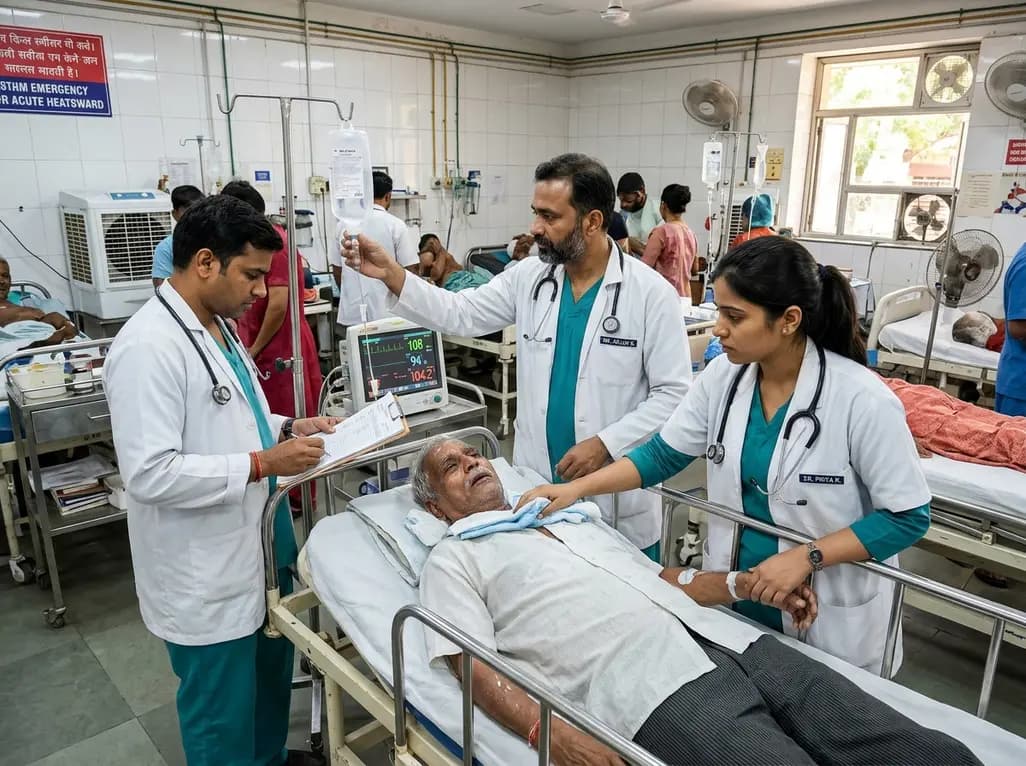
Recent epidemiological data reveals a dramatic surge in summer heat mortality driven by human-induced climate warming. This analysis explores the pathophysiological impacts on cardiac and renal systems, diagnostic dilemmas in death certification, and essential emergency cooling protocols for acute clinical care.
Today
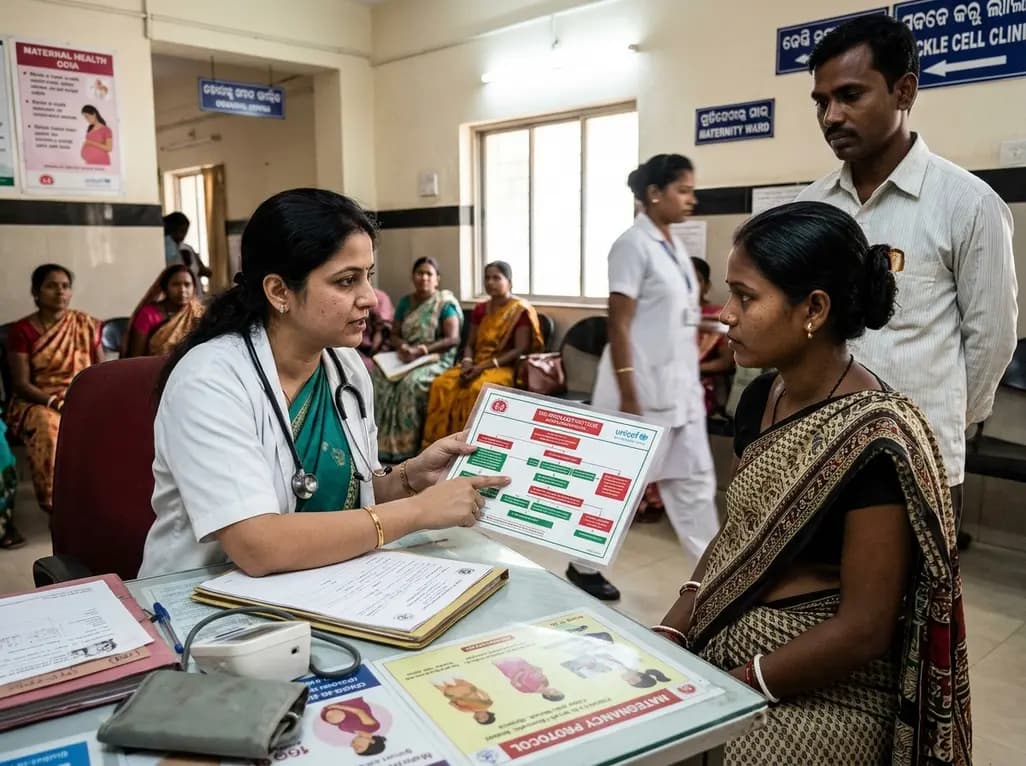
Odisha has established India's first state-level clinical protocol specifically tailored for pregnant women with sickle cell disease. Developed with NHM and UNICEF, the framework provides structured antenatal screening, crisis mitigation, standardized referral pathways, and specialized interdisciplinary care.
Today

India is advancing preventive healthcare by integrating genomics, artificial intelligence, and quantum technologies. With the SANGAM programme sequencing one million Indian genomes, clinicians can unlock personalized therapies, detect cardiometabolic risks early, and curb the burden of diabetes and heart disease.
Today
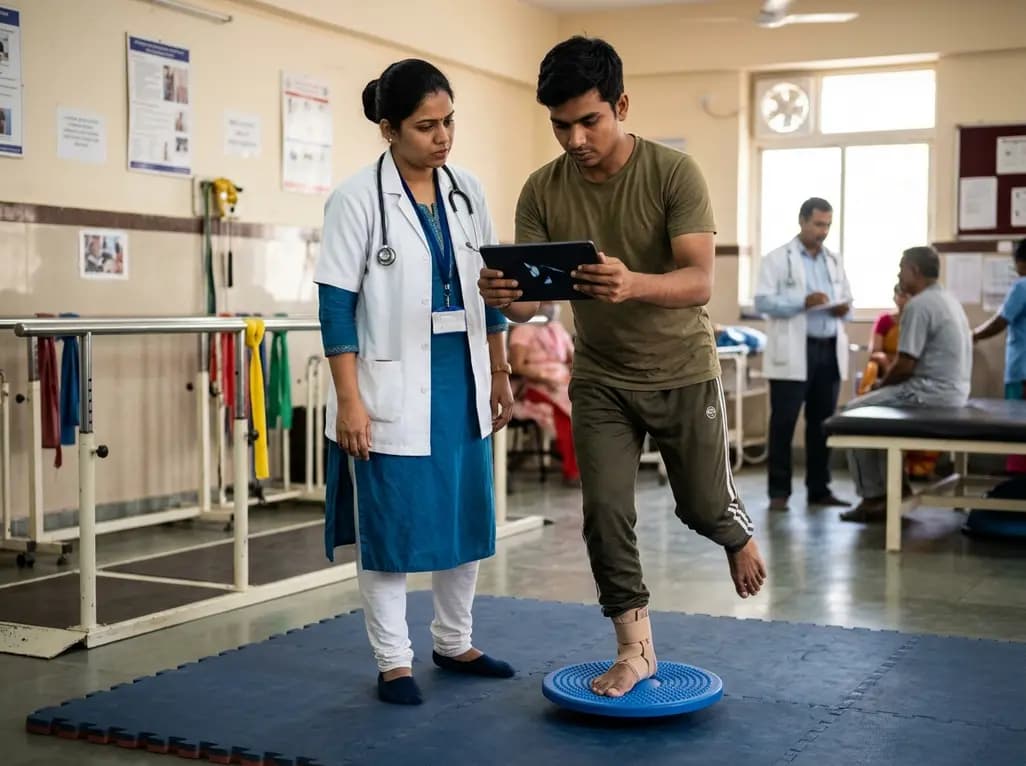
A randomized controlled trial demonstrates that an eight-week dual-task training intervention significantly improves static and dynamic postural control over standard balance exercises in individuals with chronic ankle instability, addressing critical neurocognitive deficits during athletic and daily activities.
Today

A retrospective cohort study of 7,716 ICU patients from the MIMIC-IV database demonstrates that Gradient Boosting Decision Trees significantly outperform traditional SOFA scores in predicting in-hospital mortality among patients with sepsis and diabetes, with SHAP analysis providing clinical interpretability.
Today
