

Loading, please wait...
Loading, please wait...
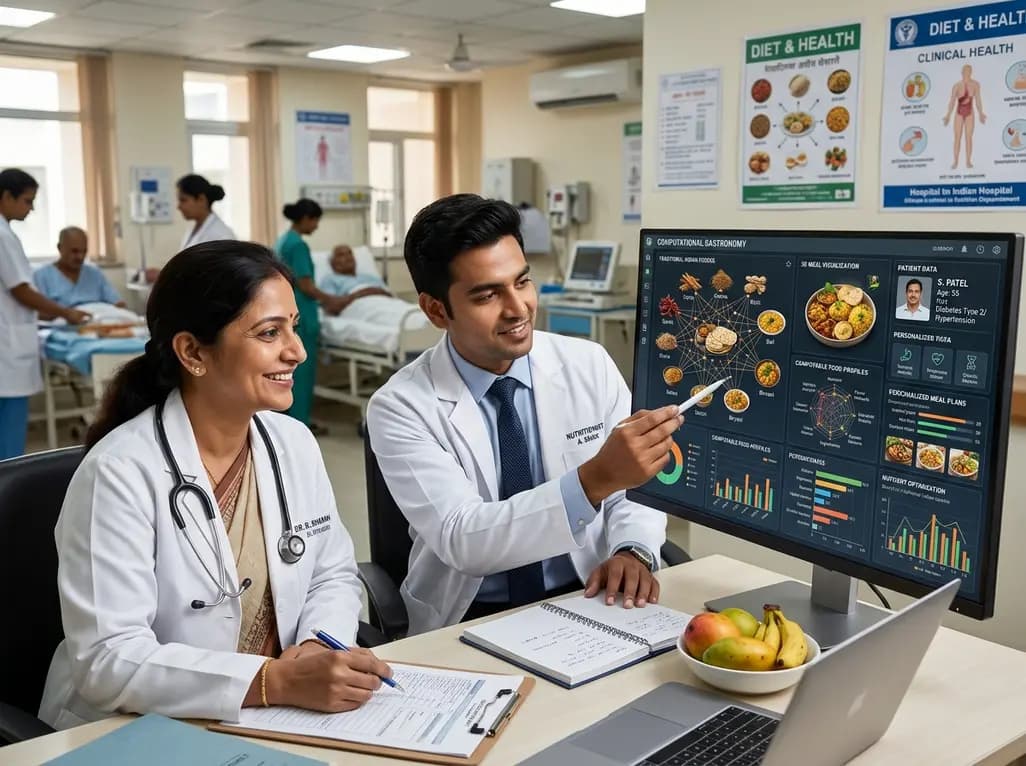
Across modern healthcare, chronic non-communicable diseases remain formidable therapeutic challenges. Recent clinical reports indicate that unhealthy dietary patterns drive 56.4% of India’s overall disease burden. Although physicians prescribe evidence-based pharmacological therapies, patients frequently struggle to sustain essential lifestyle modifications. Consequently, computational gastronomy offers an innovative scientific framework that bridges data science, culinary tradition, and clinical nutrition.
India faces an intricate healthcare crisis characterized by the coexistence of undernutrition and chronic metabolic disorders. Consequently, clinicians observe rising rates of obesity, type 2 diabetes, and cardiovascular diseases alongside persistent micronutrient deficiencies. While clinical pharmacology manages acute symptoms, it cannot correct the foundational dietary imbalances that trigger metabolic dysfunction. Furthermore, the primary clinical barrier is rarely a lack of nutritional awareness. Most patients recognize that excessive sodium, refined sugars, and saturated fats elevate cardiovascular and endocrine risks. However, individuals struggle to translate abstract biochemical requirements into affordable, enjoyable, and sustainable daily meals. Traditional nutrition science tells patients what nutrients their bodies need, yet it fails to prescribe practical culinary solutions. Therefore, medical practitioners require systematic tools that translate nutrient targets into realistic food choices. By shifting focus from nutrient reductionism toward culinary composition, clinicians can guide patients more effectively. This shift enables sustainable dietary changes that preserve patient compliance over decades. Ultimately, addressing chronic disease requires transforming daily dietary habits rather than relying solely on secondary pharmacotherapy. Moreover, when healthcare providers align clinical advice with regional cooking habits, long-term adherence improves substantially across diverse patient populations.
Historically, dietetics has analyzed food primarily through isolated macronutrients and micronutrients like calories, carbohydrates, and proteins. Although this reductionist model provides essential baseline data, it overlooks the complex biochemical matrix of real food. Real meals represent dynamic biological systems that involve intricate flavor compounds, culinary transformations, and digestive kinetics. For example, two dishes with identical caloric profiles often produce drastically different glycemic and satiety responses. Cooking techniques, spice interactions, and food matrices determine actual bioavailability and metabolic impact. Therefore, researchers established computational gastronomy to decipher these multidimensional food networks. This novel field integrates food science, organic chemistry, artificial intelligence, and systems biology. By treating recipes as structured data, machine learning algorithms can uncover hidden patterns across thousands of regional dishes. Furthermore, computational models evaluate ingredient affinities, cooking temperatures, and nutrient degradation during thermal processing. As a result, healthcare researchers can move beyond static nutrient tables toward intelligent recipe engineering. This computational paradigm allows scientists to predict how subtle ingredient substitutions alter both nutritional quality and sensory appeal. Thus, data-driven food intelligence provides actionable insights for preventive health. Consequently, physicians gain access to scientifically validated culinary data that supports targeted dietary counseling.
Traditional culinary systems represent centuries of accumulated cultural knowledge and empirical experimentation. Furthermore, data scientists studying Indian cuisine have identified distinct flavor pairing patterns that contrast sharply with Western traditions. Many Western recipes combine ingredients that share common flavor molecules. In contrast, Indian dishes predominantly combine ingredients with contrasting flavor profiles, heavily moderated by synergistic spices. Spices contribute significant bioactive polyphenols, antioxidants, and anti-inflammatory compounds while establishing cultural identity. However, when patients receive rigid clinical diets, they often abandon them because unfamiliar foods lack cultural resonance. Computational analysis allows researchers to decode the structural grammar of traditional recipes without destroying their sensory characteristics. Consequently, dietitians can reformulate traditional dishes to optimize metabolic profiles while preserving authentic taste and texture. For instance, an algorithm can identify optimal whole-grain substitutions for polished white rice in traditional batter formulations. Similarly, computational systems can adjust lipid profiles in curries without diminishing palatability. Therefore, computational cuisine modeling bridges the divide between clinical nutrition guidelines and traditional culinary pleasure. Patients achieve better glycemic control because they continue eating the foods they genuinely cherish. Moreover, preserving culinary heritage ensures that dietary interventions remain culturally respectful and socially sustainable across diverse communities.
Artificial intelligence tools require robust, peer-reviewed data to generate clinically reliable dietary recommendations. To meet this clinical need, researchers at IIIT-Delhi developed open-access computational repositories. These resources include RecipeDB, FlavorDB, SpiceRx, DietRx, and SustainableFoodDB. Together, these platforms curate extensive information on recipe formulations, volatile flavor compounds, micronutrient densities, and documented disease associations. Furthermore, they link molecular food chemistry with peer-reviewed clinical findings from biomedical literature. Standard generative chatbots frequently fabricate unverified nutritional advice. In contrast, these specialized databases supply structured, validated evidence for machine learning algorithms. Consequently, digital systems can answer complex clinical queries with high precision. For example, an intelligent algorithm can identify precise ingredient substitutions that lower sodium while maintaining savory depth. Additionally, these platforms incorporate environmental sustainability metrics, allowing planners to optimize human health alongside ecological impact. Healthcare organizations can utilize this digital infrastructure to formulate balanced institutional meal plans for hospitals and community clinics. Ultimately, high-quality computational food data ensures that therapeutic lifestyle interventions rest on verifiable biochemical facts. Clinicians can confidently recommend dietary modifications backed by rigorous computational modeling. Thus, these digital knowledge platforms establish the necessary foundation for dependable, evidence-based nutrition science.
Personalized nutrition has advanced rapidly through wearable biosensors, continuous glucose monitoring, and microbiome sequencing. However, identifying an individual's metabolic deficits is only the first step in clinical care. Telling a patient to consume forty grams of dietary fiber daily rarely produces meaningful behavioral change. Patients do not consume abstract grams of fiber; rather, they eat regional dishes like dal, khichdi, and roti. Therefore, the clinical frontier must transition from personalized nutrition to personalized food. An intelligent food platform evaluates an individual's unique metabolic profile, cultural background, economic constraints, and cooking skills. Then, the system generates customized recipe adaptations for familiar, beloved meals. For instance, a patient with diabetic nephropathy requires precise potassium and protein restrictions. An algorithmic system can recalibrate traditional regional recipes to satisfy those therapeutic constraints without sacrificing flavor. Furthermore, public health initiatives can deploy these computational models to design budget-friendly community nutrition programs. As healthcare shifts toward preventive cardiology and endocrinology, computable food will play an indispensable therapeutic role. Nevertheless, artificial intelligence must always augment professional clinical judgment rather than replace licensed dietitians and physicians. Consequently, collaborative partnerships between clinicians and computational scientists will drive the future of preventive healthcare.
Q1: What is computational gastronomy and how does it relate to clinical medicine?
Computational gastronomy is an emerging interdisciplinary science that applies data analytics, artificial intelligence, and chemistry to food and cooking. Instead of treating food merely as isolated nutrients, it models recipes as complex systems. In clinical practice, this computational approach helps physicians and dietitians redesign traditional meals to manage chronic diseases, enhance therapeutic adherence, and prevent non-communicable conditions like diabetes and hypertension.
Q2: Why are standard nutrition prescriptions often ineffective for Indian patients?
Traditional dietary advice frequently relies on abstract nutrient metrics, such as grams of fiber or milligrams of sodium. However, patients eat complex regional dishes shaped by culture, family habits, and affordability. When clinical guidelines mandate unfamiliar foods, long-term adherence drops precipitously. Translating nutrient goals into modified versions of familiar local dishes allows patients to achieve metabolic targets without abandoning their cherished cultural culinary traditions.
Q3: How can artificial intelligence support public health nutrition at a population scale?
Artificial intelligence evaluates vast culinary datasets alongside regional agricultural outputs, local food prices, and population deficiency trends. Consequently, public health agencies can formulate affordable, culturally acceptable meal plans for schools, hospital kitchens, and community programs. By identifying optimal regional ingredient substitutions, these computational models improve dietary diversity, correct micronutrient deficiencies, and lower the incidence of cardiovascular and metabolic diseases across large populations.
Disclaimer: This content is for informational and educational purposes only. It does not constitute medical advice or replace professional judgment. Refer to the latest local and national guidelines for clinical practice.
References

Read summarized clinical updates, watch expert medical content, and earn CME certifications right from your smartphone.
Open your smartphone camera to scan and install.





Explore how computational gastronomy and artificial intelligence transform clinical nutrition. By making food computable, clinicians can tailor culturally acceptable, disease-specific dietary interventions that effectively address India's dual burden of malnutrition and non-communicable diseases.
Today

The GESS-AEEM consensus establishes a clear clinical implementation framework for testosterone therapy in postmenopausal women with hypoactive sexual desire disorder, focusing on transdermal dosing, precise laboratory monitoring, and safety communication.
Today

A Bayesian component network meta-analysis of 130 RCTs reveals that self-monitoring and gamification provide the clearest positive effects in mHealth physical activity interventions, while social comparison may have adverse psychological trade-offs.
Today
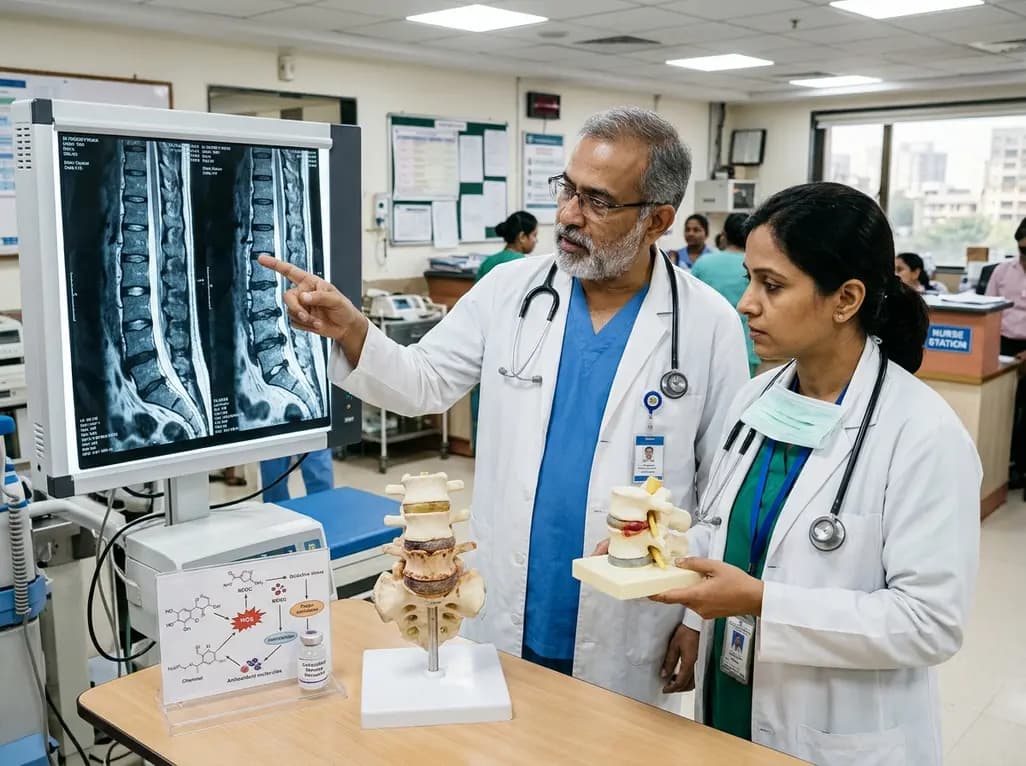
Intervertebral disc degeneration is a primary driver of chronic low back pain. Emerging evidence highlights reactive oxygen species and redox imbalance as central mechanisms. Targeted antioxidant strategies and biomaterial delivery systems offer promising disease-modifying therapies for spine health.
Today
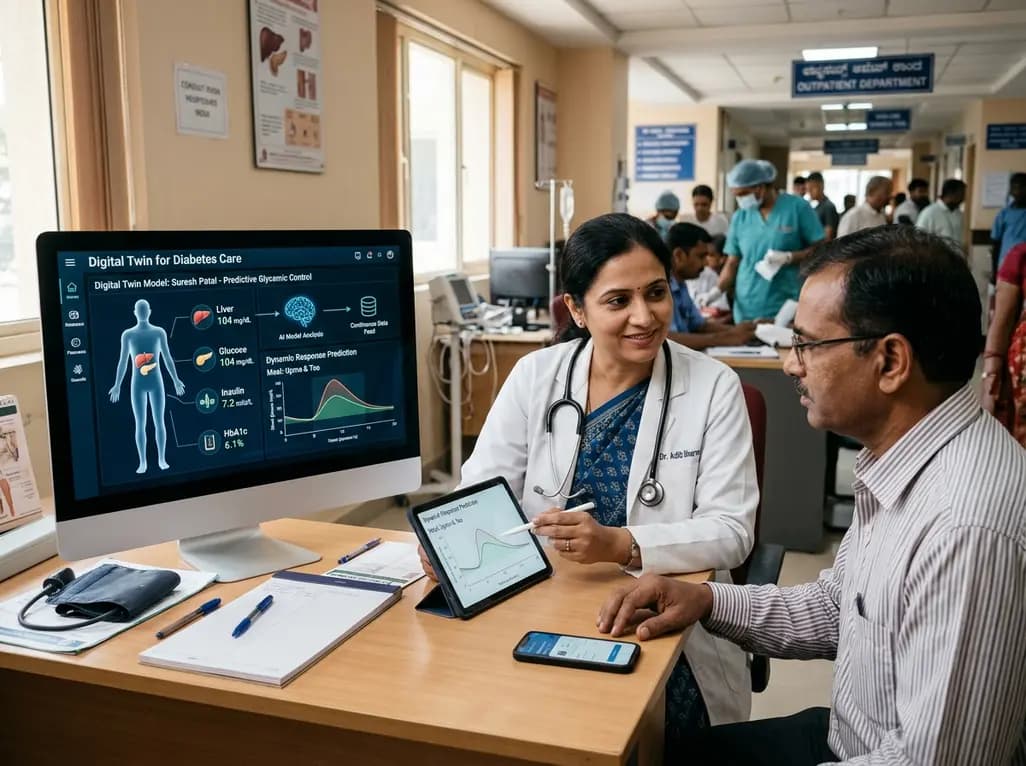
India faces an unprecedented metabolic crisis, with millions living with diabetes and prediabetes. Standard static dietary advice often falls short because individual metabolism fluctuates continuously. AI-driven digital twin models predict meal responses, restore insulin sensitivity, and assist clinical de-escalation.
Today
