.webp&w=384&q=75)

Loading, please wait...
Loading, please wait...

Implementing a standardized Otolaryngology residency curriculum is essential for ensuring uniform knowledge across surgical trainees. Effective didactic education remains a cornerstone of residency programs. However, maintaining a consistent and high-quality educational framework often proves challenging for individual departments. A recent prospective cohort study evaluated the impact of the Otolaryngology Core Curriculum (OCC) on resident and faculty perceptions, providing valuable insights into the benefits of standardized medical education.
The study, conducted at a single residency program between 2023 and 2025, utilized anonymous surveys to compare perceptions before and after the OCC implementation. Researchers measured several variables, including preparation time, confidence in clinical knowledge, and overall curriculum effectiveness. Consequently, the findings highlighted a significant shift in how residents engage with their educational materials.
One of the most striking results was the increase in weekly preparation time. Before the OCC, residents spent an average of 16.3 minutes preparing for didactics. Following implementation, this figure jumped to 83.9 minutes. This shift suggests that a well-structured curriculum encourages deeper engagement and more rigorous self-study among trainees. Furthermore, residents reported significantly higher confidence in their otolaryngology knowledge and felt more comfortable identifying relevant educational resources.
Faculty members also observed tangible improvements in the learning environment. According to the study, faculty perceptions of resident knowledge and engagement levels increased significantly post-implementation. While faculty preparation time did not change drastically, the quality of interaction during didactic sessions appeared to benefit from the standardized framework. This alignment between faculty expectations and resident preparation creates a more dynamic and effective teaching atmosphere.
Interestingly, despite the gains in confidence and preparation, there was no significant change in how residents perceived their preparedness for exams. This finding suggests that while a standardized Otolaryngology residency curriculum improves foundational knowledge and daily engagement, long-term exam readiness may be influenced by additional factors such as individual study habits and the proximity of board examinations. However, the overall improvement in curriculum effectiveness was undeniable.
The success of the OCC highlights the growing need for unified educational platforms in surgical specialties. Standardized modules allow programs to provide high-quality content regardless of local faculty availability or resource constraints. For medical educators in India and globally, these results underscore the value of integrating comprehensive digital curricula to supplement traditional hands-on training. Moreover, such systems provide a clear roadmap for both mentors and mentees, ensuring that no critical area of the specialty is overlooked during the training years.
The OCC is a standardized, comprehensive didactic framework designed to provide otolaryngology residents with a unified foundation of core knowledge through structured modules and case-based learning.
Research indicates that a standardized curriculum significantly increases the time residents spend on weekly didactic preparation and improves their confidence in clinical knowledge.
Yes, the study showed that faculty perceived a significant increase in resident knowledge and engagement during educational sessions following the implementation of the core curriculum.
Disclaimer: This content is for informational and educational purposes only. It is not intended as a substitute for professional medical advice, diagnosis, or treatment. Always seek the advice of your physician or other qualified health provider with any questions you may have regarding a medical condition. Refer to the latest local and national guidelines for clinical practice.
References
1. Epperson MV et al. Assessing the Impact of the Otolaryngology Core Curriculum (OCC): A Pre- and Post-Implementation Analysis. Otolaryngol Head Neck Surg. 2026 Apr 30. doi: 10.1002/ohn.70260. PMID: 42059152.
2. Silverchair and AAO-HNSF. The American Academy of Otolaryngology–Head and Neck Surgery Foundation Launches Game-Changing Education Product. Silverchair News. Aug 2024.
3. AAO-HNSF. Otolaryngology Core Curriculum Overview. entnet.org.

Read summarized clinical updates, watch expert medical content, and earn CME certifications right from your smartphone.
Open your smartphone camera to scan and install.





A study analysis of the Otolaryngology Core Curriculum (OCC) implementation shows improved resident confidence and engagement in training programs....
5 months ago
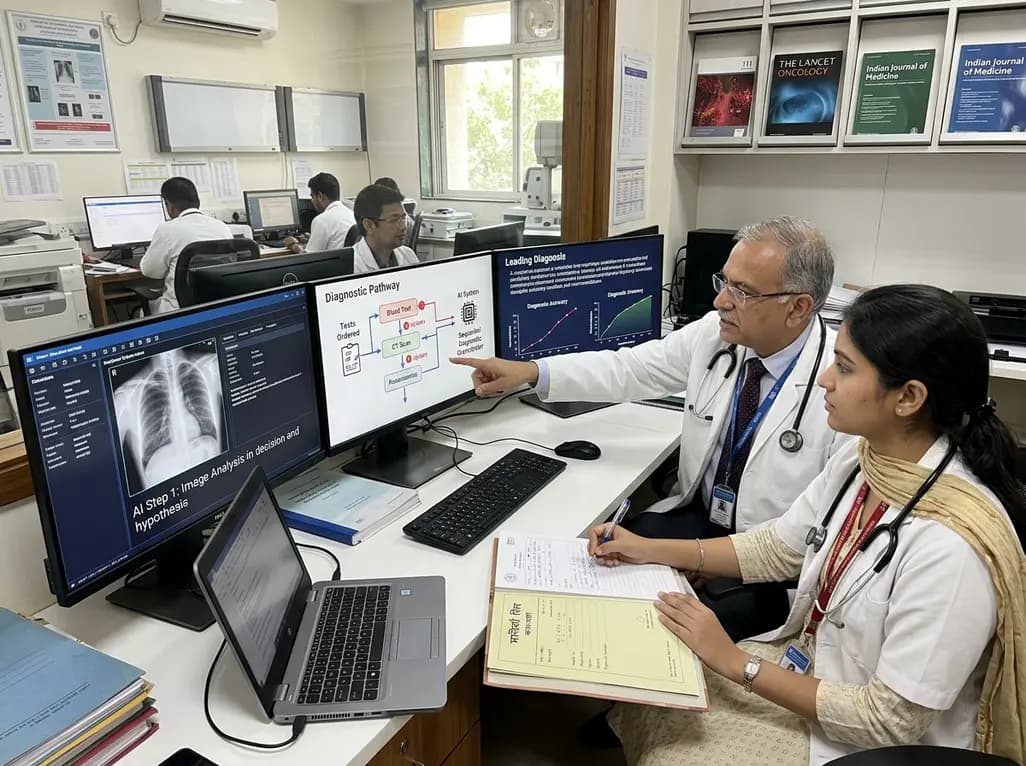
A breakthrough peer-reviewed study demonstrates that a sequential AI diagnosis system can mirror real-world clinical reasoning. By ordering stepwise tests and updating hypotheses dynamically, this multi-agent orchestrator achieved superior diagnostic accuracy while reducing investigative costs.
Today

A prenatal case highlights severe glutaric acidemia type II presenting as bilateral hyperechoic cystic kidneys at 18 weeks. Whole-exome sequencing revealed a novel homozygous ETFDH frameshift variant, demonstrating the power of rapid genetic testing in fetal renal anomalies.
Today

Review how tailored exercise programs benefit frail older patients with heart failure. Explore pathophysiological mechanisms, individualized training prescriptions, and strategies to overcome adherence barriers in clinical practice.
Yesterday

This comparative study evaluates posterior labral tears with and without glenohumeral instability, highlighting distinct demographic patterns, MRI underestimation in stable shoulders, and successful arthroscopic repair outcomes.
Yesterday

A clinical study demonstrates that early intervention with tocilizumab, either as monotherapy or bridged with corticosteroids, achieves significant proptosis reduction and resolves active inflammation in treatment-naive thyroid eye disease.
Yesterday
