.webp&w=384&q=75)

Loading, please wait...
Loading, please wait...

The medical community is currently scrutinizing osteoarthritis exercise effects following new research. A comprehensive analysis suggests that physical activity offers only minimal and short-lived relief for patients. Furthermore, these benefits may not exceed those of no treatment at all. This finding directly challenges global guidelines that promote exercise as a primary intervention. Consequently, researchers are calling for a significant shift in research priorities for managing joint pain.
The study team included experts from Bochum University of Applied Sciences in Germany. They analyzed data from five systematic reviews and 28 randomized clinical trials involving over 12,000 participants. Their findings indicate that the evidence supporting exercise remains largely inconclusive. Specifically, the researchers observed that any recorded benefits were often negligible. Therefore, the durability of exercise as a treatment is now being questioned by many experts in the field.
Evidence shows that exercise outcomes often match patient education or manual therapy. Additionally, the results are comparable to the use of painkillers, steroid injections, or even keyhole surgery. However, the certainty of evidence for knee pain relief remains very low. In contrast, researchers observed almost no benefit for hip osteoarthritis. Small effects were noted for hand osteoarthritis, but these were not transformative for most patients.
Furthermore, single trials indicate that surgical interventions may be more effective than exercise over the long term. Specifically, procedures like joint replacement or osteotomy showed superior results in particular patient groups. Because of this, clinicians must carefully consider the individual needs of their patients. While exercise is safe, its role as a stand-alone solution is becoming harder to justify based on recent data. Clinicians should stay updated on these evolving perspectives to provide the most effective care.
Q1: Are the benefits of exercise for knee osteoarthritis permanent?
No, the analysis suggests that the effects are typically small and short-lived. Long-term trials often show even smaller benefits compared to initial assessments.
Q2: How does exercise compare to other treatments like painkillers or injections?
The research indicates that exercise outcomes are generally comparable to patient education, painkillers, and various types of injections, showing no clear superiority.
Q3: Should patients stop exercising if they have osteoarthritis?
While the study questions the magnitude of the clinical effect, exercise remains a low-risk activity. Patients should consult their doctors to balance exercise with other proven treatments.
Disclaimer: This content is for informational and educational purposes only. It does not constitute medical advice or replace professional judgment. Refer to the latest local and national guidelines for clinical practice.
References

Read summarized clinical updates, watch expert medical content, and earn CME certifications right from your smartphone.
Open your smartphone camera to scan and install.





Research published in RMD Open indicates exercise may have minimal, short-term benefits for osteoarthritis, questioning its role as a first-line treatment....
8 months ago
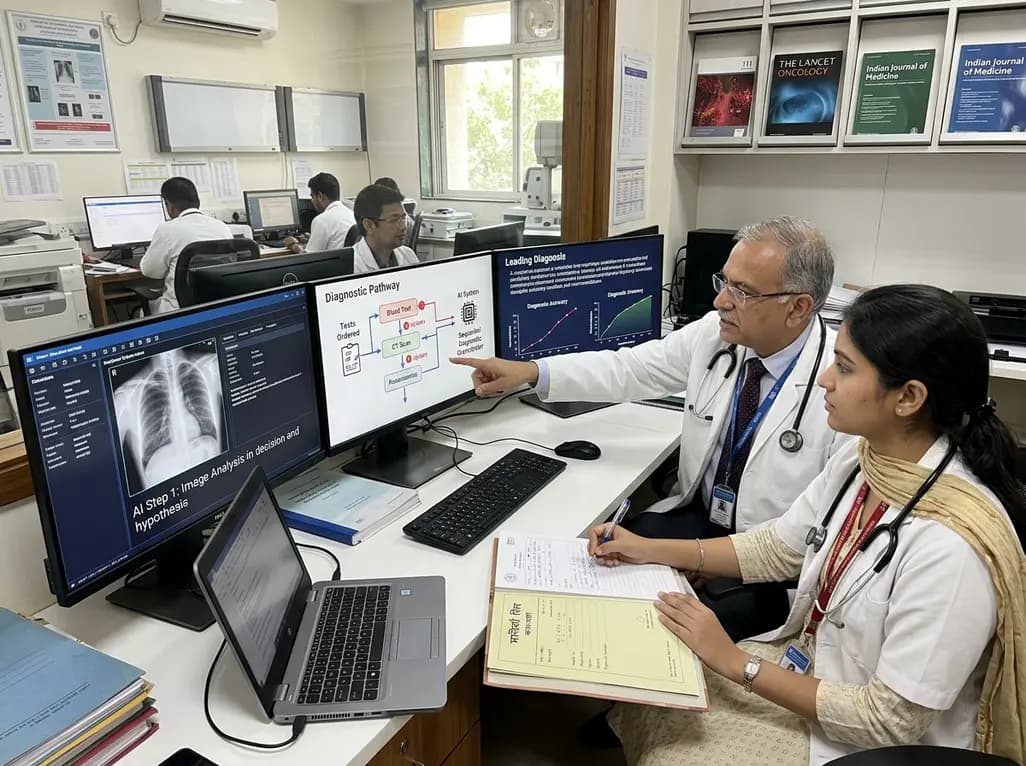
A breakthrough peer-reviewed study demonstrates that a sequential AI diagnosis system can mirror real-world clinical reasoning. By ordering stepwise tests and updating hypotheses dynamically, this multi-agent orchestrator achieved superior diagnostic accuracy while reducing investigative costs.
Today

A prenatal case highlights severe glutaric acidemia type II presenting as bilateral hyperechoic cystic kidneys at 18 weeks. Whole-exome sequencing revealed a novel homozygous ETFDH frameshift variant, demonstrating the power of rapid genetic testing in fetal renal anomalies.
Today

Review how tailored exercise programs benefit frail older patients with heart failure. Explore pathophysiological mechanisms, individualized training prescriptions, and strategies to overcome adherence barriers in clinical practice.
Yesterday

This comparative study evaluates posterior labral tears with and without glenohumeral instability, highlighting distinct demographic patterns, MRI underestimation in stable shoulders, and successful arthroscopic repair outcomes.
Yesterday

A clinical study demonstrates that early intervention with tocilizumab, either as monotherapy or bridged with corticosteroids, achieves significant proptosis reduction and resolves active inflammation in treatment-naive thyroid eye disease.
Yesterday
