.webp&w=384&q=75)

Loading, please wait...
Loading, please wait...

Management of childhood myopia has evolved beyond simple refractive correction to active progression control. For children with anisometropia—a significant difference in refractive power between the two eyes—orthokeratology (OK) has emerged as a promising intervention. A large-scale longitudinal study recently explored how orthokeratology axial length rebalancing helps stabilize ocular growth and reduces inter-ocular asymmetry in pediatric patients. This research provides crucial insights for clinicians managing asymmetric myopia development.
The study analyzed nearly 10,000 children to understand how eye-specific elongation patterns change under treatment. Researchers found that orthokeratology lenses effectively slowed axial length (AL) elongation in both eyes of anisometropic children compared to isometropic controls. Specifically, the more-myopic eyes showed significantly slower growth, while the less-myopic eyes also experienced reduced elongation rates. Consequently, the inter-ocular axial length difference (IALD) decreased steadily over the treatment period.
Furthermore, the data suggests that the baseline inter-ocular spherical equivalent refraction (SER) difference influences the rate of rebalancing. Children with higher degrees of initial asymmetry experienced a more pronounced reduction in IALD. This rebalancing effect is vital because it helps maintain binocular vision and reduces the risk of amblyopia or strabismus associated with severe anisometropia. Doctors in India should consider these findings when choosing myopia control strategies for children with unequal refractive errors.
Traditionally, clinicians worried that treating only one eye or using standard binocular treatments might not address the underlying asymmetry. However, this large-scale evidence confirms that OK lenses promote a more symmetrical ocular development profile. The treatment appears to \"narrow the gap\" between the two eyes. Additionally, the study indicates that younger children and those with faster baseline progression may benefit the most from this intervention. By proactively using OK lenses, practitioners can achieve better long-term refractive stability.
Orthokeratology reshapes the cornea overnight, creating a peripheral defocus effect that slows axial elongation. In anisometropic children, the treatment exerts a more significant slowing effect on the more myopic eye, leading to a gradual rebalancing of the axial length between both eyes.
Yes, research indicates that OK lenses are effective and safe for children with varying degrees of anisometropia. It is currently a leading myopia control intervention with evidence for slowing axial growth specifically in the more myopic eye to reduce inter-ocular differences.
Longitudinal data suggests that the reduction in inter-ocular axial length difference continues over several years of treatment. However, clinicians must monitor patients regularly to ensure the lenses continue to provide the optimal defocus profile as the child grows.
Disclaimer: This content is for informational and educational purposes only. It does not constitute medical advice or a professional relationship. Always seek the advice of a qualified healthcare provider for any medical condition or treatment. Refer to the latest local and national guidelines for clinical practice.
References
Huang K et al. Longitudinal rebalancing of axial length asymmetry in anisometropic children under orthokeratology: a large-scale cohort study. Cont Lens Anterior Eye. 2026 May 19. doi: undefined. PMID: 42155159.
Tsai HR, Wang JH, Chiu CJ. Efficacy of orthokeratology in retarding anisometropic progression: a meta-analysis. Front Med (Lausanne). 2021;8:764645.
Zhang Y, Chen Y. Changes in axial length in anisometropic children wearing orthokeratology lenses. Front Med (Lausanne). 2023;10:1222453.

Read summarized clinical updates, watch expert medical content, and earn CME certifications right from your smartphone.
Open your smartphone camera to scan and install.





Large-scale study finds orthokeratology reduces inter-ocular axial length difference and slows elongation in anisometropic children, promoting ocular symmet...
4 months ago
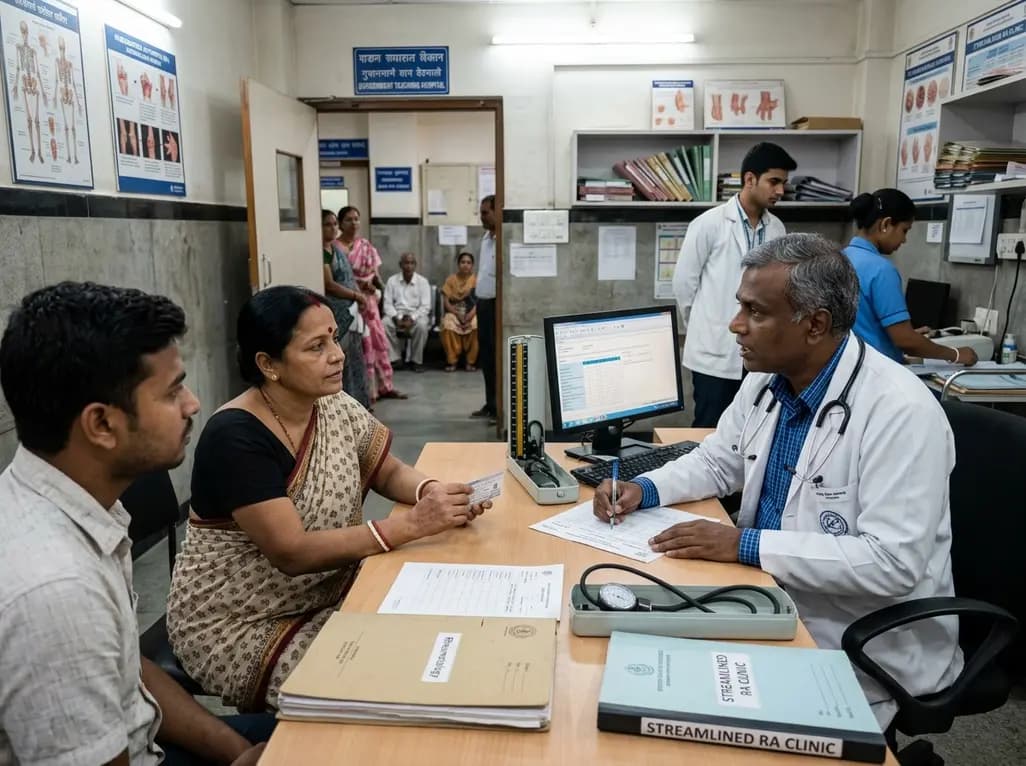
Direct transition from early arthritis clinics to a dedicated, streamlined rheumatoid arthritis clinic prevents follow-up delays, maintains DMARD doses, and halts biomarker escalation compared to general rheumatology referral.
Today

A school-based intervention using the Health Action Process Approach (HAPA) significantly enhanced adolescents' perceived benefits of consulting healthcare providers and promoted proactive menstrual health behaviors, offering key clinical insights for managing adolescent dysmenorrhea and endometriosis.
Today
A comprehensive analysis evaluating the impact of active tobacco smoking on perioperative outcomes, pulmonary complications, and technical success in patients undergoing fenestrated-branched endovascular aortic repair (FB-EVAR) for complex abdominal and thoracoabdominal aortic aneurysms.
Today
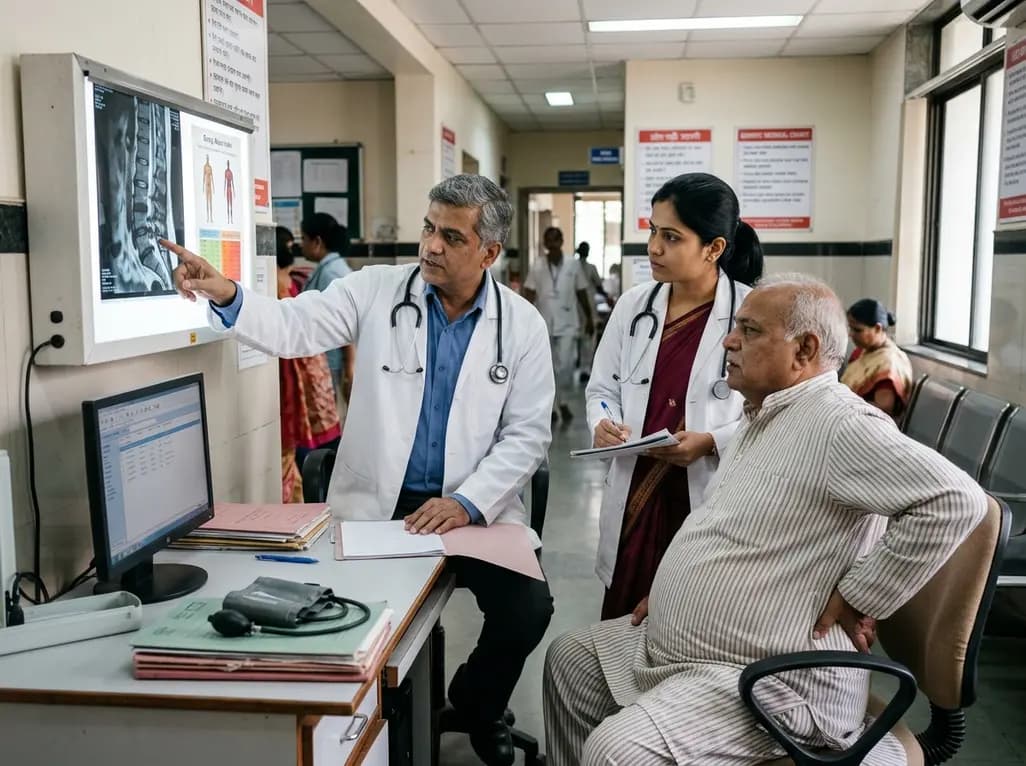
A cross-sectional study reveals that sarcopenic obesity independently increases functional impairment and severe disc degeneration in patients with degenerative lumbar spinal stenosis, highlighting the need for body composition assessment.
Today

Non-invasive biospecimen sampling offers exciting opportunities for stress medicine. This article examines a pioneering protocol comparing cortisol, inflammatory cytokines, and metabolic markers across blood plasma, whole saliva, and oral mucosal transudate during baseline and acute stress states.
Today
