.webp&w=384&q=75)

Loading, please wait...
Loading, please wait...

Chronic low back pain remains a major cause of disability worldwide, with intervertebral disc degeneration serving as a primary structural cause. The intervertebral disc consists of an inner gelatinous nucleus pulposus and an outer fibrous annulus fibrosus, both working together to absorb mechanical shock. However, progressive matrix breakdown, loss of proteoglycans, and localized chronic inflammation frequently disrupt disc tissue integrity. Consequently, identifying specific molecular mediators that initiate and propel this cellular breakdown is vital for developing targeted biological treatments.
Galectins represent a specialized family of soluble carbohydrate-binding lectins that regulate numerous physiological processes, including cell adhesion, immune response, and apoptosis. In musculoskeletal tissues, specific galectin isoforms bind to surface glycan receptors and trigger harmful catabolic cascades. While researchers previously identified galectins-1 and -3 in degenerative disc tissue, the potential involvement of galectin-4 and galectin-8 remained unclear until recently. Novel research now demonstrates that galectin-4 actively mediates human intervertebral disc degeneration by driving local inflammatory signaling and extracellular matrix degradation. Understanding these carbohydrate-binding interactions provides essential clarity on how biochemical changes within the disc space translate into clinical pathology and persistent spinal symptoms.
To evaluate the clinical relevance of galectins in spinal pathology, investigators analyzed human intervertebral disc specimens gathered from thirty-six patients undergoing surgical interventions. These patients suffered from common degenerative conditions, including severe spondylosis, spondylolisthesis, and progressive adult scoliosis. Researchers utilized detailed immunohistochemical staining to detect the localized presence of galectin-4 and galectin-8 throughout the different anatomical regions of the retrieved disc tissue.
Furthermore, the investigation correlated histological galectin expression levels with validated clinical and radiological grading systems, including the Pfirrmann radiological classification and the Rutges histopathological score. Interestingly, the analytical results revealed a strong, positive correlation between galectin-4 positivity and advanced degrees of structural degeneration. Patients presenting with higher Pfirrmann grades and severe Rutges histopathological scores exhibited significantly elevated galectin-4 accumulation within their disc tissues. In contrast, galectin-8 staining showed no statistically significant correlation with disease severity or radiological parameters. Additionally, researchers detected galectin-4 across both the annulus fibrosus and nucleus pulposus compartments, whereas the cartilaginous endplate exhibited minimal staining. These clinical correlations strongly position galectin-4 as a pathologically relevant biomarker directly involved in progressive spinal tissue breakdown.
Because the intervertebral disc consists of distinct structural zones, understanding regional cellular responses to galectins is critical for unravelling pathological mechanisms. Investigators established separate primary cell cultures using annulus fibrosus and nucleus pulposus cells isolated from human surgical specimens. They treated these primary cultures with recombinant galectin-4, recombinant galectin-8, or interleukin-1 beta, which serves as a classical pro-inflammatory control. Subsequent analytical testing using reverse transcription quantitative polymerase chain reaction and In-Cell Western assays evaluated gene expression changes and intracellular signaling responses.
The experimental observations highlighted clear region-specific differences in cellular sensitivity. Nucleus pulposus cells displayed a remarkably stronger response to galectin-4 exposure compared to annulus fibrosus cells. Furthermore, mass spectrometry analysis revealed that nucleus pulposus cells express specific sialylated N-glycans and LacdiNAc carbohydrate structures, which function as high-affinity binding sites for galectin-4. Consequently, this distinct surface glycan landscape enables nucleus pulposus cells to bind galectin-4 efficiently, triggering downstream catabolic activity. The outer annulus fibrosus cells, while responsive, exhibited lower sensitivity to galectin stimulation. These findings emphasize that different disc regions maintain unique biochemical microenvironments that dictate their vulnerability to galectin-mediated degenerative signaling.
Uncovering the precise intracellular signaling cascades triggered by galectin-4 provides valuable insight into the molecular pathogenesis of spinal degeneration. Upon binding to specific glycan ligands on the cell surface, galectin-4 rapidly initiates intracellular signal transduction. Specifically, cellular analyses revealed that galectin-4 exposure leads to robust phosphorylation and nuclear translocation of nuclear factor-kappa B, a master transcriptional regulator of inflammation and catabolism within musculoskeletal tissues.
The activation of nuclear factor-kappa B plays a central role in driving cellular dysfunction in degenerative intervertebral discs. Once activated, this signaling pathway promotes the synthesis of multiple inflammatory mediators that perpetuate local tissue destruction. Moreover, experimental inhibition of this pathway attenuated the downstream expression of inflammatory markers, proving that galectin-4 acts primarily through nuclear factor-kappa B signaling. In comparison, while galectin-8 also stimulated nuclear factor-kappa B signaling in vitro, its lack of histological correlation in patient tissue specimens suggests that galectin-4 plays a far more clinically prominent role in vivo. Therefore, targeting the interaction between galectin-4 and its surface glycan receptors could prevent the persistent activation of nuclear factor-kappa B, effectively slowing the inflammatory feedback loop within degenerating disc tissue.
The downstream consequences of galectin-4 binding involve a marked upregulation of key functional disease markers that directly impair disc homeostasis. Quantitative gene expression analyses showed that treatment with galectin-4 significantly induced messenger RNA levels for interleukin-8, also known as CXCL8, and matrix metalloproteinase-3. Interleukin-8 serves as a potent chemoattractant cytokine that amplifies local inflammatory cell recruitment and pain signaling within the avascular disc environment.
Simultaneously, matrix metalloproteinase-3 functions as a major proteolytic enzyme capable of degrading key extracellular matrix components, including proteoglycans and type II collagen. The loss of these structural proteins compromises the mechanical integrity of the nucleus pulposus, reducing its hydration and shock-absorbing capacity. Furthermore, the induction of these disease markers by galectin-4 mirrored the catabolic effects produced by interleukin-1 beta, a classic driver of disc degeneration. However, galectin-4 operates through unique lectin-glycan binding interactions, offering a novel target for therapeutic intervention. By inhibiting galectin-4 activity, clinicians may eventually prevent matrix metalloproteinase-3 production and interleukin-8 expression, thereby preserving structural matrix integrity and mitigating discogenic inflammation in symptomatic patients.
The identification of galectin-4 as a active driver of disc degeneration opens exciting therapeutic and diagnostic avenues for orthopedic specialists and neurosurgeons. Currently, conservative management and surgical interventions primarily address symptoms rather than modifying the underlying pathophysiological process. Discovering that galectin-4 correlates directly with histopathological degeneration and radiological severity suggests that galectin-4 could serve as a valuable diagnostic biomarker. Assessing galectin-4 levels in tissue samples or fluid aspirates might help clinicians grade disease progression more accurately and stratify patients for targeted interventions.
From a therapeutic perspective, blocking galectin-4 offers a promising disease-modifying strategy. Synthetic glycan mimetics, small-molecule inhibitors, or monoclonal antibodies designed to disrupt galectin-4 binding could effectively neutralize its pro-inflammatory and catabolic downstream signaling. Furthermore, because nucleus pulposus cells display heightened sensitivity to galectin-4, local intradiscal delivery of galectin-4 inhibitors could protect the central nucleus from matrix degradation without causing systemic side effects. As research advances, integrating galectin-directed biologics into clinical management protocols could revolutionize back pain treatment, offering patients non-surgical options that slow or reverse intervertebral disc degeneration.
Galectin-4 is a carbohydrate-binding protein that acts as an inflammatory mediator within the intervertebral disc. It binds to specific surface glycans on disc cells, particularly in the nucleus pulposus. This binding triggers nuclear factor-kappa B signaling, causing elevated expression of inflammatory cytokines like interleukin-8 and destructive enzymes like matrix metalloproteinase-3, ultimately accelerating extracellular matrix breakdown and functional disc degeneration.
Nucleus pulposus cells demonstrate significantly higher sensitivity to galectin-4 stimulation compared to annulus fibrosus cells. Mass spectrometry reveals that nucleus pulposus cells contain abundant sialylated N-glycans and LacdiNAc structures that serve as high-affinity binding sites for galectin-4. Consequently, galectin-4 induces stronger inflammatory gene expression and matrix metalloproteinase production in the nucleus pulposus, making this central disc compartment especially vulnerable to degeneration.
Yes, galectin-4 represents a compelling target for novel disease-modifying therapies in spinal care. Therapeutic strategies using specific glycan mimetics, monoclonal antibodies, or small-molecule inhibitors could effectively block galectin-4 from binding to disc cell receptors. Administering these targeted agents intradiscally could reduce local nuclear factor-kappa B activation, suppress matrix metalloproteinase-3 degradation, and alleviate discogenic inflammation without relying solely on symptomatic surgical procedures.
Disclaimer: This content is for informational and educational purposes only and does not constitute medical advice, diagnosis, or treatment. Healthcare professionals should rely on their clinical judgment and refer to the latest local and national guidelines for clinical practice.
References
Strauss C et al. Galectin-4: A Novel Mediator of Human Intervertebral Disc Degeneration. JOR Spine. 2026 Sep undefined. doi: 10.1002/jsp2.70194. PMID: 42564703.

Read summarized clinical updates, watch expert medical content, and earn CME certifications right from your smartphone.
Open your smartphone camera to scan and install.





A groundbreaking study identifies galectin-4 as a key molecular driver of human intervertebral disc degeneration. The protein activates NF-kB pathways and inflames disc tissues, offering a potential target for novel spine therapies.
last month

The World Health Organization has launched a 10-year framework to address evidence gaps in traditional, complementary, and integrative medicine. Prioritizing conditions such as stroke, cancer, and depression, this global roadmap highlights rigorous clinical trials, pharmacovigilance, and safer patient care.
Today

A recent longitudinal study evaluated the link between prenatal loss of control eating and cardiovascular health using Life's Essential 8 frameworks. While direct associations across pregnancy were non-significant, the high prevalence of dysregulated eating highlights critical implications for obstetric practice.
Today

Explore modern perioperative management protocols for clinical xenotransplantation. Learn how costimulation blockade, anti-inflammatory perfusion, and coagulopathy rescue overcome interspecies hurdles.
Today

A retrospective study evaluating a locally deployed vision language model (Qwen3-VL) reveals that smartphone-captured radiographs and retrieval-augmented generation can paradoxically reduce diagnostic accuracy in bone tumor referrals due to optical noise and textual hallucinations.
Today
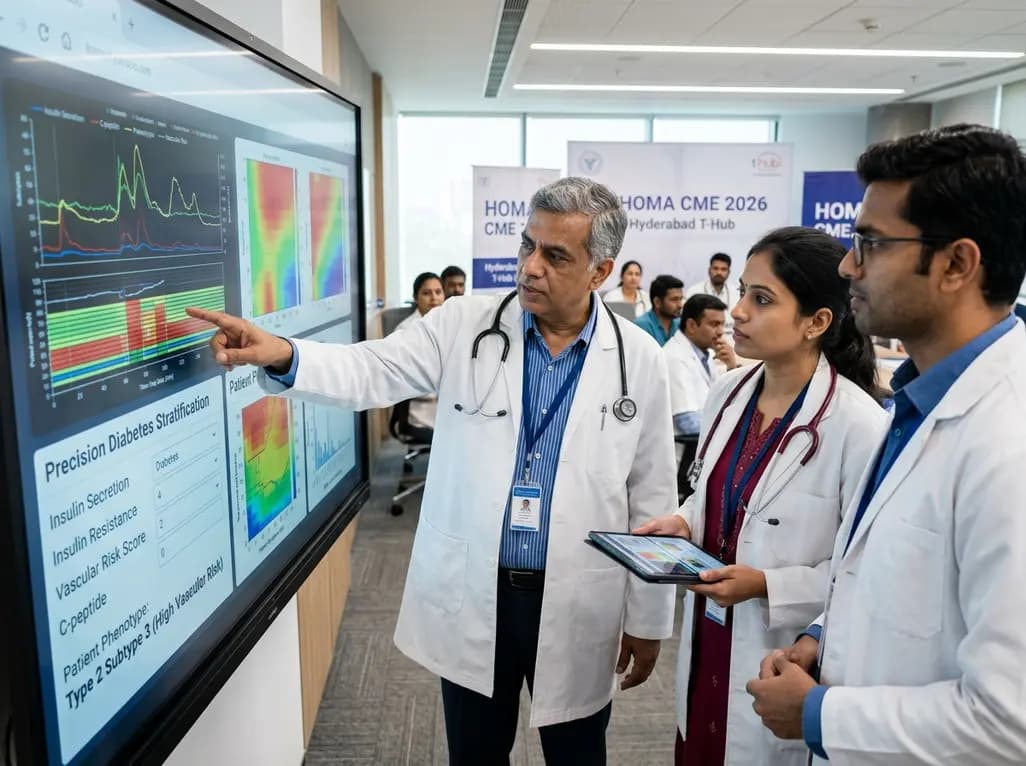
At Homa CME 2026 at Hyderabad's T-Hub, healthcare leaders emphasized moving beyond routine metrics through digital calculators and precision stratification. Discover why characterizing individual insulin secretion, resistance patterns, and vascular risks transforms chronic metabolic care in India.
Today
