.webp&w=384&q=75)

Loading, please wait...
Loading, please wait...

Effective Oriental eyeworm vector control is essential for preventing the transmission of Thelazia callipaeda, a zoonotic parasite. This eyeworm causes human thelaziasis across many parts of Asia, including several states in India. Consequently, researchers have focused on understanding the life history traits of its primary vector, Phortica okadai. A recent study evaluated how five different diets affect the development and population dynamics of this fly under controlled laboratory conditions. Notably, the study aimed to establish standardized rearing protocols that have been missing from entomological research.
The study revealed that fermented pear is the most suitable substrate for establishing laboratory colonies. Specifically, flies on this diet showed the shortest pre-adult development time of approximately 17 days. Furthermore, these females exhibited the highest fecundity, producing an average of 116.6 eggs. Notably, the intrinsic rate of increase was significantly greater compared to apple or banana diets. Therefore, population projections showed that pear-fed colonies produced ten times more adults within three months than other groups. These findings provide a clear roadmap for better laboratory-based vector competence research.
Additionally, the results suggest that pear orchards represent high-risk habitats for eyeworm transmission. Clinicians should recognize that agricultural environments directly influence the density of zoophilic flies. Moreover, this knowledge allows for targeted surveillance in regions where pear cultivation is common. By understanding these ecological factors, health authorities can implement more effective control measures. Thus, integrating environmental data with clinical practice supports a more comprehensive One Health approach to disease management and prevention.
Thelazia callipaeda, or the Oriental eyeworm, causes ocular infections characterized by conjunctivitis, lacrimation, and foreign body sensations. If left untreated, it can lead to corneal ulcers or even vision loss.
Phortica okadai is a zoophilic fly that feeds on ocular secretions. It acts as the intermediate host and primary vector, transmitting the infective third-stage larvae of the eyeworm to humans and animals.
The study identifies pear orchards as potential high-risk areas. Doctors in rural or agricultural regions can use this information to better advise patients on fly control and symptom recognition in endemic areas.
Disclaimer: This content is for informational and educational purposes only and does not constitute medical advice. Refer to the latest local and national guidelines for clinical practice.
References
1. Chen Z et al. Dietary effects on the development and population dynamics of the Thelazia callipaeda vector Phortica okadai revealed by age-stage, two-sex life table analysis. Parasit Vectors. 2026 May 08. doi: 10.1186/s13071-026-07408-y. PMID: 42104517.
2. Otranto D, Eberhard ML. Thelazia callipaeda: the "oriental eye worm". Clin Microbiol Rev. 2011;24(3):495-505.
3. Singh TS, Singh KN. Thelaziasis: Report of two cases. Br J Ophthalmol. 1993;77(8):528-529.
"
Read summarized clinical updates, watch expert medical content, and earn CME certifications right from your smartphone.
Open your smartphone camera to scan and install.





Study finds fermented pear is the optimal diet for rearing the Oriental eyeworm vector Phortica okadai, highlighting potential high-risk habitats in orchard...
5 months ago

Explore vital recurrent stroke predictors in lacunar stroke patients managed with intensive blood pressure lowering. This analysis examines trial findings from SPS3 to uncover residual vascular risks, metabolic factors, and targeted secondary prevention strategies for high-risk neurological patients.
Today
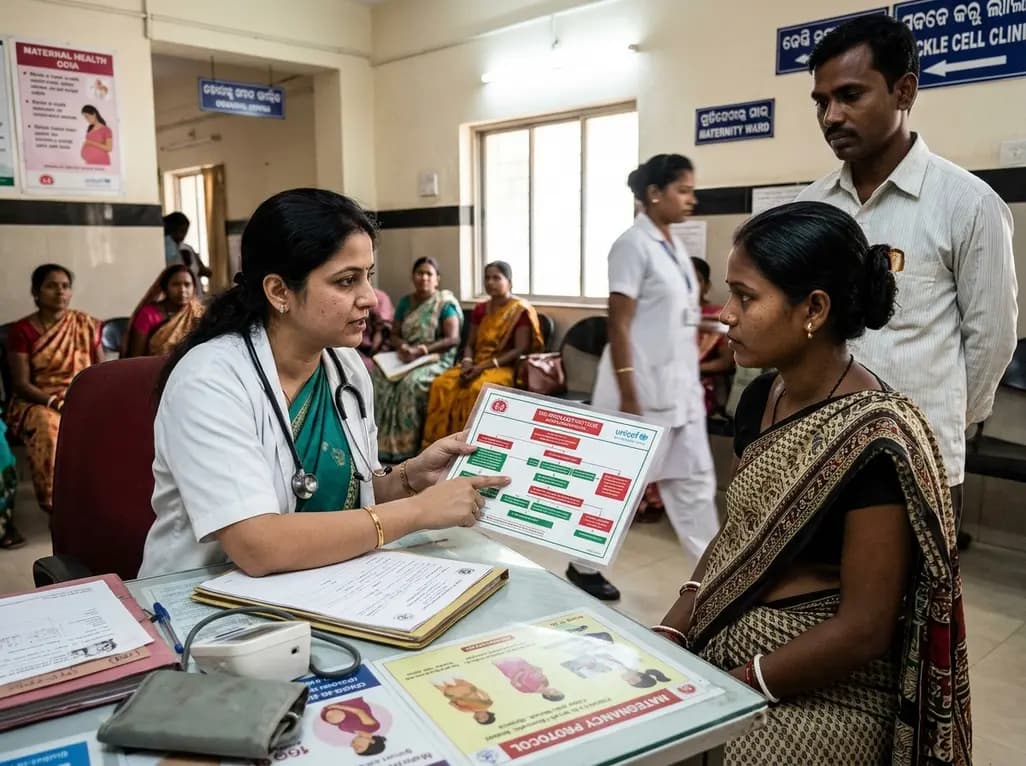
Odisha has established India's first state-level clinical protocol specifically tailored for pregnant women with sickle cell disease. Developed with NHM and UNICEF, the framework provides structured antenatal screening, crisis mitigation, standardized referral pathways, and specialized interdisciplinary care.
Today

The Directorate General of Health Services directs Indian states to halt the hazardous reuse and reprocessing of single-use medical devices. Discover regulatory implications under the Drugs and Cosmetics Act, critical infection risks, legal liabilities, and operational changes required across clinical specialties.
Today

Mitochondria-targeted nanoparticles self-assembled from EGCG and L-glutamic acid effectively restore mitochondrial homeostasis, suppress synovial inflammation, and attenuate chondrocyte senescence in osteoarthritis, offering a promising disease-modifying nanotherapy.
Today

India is advancing preventive healthcare by integrating genomics, artificial intelligence, and quantum technologies. With the SANGAM programme sequencing one million Indian genomes, clinicians can unlock personalized therapies, detect cardiometabolic risks early, and curb the burden of diabetes and heart disease.
Today
