.webp&w=384&q=75)

Loading, please wait...
Loading, please wait...

Clinical management of intermediate-stage gastric cancer presents a persistent therapeutic dilemma for multidisciplinary oncology teams worldwide. Specifically, patients diagnosed with cT2N0 gastric adenocarcinoma occupy a clinical gray zone between early superficial lesions and advanced nodal disease. Although landmark randomized trials established perioperative chemotherapy as standard care for locally advanced tumors, the optimal sequence of systemic therapy and resection for intermediate T2 tumors remains debated. Clinicians frequently evaluate whether immediate surgical resection or upfront systemic therapy provides superior long-term survival for these patients.
Clinicians historically treated cT2N0 lesions with upfront gastrectomy because these tumors appeared confined to the muscularis propria without evident lymph node involvement. However, preoperative clinical staging modalities, including endoscopic ultrasound and computed tomography, exhibit notable diagnostic limitations. Primary tumors frequently harbor occult nodal metastases or deeper transmural invasion that imaging fails to detect. Consequently, patients who undergo immediate surgery face substantial risks of pathological upstaging. In addition, postoperative complications can significantly delay or prevent the timely administration of essential adjuvant systemic therapy. Therefore, relying solely on upfront surgical resection often undertreats biologically aggressive tumors. Furthermore, large randomized clinical trials historically aggregated stage II and III tumors together, leaving clinical T2N0 disease underrepresented in prospective subgroup analyses. As a result, treatment paradigms have varied widely across oncology centers globally. Some institutions routinely recommend perioperative chemotherapy regimens, while others proceed directly to radical gastrectomy with D2 lymphadenectomy. This lack of clear consensus highlighted the urgent need for robust, real-world comparative survival analyses to guide therapeutic sequencing.
To address this clinical dilemma, researchers recently evaluated a large cohort of 3,676 patients with intermediate-stage gastric cancer using the National Cancer Database from 2004 to 2020. The investigators stratified patients into three distinct treatment categories: upfront surgery alone without systemic treatment, perioperative chemotherapy followed by surgery, and upfront surgical resection followed by postoperative adjuvant chemotherapy. Interestingly, the study revealed that 61.3% of patients historically received no chemotherapy at all. Meanwhile, 19.4% received perioperative chemotherapy, and 19.2% underwent adjuvant chemotherapy. Among the 2,961 patients who underwent upfront surgical resection, final surgical pathology demonstrated that 28.8% of cases were upstaged to higher pathological stages. Multivariable survival analysis revealed that both chemotherapy strategies significantly reduced all-cause mortality compared to surgery alone. Specifically, perioperative chemotherapy and adjuvant chemotherapy achieved marked reductions in mortality hazards compared to upfront resection without systemic therapy. Consequently, systemic chemotherapy clearly confers a meaningful survival advantage for these intermediate-stage tumors, confirming that surgery alone is insufficient for optimal oncologic control.
A central question in surgical oncology is whether administering systemic therapy before surgery offers distinct biological advantages over postoperative administration. Neoadjuvant systemic therapy promotes early systemic disease control, targets micrometastatic spread, and enhances the likelihood of achieving an R0 resection margin with negative histological boundaries. Furthermore, patients demonstrate significantly better tolerance and completion rates for multi-agent cytotoxic regimens before undergoing major gastric resections. In contrast, major gastric surgery frequently leads to postoperative nutritional decline, altered gastrointestinal anatomy, and prolonged recovery times. These postoperative challenges often hinder patients from completing planned adjuvant chemotherapy cycles. Nevertheless, recent national cohort data demonstrated comparable long-term overall survival outcomes between perioperative and adjuvant chemotherapy groups. Both modalities provided substantial protection against cancer recurrence and death. Therefore, while perioperative systemic therapy remains biologically attractive and ensures drug delivery, successful delivery of adjuvant chemotherapy following upfront resection also provides excellent survival outcomes when patients upstage postoperatively.
Accurate preoperative staging remains essential for formulating an effective personalized treatment strategy in gastric cancer care. Endoscopic ultrasound provides high-resolution anatomical evaluation of gastric wall layers, yet differentiating T1 from T2 lesions or T2 from T3 invasion remains technically challenging. Moreover, standard axial imaging often misses micrometastases in regional lymph nodes smaller than one centimeter. In the analyzed national database cohort, nearly 29% of patients clinically classified as intermediate-stage were pathologically upstaged following radical surgery. This substantial rate of staging discrepancy underscores the biological aggressiveness of gastric malignancies and the limitations of modern diagnostic imaging. When surgical teams elect upfront resection, multidisciplinary tumor boards must anticipate potential upstaging and plan for aggressive adjuvant regimens. Furthermore, diagnostic laparoscopy with peritoneal washing cytology plays a critical role in ruling out occult peritoneal disease before committing patients to definitive curative-intent pathways. Ultimately, recognizing the high risk of understaging justifies the routine incorporation of multimodality systemic therapy in this patient subset.
These contemporary findings carry direct clinical implications for surgical oncologists, medical oncologists, and gastroenterologists managing intermediate gastric tumors. First, treating physicians should thoroughly discuss the critical necessity of systemic chemotherapy with all patients presenting with clinical T2 lesions. Because surgery alone carries a significantly higher risk of cancer mortality, omitting chemotherapy represents a substantial deviation from optimal oncologic care. Second, multidisciplinary tumor boards should individualize the sequencing strategy based on patient performance status, nutritional reserves, and institutional surgical expertise. For robust patients with bulky T2 tumors or questionable nodal staging, perioperative triplet or doublet chemotherapy offers superior compliance and tumor downstaging. Conversely, if a patient undergoes upfront radical gastrectomy with adequate D2 lymphadenectomy and exhibits pathological upstaging, initiating prompt adjuvant chemotherapy remains a highly effective curative strategy. In addition, clinicians must integrate molecular profiling, including HER2, PD-L1, and mismatch repair status, to optimize future treatment personalization.
Preoperative clinical staging utilizing endoscopic ultrasound and computed tomography provides useful anatomical information, but it has recognized diagnostic limitations. Clinicians frequently encounter microscopic nodal disease or deeper muscular invasion that conventional imaging fails to detect. In national registry analyses, nearly 29% of clinically staged cT2N0 patients experienced pathological upstaging following surgical resection. Consequently, physicians must account for occult disease risks when formulating initial treatment recommendations.
Comparative studies demonstrate that both perioperative chemotherapy and postoperative adjuvant chemotherapy provide similar overall survival benefits compared to surgery alone. While perioperative chemotherapy ensures higher drug compliance before surgical stress, adjuvant chemotherapy achieves comparable survival when completed successfully. Therefore, clinicians can utilize either sequence within a multidisciplinary plan, depending on individual patient fitness, staging certainty, and postoperative recovery.
Upfront surgical resection alone fails to address micrometastatic disease and occult nodal metastasis present in intermediate-stage tumors. Comprehensive survival data demonstrate that omitting chemotherapy results in significantly higher mortality hazards. Because nearly one-third of clinical T2N0 patients harbor more advanced disease on final pathology, incorporating systemic chemotherapy remains necessary to improve disease-free survival and maximize long-term curative outcomes.
Disclaimer: This content is for informational and educational purposes only and should not be considered medical advice. Clinical decisions must always be tailored to individual patient presentation, institutional protocols, and multidisciplinary tumor board consensus. Refer to the latest local and national guidelines for clinical practice.
References

Read summarized clinical updates, watch expert medical content, and earn CME certifications right from your smartphone.
Open your smartphone camera to scan and install.





A large National Cancer Database study reveals that clinical T2N0 gastric adenocarcinoma benefits significantly from chemotherapy. Both perioperative and adjuvant regimens reduce mortality compared to upfront surgery alone, challenging traditional management paradigms.
last month

A study reveals that salivary cortisone correlates more strongly with serum cortisol than salivary cortisol during dynamic adrenal testing, while salivary dexamethasone accurately confirms compliance. This provides a non-invasive, precise alternative to venipuncture for diagnosing adrenal disorders.
Today
Prenatal evaluation of fetal growth restriction requires an integrated diagnostic approach. While chromosomal microarray remains fundamental, exome sequencing offers significant diagnostic yield in isolated and syndromic cases, especially when ultrasound shows skeletal anomalies or normal placental function.
Today

Evaluating disagreement among Friedewald, Martin-Hopkins, and Sampson LDL-C equations reveals diagnostic uncertainty at statin cutoffs. An interpretable regime-aware calibration model rescues patient misclassifications without extra testing costs.
Today
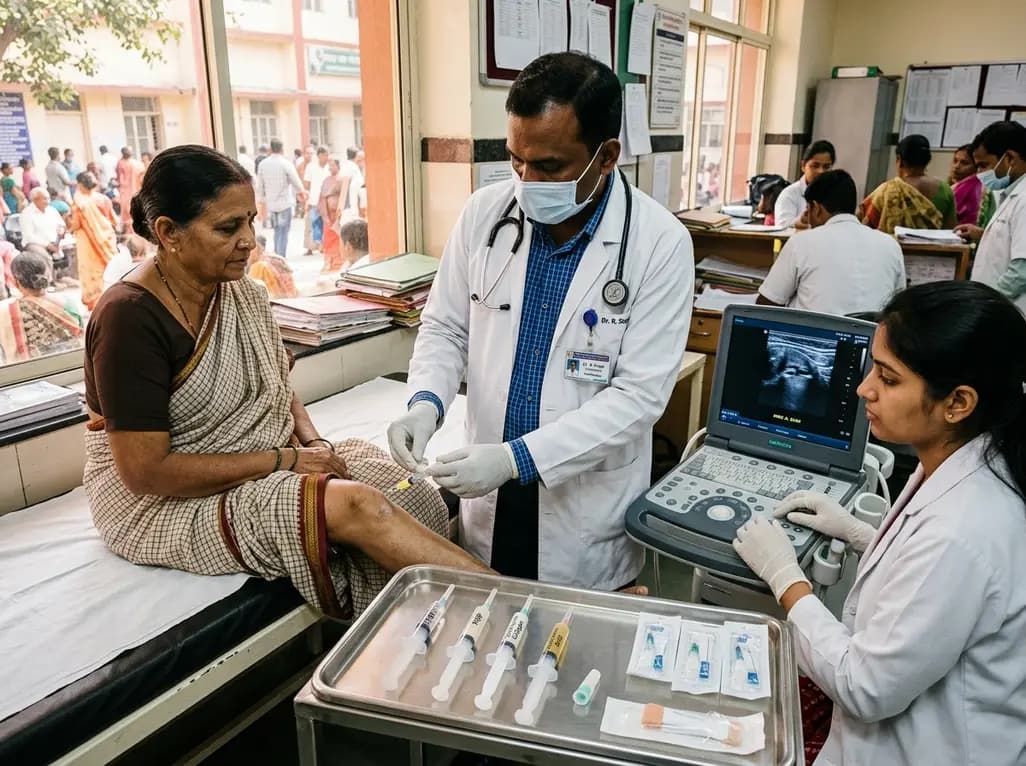
A randomized controlled trial compared ultrasound-guided intra-articular injections of PRP, hydrolyzed type I collagen, and hyaluronic acid in knee osteoarthritis. All therapies demonstrated significant improvements in WOMAC and pain scores at six months, supporting hydrolyzed collagen as a viable biological option.
Today

A groundbreaking review highlights mitochondrial quality control as a pivotal gating layer between metabolite signaling and regulated cell death, offering transformative therapeutic avenues across cardiology, oncology, and critical care.
Today
