

Loading, please wait...
Loading, please wait...
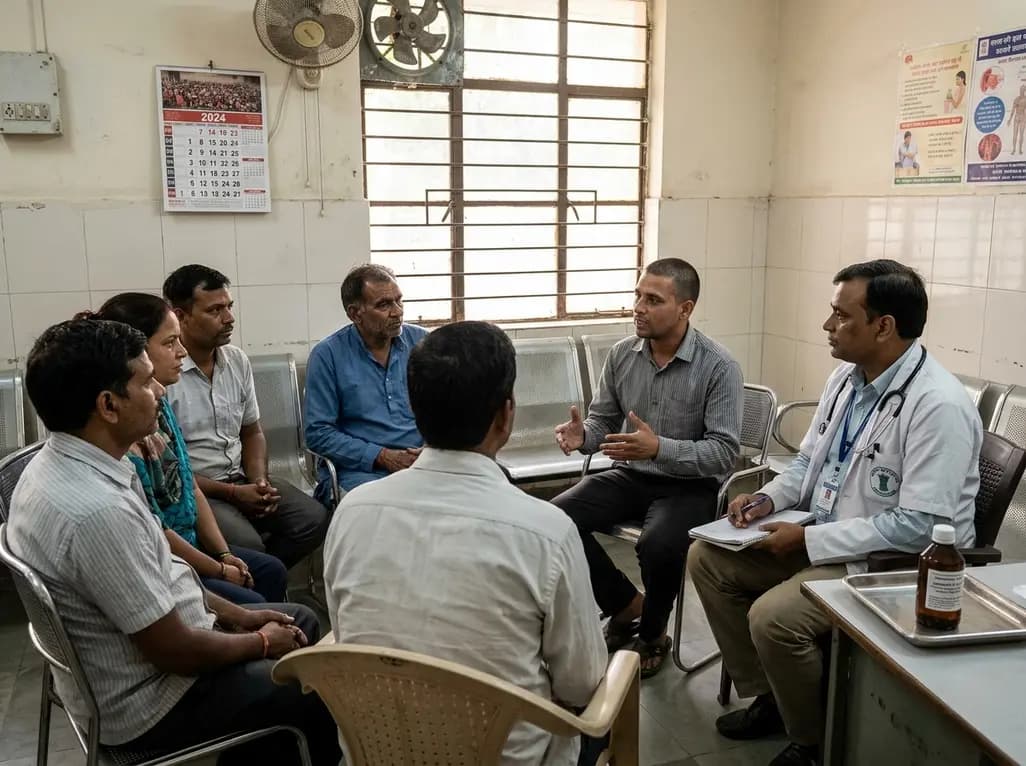
Managing substance use disorders following criminal justice involvement represents one of modern medicine's most urgent challenges. Individuals who transition from correctional facilities back into community settings encounter exceptionally elevated rates of relapse, accidental overdose, and mortality. Consequently, establishing effective pathways toward sustained opioid use disorder abstinence remains a vital clinical priority for addiction specialists, primary care physicians, and public health practitioners. Although pharmacotherapy stands as the recognized standard of care, many patients struggle to maintain adherence without comprehensive psychosocial reinforcement. Therefore, evaluating how community-based mutual help groups interact with pharmacological treatments offers essential guidance for post-release reintegration protocols.
The transition from a carceral environment to civilian life creates profound physiological and psychological stress. During incarceration, individuals frequently undergo forced withdrawal or experience prolonged periods of involuntary abstinence. As a result, biological tolerance to opioids diminishes substantially. When individuals return to their previous environments, they encounter familiar socioeconomic stressors, environmental triggers, and disrupted social networks. Consequently, resuming opioid consumption at pre-incarceration doses precipitates severe respiratory depression and fatal poisoning. In fact, research demonstrates that former inmates face an overdose mortality risk up to forty times higher than the general population during the first two weeks post-release.
Moreover, systemic healthcare disruptions exacerbate these physiological vulnerabilities. Released individuals often lack immediate health insurance, transportation, stable housing, and reliable medical follow-up. Standard correctional discharge planning frequently fails to connect individuals directly to licensed outpatient opioid treatment programs. Therefore, individuals experience immediate interruptions in pharmacotherapy. Without consistent clinical contact, physiological cravings quickly overwhelm recovery intentions. To counter this critical vulnerability, clinicians must understand how multi-layered recovery frameworks bridge the fragile gap between institutional discharge and long-term community stabilization.
A landmark longitudinal cohort study led by Hart and colleagues rigorously investigated these transitional dynamics. The study evaluated 328 adult participants who screened positive for problematic opioid use upon discharge from jail facilities in Chicago. Researchers gathered detailed behavioral data at baseline, three-month, and six-month intervals following release into the community. Importantly, participants reported their actual cumulative days of mutual help group attendance and their days of medication engagement.
The investigative team utilized sophisticated beta-binomial regression models to measure treatment interactions accurately. Furthermore, the statistical models adjusted for critical baseline covariates, past legal involvement, and underlying sociodemographic factors. Notably, the cohort comprised predominantly Black individuals, a population historically underrepresented in addiction literature yet disproportionately impacted by carceral disparities. The investigators deliberately tracked independent and combined associations of both recovery modalities on illicit opioid abstinence. By measuring actual days of engagement rather than binary treatment enrollment, the study provided granular insights into real-world recovery trajectories during community re-entry.
The investigation revealed striking independent benefits for both peer-led recovery groups and medications for opioid use disorder. Specifically, at the three-month assessment, each additional day of mutual help group participation generated an average increase of 0.4 days of confirmed abstinence. Similarly, each additional day of medication support yielded 0.3 additional days of abstinence from illicit opioids. Thus, both interventions independently propelled measurable reductions in drug use.
Furthermore, these behavioral patterns continued to yield sustained clinical benefits over longer follow-up horizons. At six months post-release, earlier three-month engagement in both interventions still predicted ongoing sobriety. Specifically, three-month mutual help participation contributed an additional 0.3 abstinent days, whereas earlier medication days sustained a 0.1-day advantage. Although the statistical magnitude attenuated slightly over time, the trajectory highlights the enduring value of early intervention. These findings demonstrate that consistent participation during the immediate post-release window establishes behavioral momentum. Consequently, proactive interventions during early re-entry produce durable clinical dividends months after initial discharge.
A particularly revealing finding emerged when researchers analyzed the interaction between peer groups and pharmacotherapy. At three months, mutual help groups produced their most pronounced benefits among individuals who reported low levels of medication adherence. In contrast, patients who achieved high, consistent medication engagement maintained high rates of abstinence regardless of meeting attendance. Therefore, peer support networks served as a crucial compensatory buffer when pharmacological support was intermittent or subtherapeutic.
However, the statistical interaction between these modalities disappeared by the six-month follow-up assessment. At this later juncture, both modalities exerted distinct, independent influences on long-term recovery. This finding indicates that mutual help groups provide irreplaceable psychosocial benefits that medication alone cannot replicate. While pharmacotherapy effectively blunts biological cravings and stabilizes neurochemistry, mutual aid groups address chronic loneliness, cultivate accountability, and offer peer empathy. In addition, these community spaces facilitate prosocial rebuilding among individuals coping with the stigma of criminal records. Hence, combining both pathways creates a robust, multi-dimensional safety net for complex patients.
Despite clear scientific evidence supporting combined care, significant structural and cultural barriers persist within community recovery ecosystems. Historically, traditional twelve-step fellowships maintained strict definitions of sobriety that viewed agonist medications as continued chemical dependence. Consequently, patients taking buprenorphine or methadone frequently encountered peer judgment, exclusion, or discouragement from fellow attendees. This cultural friction often forced vulnerable individuals to hide their medication regimens or abandon mutual aid entirely.
Fortunately, progressive shifts are transforming the mutual aid landscape. Programs like Medication-Assisted Recovery Anonymous have emerged to provide explicitly welcoming environments for pharmacotherapy patients. Moreover, mainstream twelve-step fellowships increasingly emphasize that medical decisions remain strictly between patients and their physicians. Addiction medicine specialists must actively guide patients toward receptive meetings that validate medical treatment. Clinicians should educate peer fellowship leaders regarding the neurobiological basis of opioid dependence. By bridging the traditional divide between medical science and peer recovery, healthcare providers can dismantle counterproductive stigma and expand therapeutic alliances.
Translating these research insights into clinical practice requires coordinated care across correctional and community healthcare systems. First, correctional facilities must initiate or continue medications for opioid use disorder prior to release rather than forcing detoxification. Starting therapy during custody dramatically increases post-release outpatient retention and curtails fatal overdoses. Second, discharge navigators should proactively link departing individuals to verified peer recovery networks before physical release occurs.
Additionally, primary care clinicians and de-addiction specialists should routinely ask patients about mutual aid participation. When patients face barriers to obtaining medication, such as bureaucratic delays or financial constraints, mutual help groups provide critical community reinforcement. Conversely, clinicians should reassure patients that peer fellowship attendance complements pharmacotherapy rather than replacing it. Health systems must also invest in certified peer support specialists who possess lived experience with criminal justice navigation. Through coordinated cross-sector partnerships, healthcare networks can deliver comprehensive harm-reduction strategies, minimize recidivism, and secure sustained recovery outcomes.
Mutual help groups provide structured peer accountability, emotional empathy, and prosocial community networks during high-risk re-entry periods. These fellowships offer immediate, cost-free psychological support that reduces isolation and reinforces coping strategies. Research demonstrates that each day of meeting attendance significantly increases days of illicit opioid abstinence, especially when medication access is disrupted.
Overdose risk rises exponentially post-release because incarcerated individuals quickly lose pharmacological opioid tolerance during periods of forced abstinence. When individuals return to community environments and encounter familiar triggers, they frequently consume previous dosages. This sudden exposure overwhelms unconditioned mu-opioid receptors, precipitating catastrophic respiratory depression and fatal poisoning within the first few weeks.
Yes, combining medications with peer programs provides superior holistic support by addressing neurochemical dysregulation and psychosocial isolation simultaneously. While traditional fellowship stigma once presented obstacles, modern groups increasingly support medical treatments. Clinicians should guide patients toward medication-friendly fellowships, including Medication-Assisted Recovery Anonymous, to ensure a non-judgmental, comprehensive recovery experience.
Disclaimer: This content is for informational and educational purposes only... Refer to the latest local and national guidelines for clinical practice.
References

Read summarized clinical updates, watch expert medical content, and earn CME certifications right from your smartphone.
Open your smartphone camera to scan and install.





A prospective study shows that combining mutual help groups with medications significantly promotes opioid use disorder abstinence following carceral release. Dual-modality support provides vital harm-reduction synergy for vulnerable individuals during transitional re-entry into community settings.
Today
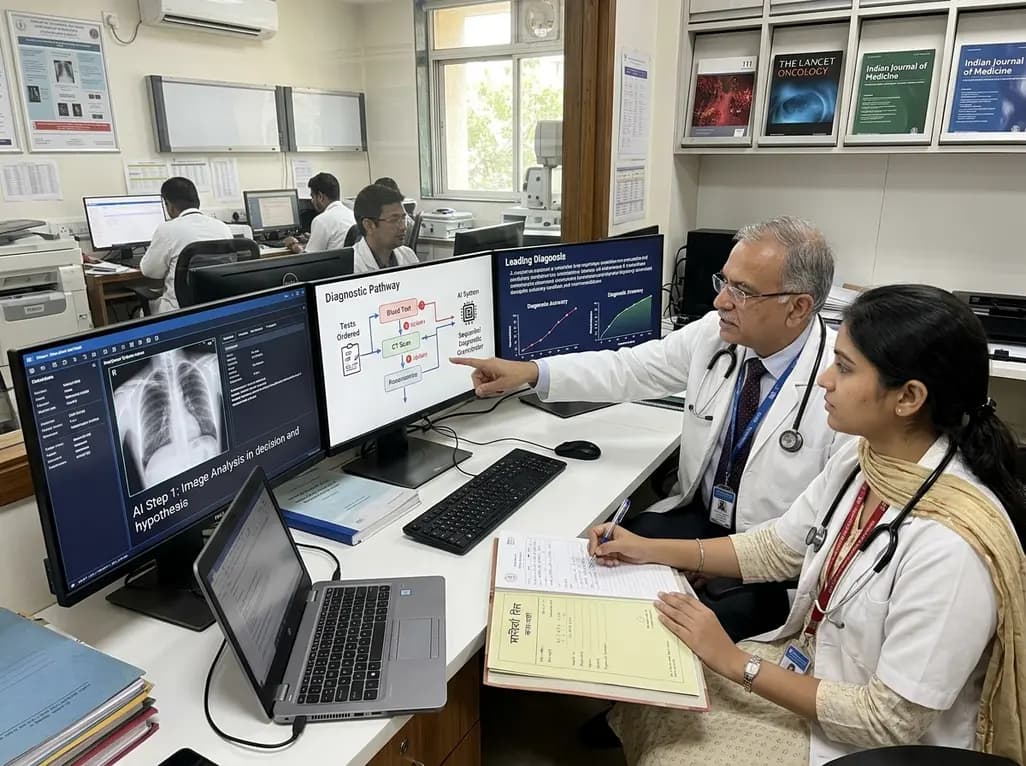
A breakthrough peer-reviewed study demonstrates that a sequential AI diagnosis system can mirror real-world clinical reasoning. By ordering stepwise tests and updating hypotheses dynamically, this multi-agent orchestrator achieved superior diagnostic accuracy while reducing investigative costs.
Today

A prenatal case highlights severe glutaric acidemia type II presenting as bilateral hyperechoic cystic kidneys at 18 weeks. Whole-exome sequencing revealed a novel homozygous ETFDH frameshift variant, demonstrating the power of rapid genetic testing in fetal renal anomalies.
Today

Review how tailored exercise programs benefit frail older patients with heart failure. Explore pathophysiological mechanisms, individualized training prescriptions, and strategies to overcome adherence barriers in clinical practice.
Yesterday

This comparative study evaluates posterior labral tears with and without glenohumeral instability, highlighting distinct demographic patterns, MRI underestimation in stable shoulders, and successful arthroscopic repair outcomes.
Yesterday

A clinical study demonstrates that early intervention with tocilizumab, either as monotherapy or bridged with corticosteroids, achieves significant proptosis reduction and resolves active inflammation in treatment-naive thyroid eye disease.
Yesterday
