.webp&w=384&q=75)

Loading, please wait...
Loading, please wait...

Emergency departments (ED) function as critical access points for patients struggling with addiction. A recent qualitative study by Stilley JAW et al. explores how Opioid Biosurveillance Emergency Medicine can bridge gaps in our current response strategies. While global health organizations have highlighted this crisis for years, the challenges remain acute in various healthcare landscapes. Consequently, clinicians must evaluate new frameworks to provide comprehensive care and seamless linkage to services.
Physicians identified several systemic hurdles during the study. First, the collection of biological materials for regional monitoring often creates a significant time burden. This is particularly difficult in overcrowded ED settings. Furthermore, doctors expressed concerns regarding the logistical aspects of biosurveillance sample collection. Beyond data collection, linkage to care remains hindered by social determinants of health and restricted access to outpatient resources. These factors often lead to a fragmented care experience for the patient.
To address these gaps, researchers proposed a sequential intercept model. This framework maps crucial touchpoints, such as emergency medical services and predischarge coordination. Specifically, the study emphasizes fostering cross-sector partnerships and integrating community resources more effectively. Therefore, clinicians can adopt a patient-centered approach that moves beyond episodic treatment. Better integration of outpatient resources ensures that the care pathway extends far beyond the hospital doors.
In India, the opioid crisis has prompted urgent action in states like Mizoram and Punjab. Similar to international findings, Indian healthcare facilities face infrastructure challenges and a need for better naloxone distribution. Implementing biosurveillance protocols could provide data-driven insights into local drug use patterns. However, such systems must be adapted to the specific sociocultural landscape of India to ensure success. Strengthening the synergy between emergency care and community support is vital for long-term recovery outcomes.
Biosurveillance involves monitoring biological data and clinical information to track overdose trends and identify emerging drug threats. It helps public health officials and hospital administrators allocate resources more effectively to high-risk areas.
According to physicians, the main barriers include social determinants of health, limited access to outpatient addiction services, and the time-intensive nature of coordinating complex care during an acute emergency visit.
Recommendations include fostering active partnerships between the ED and community resources, improving predischarge coordination, and utilizing a sequential intercept model to identify missed opportunities for early intervention.
Disclaimer: This content is for informational and educational purposes only. It is not intended as medical advice or a substitute for professional healthcare consultation. Refer to the latest local and national guidelines for clinical practice.
References
Stilley JAW et al. Biosurveillance and the Opioid Crisis in Emergency Medicine: Qualitative Study of Physician Perspectives. JMIR Form Res. 2026 Feb 23. doi: 10.2196/82865. PMID: 41730220.
The Opioid Crisis, Preventing and Managing Substance Abuse in India: A Systematic Review. PMC11444391. 2024 Oct 1. doi: 10.7759/cureus.70617.
United Nations Office on Drugs and Crime (UNODC). India: Saving lives through drug overdose management. Available at: unodc.org.

Read summarized clinical updates, watch expert medical content, and earn CME certifications right from your smartphone.
Open your smartphone camera to scan and install.





A qualitative study reveals EM physician perspectives on biosurveillance challenges and the need for integrated community care in the opioid crisis....
7 months ago

A multicenter study from Southeastern Türkiye identified rare alpha-1 antitrypsin deficiency variants, including the homozygous Malton genotype, among COPD patients. Half were never-smokers, highlighting the critical need for comprehensive genetic screening beyond common S and Z alleles.
Today
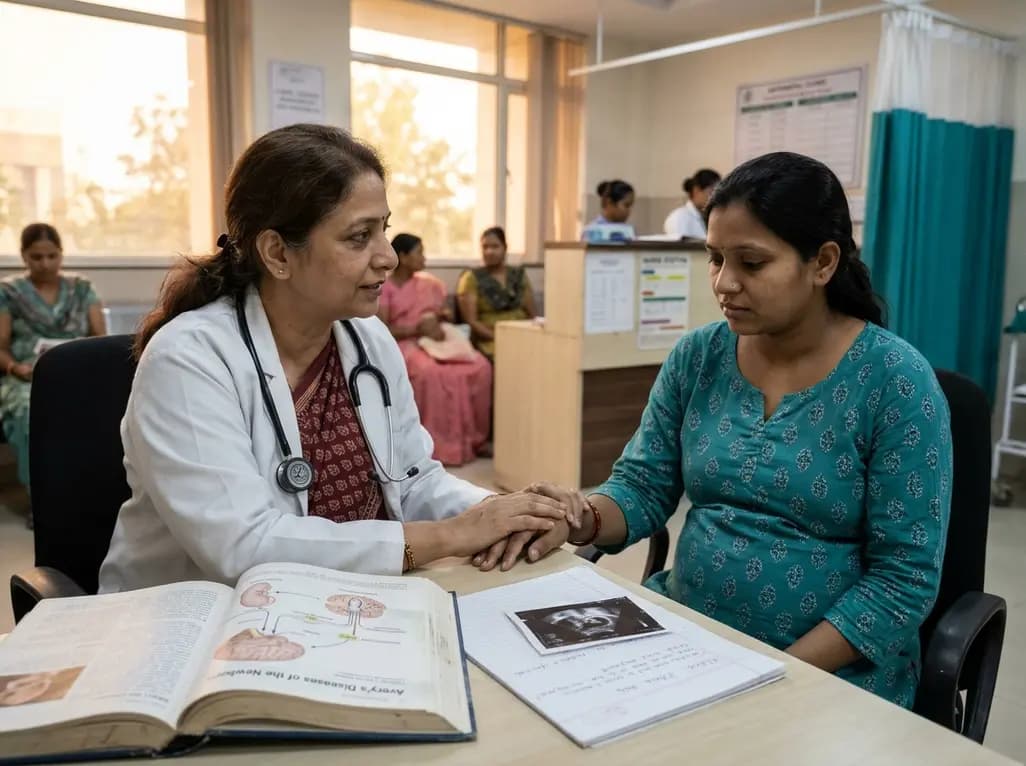
A comprehensive scoping review synthesises evidence linking prenatal maternal mental health to long-term offspring neurodevelopment, evaluating neuroendocrine, inflammatory, and epigenetic pathways while highlighting clinical screening and future research priorities.
Today

The Directorate General of Health Services directs Indian states to halt the hazardous reuse and reprocessing of single-use medical devices. Discover regulatory implications under the Drugs and Cosmetics Act, critical infection risks, legal liabilities, and operational changes required across clinical specialties.
Today
A 25-year multi-institutional cohort reveals high recurrence rates in pediatric giant cell tumor of bone, particularly in patients with open physes and bone marrow edema on preoperative MRI. Early surveillance and careful balance between growth plate preservation and tumor clearance are essential.
Today

India is advancing preventive healthcare by integrating genomics, artificial intelligence, and quantum technologies. With the SANGAM programme sequencing one million Indian genomes, clinicians can unlock personalized therapies, detect cardiometabolic risks early, and curb the burden of diabetes and heart disease.
Today
