.webp&w=384&q=75)

Loading, please wait...
Loading, please wait...

The World Health Organization (WHO) currently promotes the integration of human and veterinary healthcare. This occurs specifically through the One Health approach. However, achieving this goal depends entirely on sustainable workforces. Both sectors currently face significant shortages because of poor One Health workforce wellbeing. Consequently, studying these professionals together provides necessary evidence to support new initiatives. Therefore, researchers conducted a scoping review to clarify the existing knowledge in this area. Additionally, this study identifies many common professional challenges across both sectors.
The analysis of 47 investigations highlighted shared professional challenges in both the human and veterinary health sectors. But, narrow conceptualizations and an over-reliance on observational studies presented significant knowledge gaps. Furthermore, insufficient theory development limited the overall findings. Nonetheless, future researchers can address these limitations effectively. Specifically, they should focus on a more diverse range of professions. Because of this, the evidence underpinning mutual learning will eventually become much stronger. Also, these improvements will help create a more resilient and versatile workforce for the future.
Interprofessional learning opportunities on vocational health have been largely overlooked until recently. Yet, these initiatives could enhance wellbeing for both professional groups significantly. For instance, shared vocational training may lead to a more resilient health workforce. In addition, these programs encourage professionals to learn with, from, and about each other. As a result, the global health system becomes better prepared for emerging zoonotic threats. Similarly, India's National One Health Mission utilizes such interdisciplinary strategies to strengthen its public health infrastructure. So, this approach helps ensure long-term sustainability for both human and animal health providers.
Ultimately, supporting the people within the health workforce is essential for global safety. If we improve vocational wellbeing, then we improve the entire healthcare system's capacity. Therefore, researchers and policymakers must prioritize collaborative mental health strategies. Finally, this integrated focus will protect health providers and the populations they serve. For this reason, a unified approach to wellbeing is the best path forward.
The One Health approach recognizes that human and veterinary workers face remarkably similar systemic stressors. Because of this similarity, integrating their wellbeing strategies creates more effective support networks and effectively reduces burnout across both sectors.
Interprofessional learning allows different health disciplines to share vocational resources and coping strategies. Consequently, this collaboration fosters mutual understanding and develops a more resilient, versatile workforce prepared for multifaceted global health challenges.
Disclaimer: This content is for informational and educational purposes only. It does not constitute professional medical advice, diagnosis, or treatment. Always seek the advice of your physician or other qualified health provider with any questions you may have regarding a medical condition. Refer to the latest local and national guidelines for clinical practice.
References

Read summarized clinical updates, watch expert medical content, and earn CME certifications right from your smartphone.
Open your smartphone camera to scan and install.





A scoping review reveals shared professional challenges in human and veterinary health, highlighting the need for collaborative wellbeing initiatives....
6 months ago
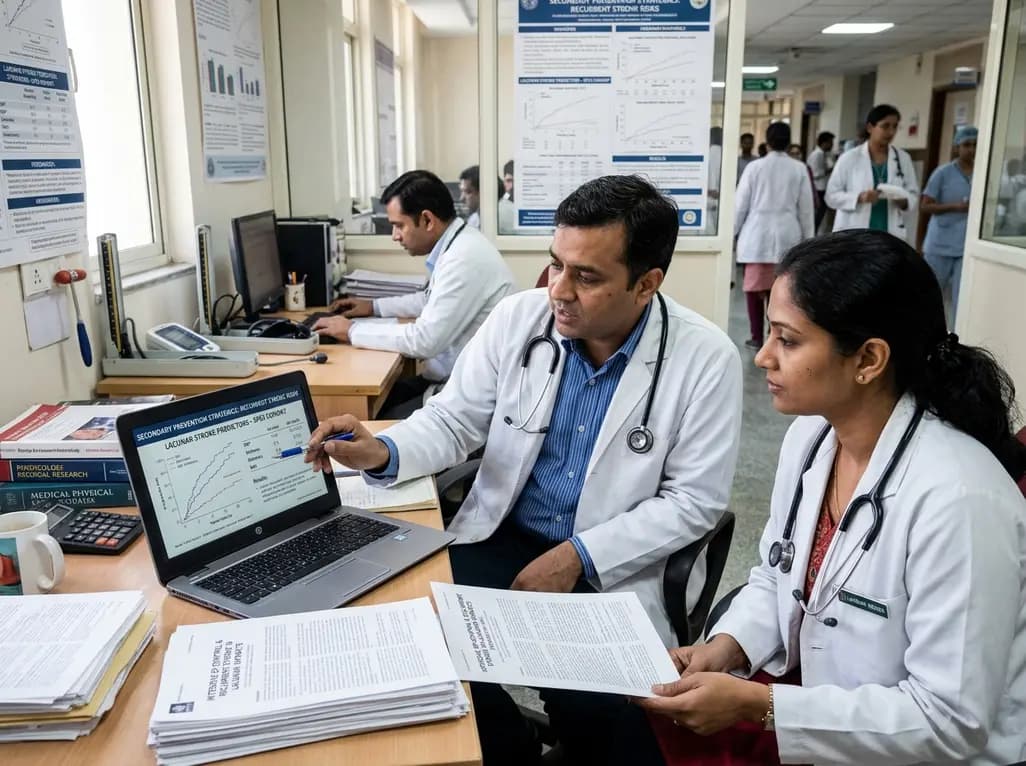
Explore vital recurrent stroke predictors in lacunar stroke patients managed with intensive blood pressure lowering. This analysis examines trial findings from SPS3 to uncover residual vascular risks, metabolic factors, and targeted secondary prevention strategies for high-risk neurological patients.
Today

Odisha has established India's first state-level clinical protocol specifically tailored for pregnant women with sickle cell disease. Developed with NHM and UNICEF, the framework provides structured antenatal screening, crisis mitigation, standardized referral pathways, and specialized interdisciplinary care.
Today

The Directorate General of Health Services directs Indian states to halt the hazardous reuse and reprocessing of single-use medical devices. Discover regulatory implications under the Drugs and Cosmetics Act, critical infection risks, legal liabilities, and operational changes required across clinical specialties.
Today

Mitochondria-targeted nanoparticles self-assembled from EGCG and L-glutamic acid effectively restore mitochondrial homeostasis, suppress synovial inflammation, and attenuate chondrocyte senescence in osteoarthritis, offering a promising disease-modifying nanotherapy.
Today

India is advancing preventive healthcare by integrating genomics, artificial intelligence, and quantum technologies. With the SANGAM programme sequencing one million Indian genomes, clinicians can unlock personalized therapies, detect cardiometabolic risks early, and curb the burden of diabetes and heart disease.
Today
