.webp&w=384&q=75)

Loading, please wait...
Loading, please wait...

Older adult maltreatment remains a critical concern for geriatric care providers who serve as the front line of identification. However, clinicians often find themselves in a difficult position when transitioning from identification to reporting. Consequently, understanding the psychological and institutional hurdles is vital for improving patient safety in India and globally.
Recent research highlights that while most professionals can identify risk factors, they frequently hesitate to report suspected abuse. Additionally, many providers cite a fear of negative consequences for their careers or the patient. Furthermore, a lack of clear reporting knowledge often leaves clinicians feeling unprepared for the legal ramifications. Specifically, in the Indian context, many are still unfamiliar with the provisions of the Maintenance and Welfare of Parents and Senior Citizens Act. Therefore, hospitals must prioritize training that builds confidence and psychological safety among staff.
Moreover, institutional support plays a pivotal role in encouraging active intervention. For instance, creating clear, anonymous reporting channels can significantly reduce the hesitation caused by professional or social barriers. Notably, family members are often the primary perpetrators, which adds a layer of emotional complexity to the case. As a result, a culture change is necessary to ensure that interdisciplinary teams feel empowered to protect vulnerable seniors without fear of retribution.
Common signs include unexplained injuries, sudden changes in financial status, and withdrawal from social activities. Additionally, poor hygiene or untreated medical conditions may indicate significant neglect.
Institutions can provide regular workshops on geriatric ethics and legal obligations. Furthermore, they should establish multidisciplinary committees to review suspected cases, thereby distributing the burden of decision-making.
Disclaimer: This content is for informational and educational purposes only. It is not intended to be a substitute for professional medical advice, diagnosis, or treatment. Always seek the advice of your physician or other qualified health provider with any questions you may have regarding a medical condition. Refer to the latest local and national guidelines for clinical practice.
References
Wyman J et al. Responding to Older Adult Maltreatment: Interdisciplinary Geriatric Care Provider Experiences and Training Needs. Can J Nurs Res. 2026 Apr 20. doi: 10.1177/08445621261443833. PMID: 42007766.
HelpAge India. Ageing in India: Exploring Preparedness & Response to Care Challenges. 2024.
Longitudinal Ageing Study in India (LASI). Wave 1 Report. 2020.

Read summarized clinical updates, watch expert medical content, and earn CME certifications right from your smartphone.
Open your smartphone camera to scan and install.





Healthcare providers frequently identify older adult maltreatment but face significant reporting barriers, necessitating a culture of psychological safety....
6 months ago
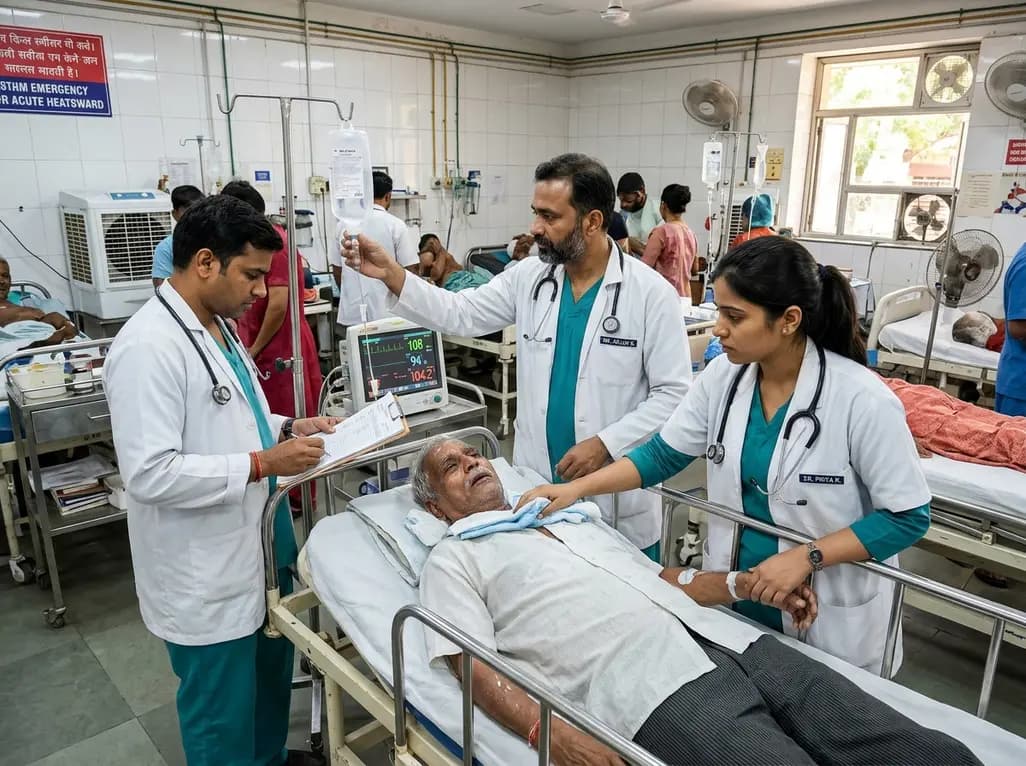
Recent epidemiological data reveals a dramatic surge in summer heat mortality driven by human-induced climate warming. This analysis explores the pathophysiological impacts on cardiac and renal systems, diagnostic dilemmas in death certification, and essential emergency cooling protocols for acute clinical care.
Today

Odisha has established India's first state-level clinical protocol specifically tailored for pregnant women with sickle cell disease. Developed with NHM and UNICEF, the framework provides structured antenatal screening, crisis mitigation, standardized referral pathways, and specialized interdisciplinary care.
Today

India is advancing preventive healthcare by integrating genomics, artificial intelligence, and quantum technologies. With the SANGAM programme sequencing one million Indian genomes, clinicians can unlock personalized therapies, detect cardiometabolic risks early, and curb the burden of diabetes and heart disease.
Today

A randomized controlled trial demonstrates that an eight-week dual-task training intervention significantly improves static and dynamic postural control over standard balance exercises in individuals with chronic ankle instability, addressing critical neurocognitive deficits during athletic and daily activities.
Today

A retrospective cohort study of 7,716 ICU patients from the MIMIC-IV database demonstrates that Gradient Boosting Decision Trees significantly outperform traditional SOFA scores in predicting in-hospital mortality among patients with sepsis and diabetes, with SHAP analysis providing clinical interpretability.
Today
