.webp&w=384&q=75)

Loading, please wait...
Loading, please wait...

Accurate older adult activity recognition is essential for effective monitoring in long-term care. However, health-related variability often makes movement patterns difficult for traditional AI to interpret. Specifically, postural deformities and chronic conditions can make different activities look similar. Consequently, standard models developed for the general population often struggle in geriatric settings. A recent study introduces a care-assessment-aware spatiotemporal transformer (CSTT) to solve this problem.
The CSTT framework integrates body key points, heatmaps, and personalized care level data. Therefore, the model understands the context of an individual's physical limitations. Notably, it dynamically adjusts its attention mechanism based on the user's specific care assessment. During validation, the model analyzed data from 51 participants aged 64 to 95. These individuals required varying levels of assistance.
The results are highly promising for the future of geriatric care. Despite significant intraclass variation, the CSTT model achieved an F-score and accuracy of 0.96. Furthermore, its area under the curve reached 0.98. These figures suggest that personalized modeling is the key to reliable monitoring. Eventually, these systems could improve fall detection and intervention speed in Indian care facilities.
Care level context allows the model to adjust its expectations for movement. By understanding a patient's physical assistance needs, the AI can better distinguish between similar-looking motions caused by deformities or health issues.
While the study focused on care facilities, the underlying CSTT framework is adaptable. Future iterations could support aging-in-place strategies by providing non-invasive, privacy-preserving monitoring in domestic environments.
Disclaimer: This content is for informational and educational purposes only. It does not constitute medical advice or a professional recommendation. Refer to the latest local and national guidelines for clinical practice.
References
Nahid N et al. Integrating Care Context With Skeleton and Depth Information for Older Adult Activity Recognition in a Care Facility Using Care-Assessment-Aware Spatiotemporal Transformer: Method and Validation Study. JMIR Aging. 2026 Apr 02. doi: 10.2196/80102. PMID: 41926761.
Sykes H. Human pose estimation and transformer models for privacy-preserving fall detection in low-power devices. Frontiers in Digital Health. 2025;7:112-124.
Kim Y et al. Real-time activity and fall detection using transformer-based deep learning models for elderly care applications. BMJ Health Care Inform. 2025;32(1):e101439.

Read summarized clinical updates, watch expert medical content, and earn CME certifications right from your smartphone.
Open your smartphone camera to scan and install.





A study presents the CSTT model, which significantly improves activity recognition accuracy for older adults by incorporating individualized care level data...
6 months ago
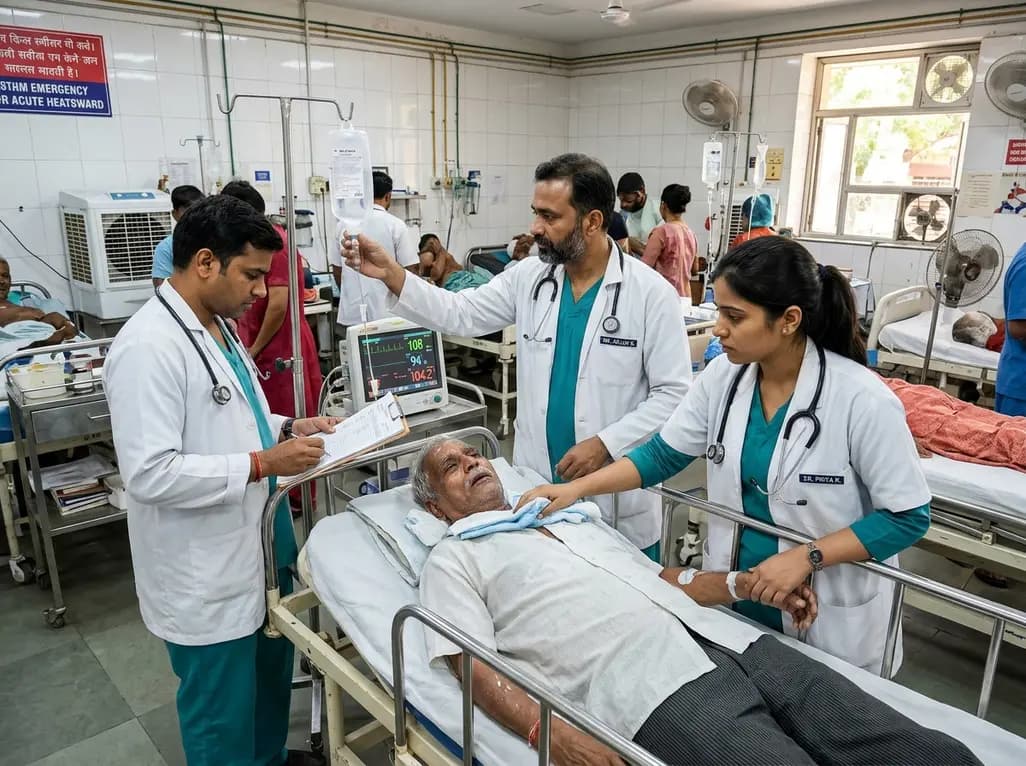
Recent epidemiological data reveals a dramatic surge in summer heat mortality driven by human-induced climate warming. This analysis explores the pathophysiological impacts on cardiac and renal systems, diagnostic dilemmas in death certification, and essential emergency cooling protocols for acute clinical care.
Today

Odisha has established India's first state-level clinical protocol specifically tailored for pregnant women with sickle cell disease. Developed with NHM and UNICEF, the framework provides structured antenatal screening, crisis mitigation, standardized referral pathways, and specialized interdisciplinary care.
Today

India is advancing preventive healthcare by integrating genomics, artificial intelligence, and quantum technologies. With the SANGAM programme sequencing one million Indian genomes, clinicians can unlock personalized therapies, detect cardiometabolic risks early, and curb the burden of diabetes and heart disease.
Today
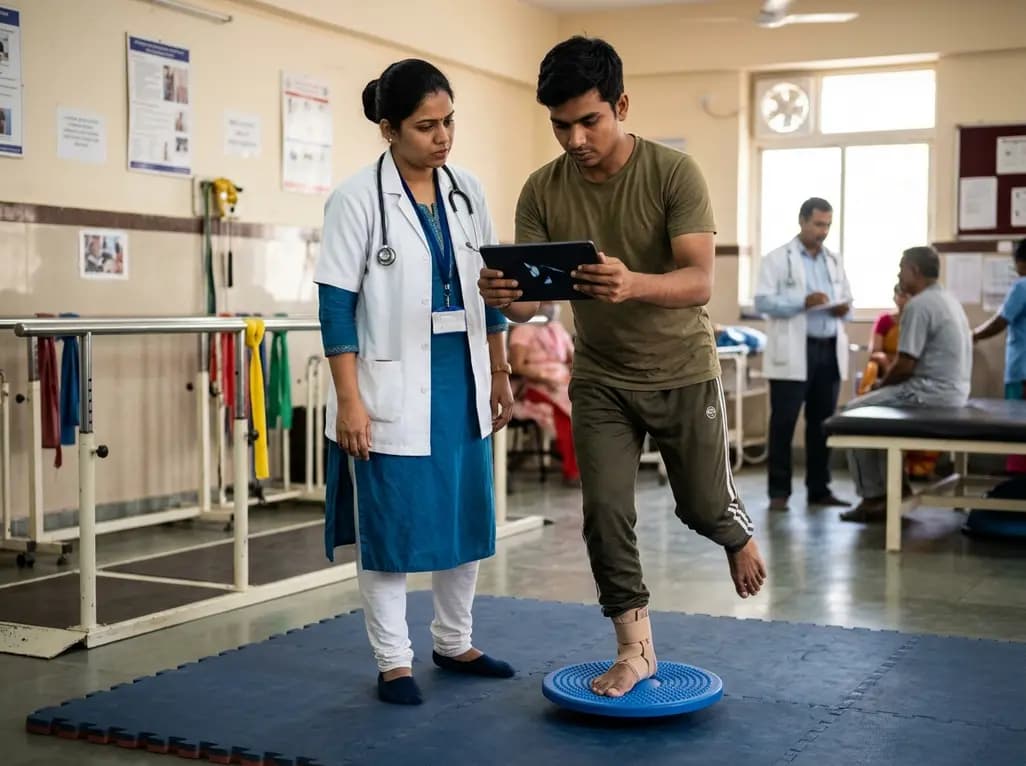
A randomized controlled trial demonstrates that an eight-week dual-task training intervention significantly improves static and dynamic postural control over standard balance exercises in individuals with chronic ankle instability, addressing critical neurocognitive deficits during athletic and daily activities.
Today

A retrospective cohort study of 7,716 ICU patients from the MIMIC-IV database demonstrates that Gradient Boosting Decision Trees significantly outperform traditional SOFA scores in predicting in-hospital mortality among patients with sepsis and diabetes, with SHAP analysis providing clinical interpretability.
Today
