.webp&w=384&q=75)

Loading, please wait...
Loading, please wait...

Odontogenic facial cellulitis represents one of the most frequent and challenging facial space infections encountered in clinical practice globally. This acute inflammatory condition originates primarily from untreated dental caries, deep periodontal lesions, or periapical pathology that extends beyond the alveolar bone. Because the oral cavity harbors a complex microenvironment, these deep tissue infections exhibit a polymicrobial nature. Consequently, pathogenic bacteria can rapidly spread along fascial planes, leading to severe and potentially life-threatening complications such as airway compromise, descending necrotizing mediastinitis, and systemic sepsis. In many developing regions, the widespread availability and over-the-counter misuse of systemic antimicrobials further exacerbate this clinical challenge. As a result, therapeutic failure and persistent soft tissue swelling frequently complicate patient care. To address this growing threat, recent scientific investigations have sought to delineate the exact bacterial species responsible for deep tissue fascial infections. Understanding local microbiological profiles remains essential for selecting targeted therapeutic agents. Moreover, evaluating antimicrobial susceptibility patterns allows clinicians to adjust empirical regimens effectively. Therefore, comprehensive surveillance of oral pathogens plays a pivotal role in optimizing clinical outcomes and curbing the expansion of drug-resistant microorganisms in head and neck infections.
Recent cross-sectional evidence demonstrates distinct patterns regarding both the anatomical origin and the microbiological profile of these deep facial space infections. Specifically, odontogenic facial cellulitis originates predominantly from lower posterior teeth, with the lower first molar identified as the single most frequent primary site of infection. Because of the anatomic positioning of lower molar apices relative to muscle attachments, purulent exudate routinely penetrates adjacent fascial spaces. Consequently, the infection spreads most commonly into the submandibular and submental spaces, causing marked external swelling, trismus, and localized pain. From a microbiological perspective, laboratory isolation procedures using selective media, Gram staining, and biochemical assays confirm that Gram-positive cocci remain the predominant bacterial pathogens. These organisms adapt efficiently to the hypoxic soft tissue environment, establishing robust bacterial colonies within deep fascial compartments. Furthermore, the persistent dominance of Gram-positive cocci highlights their primary pathogenic role in driving localized soft tissue destruction. Understanding these anatomical and microbiological characteristics helps clinicians localize the primary dental source quickly. Consequently, prompt surgical intervention, such as incision and drainage, can be effectively paired with targeted dental extraction or endodontic therapy to eliminate the reservoir of infection.
Evaluating antimicrobial susceptibility patterns yields critical clinical insights for optimizing empirical drug selection in facial soft tissue infections. Surprisingly, recent microbiological investigations reported complete resistance to metronidazole among isolated bacterial pathogens. Historically, metronidazole served as a cornerstone of anaerobic coverage for odontogenic infections worldwide. However, extensive over-the-counter antibiotic overuse and unguided empirical prescribing have significantly reduced its therapeutic efficacy. In contrast, susceptibility testing for other common antimicrobial agents, such as amoxicillin and clindamycin, yielded noteworthy observations. Importantly, prior systemic antibiotic administration by patients before hospital presentation showed no statistically significant association with altered susceptibility to amoxicillin or clindamycin. This finding indicates that short-term pre-admission antibiotic exposure does not automatically render these conventional first-line agents useless. Furthermore, beta-lactam drugs and lincosamides retain variable degrees of activity against non-resistant strains, making them valuable initial considerations. Nevertheless, the alarming surge in metronidazole resistance necessitates extreme caution when formulating empirical treatment guidelines. Clinicians must recognize that traditional anaerobic regimens may no longer provide adequate therapeutic coverage. Consequently, routine culture and sensitivity testing must be prioritized to ensure that prescribed antimicrobial therapies effectively suppress the offending pathogens and prevent treatment failure.
To achieve definitive species identification among highly resistant bacterial isolates, advanced molecular diagnostic tools are increasingly utilized. In recent cross-sectional research, resistant bacterial strains that demonstrated resistance to three or more distinct antimicrobial classes underwent precise 16S rRNA gene sequencing. This molecular analysis revealed a concerning prevalence of multidrug-resistant (MDR) organisms within deep facial space infections. Specifically, the sequencing data identified predominantly Bacillus, Enterococcus, and Staphylococcus species among the isolated multidrug-resistant pathogens. The identification of Enterococcus species is particularly troubling, as these Gram-positive cocci frequently exhibit intrinsic resistance to multiple antibiotic classes and can transfer resistance determinants to other microflora. Similarly, multidrug-resistant Staphylococcus species pose significant therapeutic challenges due to their ability to form resilient biofilms and cause persistent soft tissue destruction. Moreover, the presence of Bacillus species highlights the evolving complexity of polymicrobial head and neck infections. Consequently, these sequence data have been deposited in the NCBI GenBank to enrich global genomic databases and support ongoing epidemiological surveillance. Overall, these findings underscore the necessity of molecular tools in identifying unusual or highly resistant pathogens that standard biochemical tests might misidentify.
The emergence of multidrug resistance in odontogenic infections carries profound clinical implications for healthcare practitioners, surgeons, and emergency physicians. Traditionally, empirical protocols relied heavily on combination therapies involving metronidazole alongside penicillins. However, given the complete resistance to metronidazole observed in recent regional cohorts, clinicians must re-evaluate standard empirical choices. Instead, broad-spectrum beta-lactamase inhibitor combinations or alternative agents with documented local efficacy should be considered when managing severe fascial space infections. Furthermore, antibiotic stewardship programs must be aggressively implemented across both dental and medical primary care settings. Restricting over-the-counter antimicrobial sales and educating patients on the dangers of self-medication are essential steps in curbing further resistance. In addition, prompt surgical management remains the cornerstone of clinical success. Surgical decompression, pus drainage, and removal of the offending tooth significantly reduce bacterial load, thereby enhancing the efficacy of systemic antibiotic therapy. Ultimately, bridging microbiological research with clinical practice ensures that patients receive timely, targeted, and evidence-based interventions. By combining strict antimicrobial stewardship with precise diagnostic testing and timely surgical drainage, healthcare providers can effectively combat resistant facial cellulitis and improve patient survival rates.
Odontogenic facial cellulitis primarily originates from untreated dental caries or periapical infections, particularly in lower posterior teeth like the lower first molar. Bacterial pathogens break through the alveolar bone and penetrate surrounding soft tissue compartments. Because the infection is polymicrobial, organisms rapidly spread along anatomical fascial planes into the submandibular and submental spaces. This aggressive expansion causes severe facial swelling, pain, trismus, and potential airway compromise if left untreated.
Metronidazole resistance has risen significantly due to widespread over-the-counter antibiotic misuse, unguided self-medication, and non-prescribed empirical antimicrobial usage in many regions. Although metronidazole was historically effective against anaerobic oral pathogens, frequent irrational use has selected for resistant bacterial strains. As a result, empirical regimens relying solely on metronidazole may fail. Clinicians must now rely on detailed culture and antibiotic susceptibility testing to guide effective treatment for soft tissue fascial infections.
Recent molecular diagnostic studies utilizing 16S rRNA sequencing have identified Bacillus, Enterococcus, and Staphylococcus species as predominant multidrug-resistant pathogens in odontogenic facial cellulitis. These resistant strains demonstrate insensitivity to three or more antibiotic classes, complicating empirical therapy. The emergence of these multidrug-resistant organisms highlights the critical need for molecular surveillance, comprehensive microbiological evaluation, and strict adherence to antibiotic stewardship protocols in dental and medical clinical practice settings.
Disclaimer: This content is for informational and educational purposes only... Refer to the latest local and national guidelines for clinical practice.
References

Read summarized clinical updates, watch expert medical content, and earn CME certifications right from your smartphone.
Open your smartphone camera to scan and install.





A cross-sectional study on odontogenic facial cellulitis reveals predominant Gram-positive cocci, complete metronidazole resistance, and multidrug-resistant strains including Bacillus, Enterococcus, and Staphylococcus. These findings emphasize the urgent need for tailored empirical antimicrobial strategies.
4 weeks back

A large NHANES cohort study reveals that higher Healthy Eating Index scores significantly reduce all-cause mortality risk in CKD patients by 45%. This analysis highlights the importance of comprehensive diet quality and medical nutrition therapy in renal care to optimize long-term clinical survival.
Today

Explore real-world data showing how private oncogenetics and molecular tumor boards achieve 3-week consult turnaround, high ctDNA actionability, and vital germline variant detection, enhancing individualized cancer care and familial risk assessment.
Today

A meta-analysis of 13 propensity score-matched studies shows ViV-TAVR delivers lower early mortality and reduced bleeding compared to redo-SAVR for degenerated bioprosthetic aortic valves, though long-term hemodynamics warrant careful anatomical and patient-centered evaluation.
Today
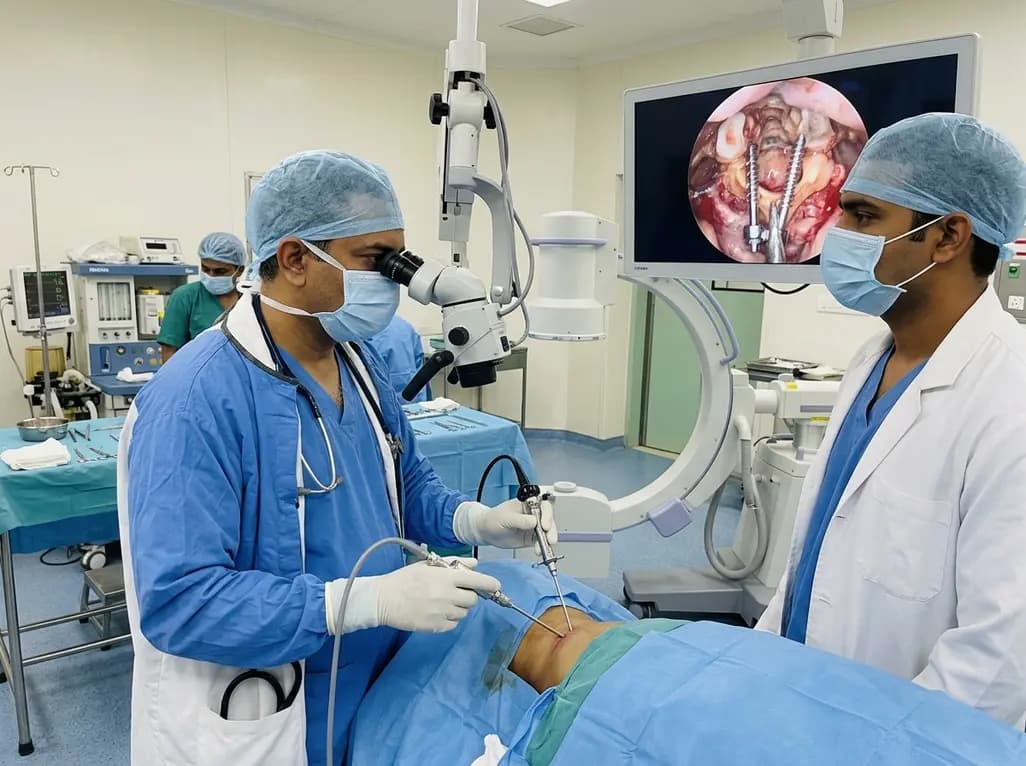
Endoscopic posterior cervical fusion combines minimally invasive decompression, joint preparation, and rigid screw-rod fixation for atlantoaxial pathologies. Early clinical findings demonstrate solid bony union, excellent symptom relief, and minimal soft-tissue morbidity without significant vascular compromise.
Today

The All-India Food Processors' Association has approached the Supreme Court to oppose FSSAI's proposed per-100g benchmark for front-of-pack warning labels, advocating instead for a per-serving threshold. We explore the regulatory showdown, nutritional evidence, and implications for clinical lifestyle counseling.
Today
