.webp&w=384&q=75)

Loading, please wait...
Loading, please wait...

Malnutrition represents one of the most critical yet frequently underdiagnosed complications in chronic gastrointestinal disorders. Clinicians managing Crohn's disease and ulcerative colitis regularly encounter systemic debility driven by chronic inflammation, malabsorption, and reduced intake. Consequently, initiating targeted nutritional support in IBD has become a cornerstone of comprehensive multidisciplinary care. A landmark clinical trial led by Kübra Derya İpek and Hande Öngün Yılmaz provides timely evidence on structured dietary therapy. This study evaluated the comparative efficacy of an oral high-protein diet alone versus an enteral-supplemented protocol. The findings confirm that timely intervention directly curbs disease severity while reversing nutritional compromise.
Malnutrition affects a substantial proportion of patients suffering from active inflammatory bowel disease. Catabolic inflammatory cascades, elevated circulating cytokines, and persistent mucosal shedding accelerate muscle protein breakdown. Furthermore, symptoms like chronic abdominal cramping, postprandial nausea, and food avoidance exacerbate macronutrient deficits. Clinicians frequently observe that protein-energy wasting impairs wound healing, increases infectious complications, and compromises response to biological therapies. In Indian clinical practice, baseline nutritional vulnerabilities frequently complicate inflammatory disease courses. Dietary practices often lack sufficient bioavailable protein, which accelerates sarcopenia during inflammatory flares. Therefore, formal screening represents an urgent clinical priority across all outpatient and inpatient consultations. Standard tools such as the Nutritional Risk Screening 2002 enable clinicians to identify vulnerable individuals before severe depletion occurs. Addressing these vulnerabilities early prevents prolonged hospitalizations and markedly enhances quality of life. Hence, clinicians must integrate structured nutritional risk screening into every routine follow-up encounter to optimize long-term clinical trajectories.
The prospective study investigated forty-eight malnourished adults with inflammatory bowel disease over a rigorous twelve-week period. Researchers assigned participants to either an individualized high-protein diet or a high-protein regimen combined with oral enteral supplements. At baseline, severe malnutrition affected 79.2% of the cohort, underscoring the profound physiological toll of mucosal inflammation. However, by week twelve, structured dietary interventions reduced the overall prevalence of severe malnutrition to 45.8%. Notably, disease activity indices dropped in direct correlation with nutritional improvement across both arms. In the high-protein diet cohort, mean Nutritional Risk Screening scores declined from 2.75 to 2.17. Meanwhile, the enteral-supplemented group achieved a reduction from 3.38 to 2.92. In addition, patients receiving enteral supplementation demonstrated significantly superior weight gain compared to whole-food counseling alone. Specifically, the supplemented group gained an average of 6.24 kilograms, whereas the diet-alone group achieved 3.55 kilograms. These findings confirm that combining high protein targets with specialized enteral formulations delivers accelerated recovery in catabolic patients.
Understanding the physiological mechanisms of nutritional support in IBD explains why dietary optimization alters clinical trajectories. Amino acids like glutamine, arginine, and branched-chain amino acids serve as essential metabolic substrates for rapidly dividing enterocytes. Consequently, high-protein intake promotes tight-junction protein synthesis, which restores intestinal barrier function. Moreover, adequate dietary protein mitigates the catabolic consumption of skeletal muscle during tumor necrosis factor-driven systemic inflammation. Enteral formulations provide easily absorbable peptides and balanced micronutrients without triggering osmotic diarrhea or postprandial intestinal distention. Furthermore, modern polymeric enteral supplements favorably modulate gut microbiome composition by increasing short-chain fatty acid-producing commensal bacteria. These microbial metabolites suppress nuclear factor-kappa B activation, thereby reducing mucosal cytokine release. As systemic inflammation abates, nutrient absorption improves, establishing a synergistic cycle of clinical recovery. Thus, protein-dense nutritional therapies do not merely supply calories; they actively suppress inflammatory pathways and support comprehensive mucosal restitution.
Translating trial evidence into routine practice requires systematic staging and customized prescription pathways. Gastroenterologists should first stratify patients using validated objective metrics, including serum albumin, body mass index, and functional strength tests. When Nutritional Risk Screening indicates moderate-to-severe risk, dietary counseling alone often fails to fulfill elevated metabolic demands. In such scenarios, clinicians should promptly initiate oral nutritional supplements containing specialized high-protein formulations. Prescribing between 400 and 600 kilocalories daily via divided enteral servings bridges the energy gap without diminishing voluntary oral intake. Additionally, healthcare providers must monitor patient adherence closely, as taste fatigue and mild gastrointestinal symptoms can decrease compliance. Adjusting product temperature, alternating palatable flavors, and utilizing semi-elemental products for malabsorptive patients significantly improves compliance rates. Regular follow-up at six and twelve weeks ensures timely calibration of macronutrient ratios as clinical remission develops. Therefore, collaborative management between gastroenterologists and specialist dietitians ensures sustained adherence, minimizes adverse tolerance events, and secures durable nutritional stabilization.
Implementing targeted nutritional support in Indian clinical settings presents distinctive sociocultural challenges and opportunities. Many Indian patients follow strict vegetarian or lacto-vegetarian diets, which often supply insufficient essential amino acids during catabolic relapses. In addition, common misconceptions prompt patients to adopt overly restrictive diets during flares, eliminating pulses, legumes, and dairy entirely. Consequently, clinicians must actively dispel these restrictive beliefs and provide culturally congruent dietary plans. Recommending well-cooked lentils, paneer, tofu, curd, and isolated whey protein concentrates ensures adequate protein intake without exacerbating gastrointestinal symptoms. When dietary intake cannot meet the daily target of 1.2 to 1.5 grams of protein per kilogram, prescribing specialized oral nutritional formulas becomes mandatory. Clinicians must also consider economic factors, identifying affordable, locally accessible commercial enteral supplements to optimize long-term adherence. Regular educational discussions empower patients to view medical nutrition as an indispensable therapy alongside pharmacotherapy. Ultimately, establishing customized nutritional protocols helps clinicians overcome dietary limitations, ensuring superior disease control across diverse patient populations.
Targeted nutritional support delivers bioavailable amino acids essential for mucosal restitution and cellular repair. It replenishes critical substrate pools that suppress systemic catabolism, cytokine synthesis, and gut permeability. In addition, specialized enteral formulations modulate the colonic microbiome and increase short-chain fatty acid production. This physiological cascade dampens active mucosal inflammation, leading to measurable reductions in standardized disease severity scores such as the Crohn's Disease Activity Index and Mayo score.
Clinicians should prescribe enteral supplements when patients exhibit moderate-to-severe malnutrition, significant weight loss, or high Nutritional Risk Screening scores. Furthermore, oral supplements become essential when patients cannot meet at least seventy-five percent of their daily caloric and protein requirements through regular food. Supplementation provides easily digestible peptides and balanced micronutrients, promoting faster weight regain and clinical recovery than whole-food counseling alone in active catabolic states.
Clinicians should implement validated screening instruments such as the Nutritional Risk Screening 2002 or the Subjective Global Assessment during initial outpatient consultations. Additionally, clinicians should track objective parameters, including body mass index, mid-upper arm circumference, and functional handgrip dynamometry. Serial measurements of serum albumin, micronutrient panels, and disease activity indices complete the diagnostic assessment, allowing physicians to detect subclinical malnutrition and guide timely intervention.
Disclaimer: This content is for informational and educational purposes only... Refer to the latest local and national guidelines for clinical practice.
References
Derya İpek K et al. The effect of nutritional support on clinical disease progress and malnutrition in inflammatory bowel patients. Br J Nutr. 2026 Sep 29. doi: 10.1017/S0007114526108472. PMID: 42806934.
Forbes A, Escher J, Hebuterne X, et al. ESPEN practical guideline: Clinical Nutrition in inflammatory bowel disease. Clin Nutr. 2020;39(3):632-653.
Balestrieri P, Ribolsi M, Guarino MPL, et al. Nutritional Aspects in Inflammatory Bowel Diseases. Nutrients. 2020;12(2):372.

Read summarized clinical updates, watch expert medical content, and earn CME certifications right from your smartphone.
Open your smartphone camera to scan and install.





A new clinical trial demonstrates that structured high-protein diets and enteral supplementation significantly decrease malnutrition and disease activity in inflammatory bowel disease patients, offering clear guidance for gastroenterologists and nutritionists.
Today
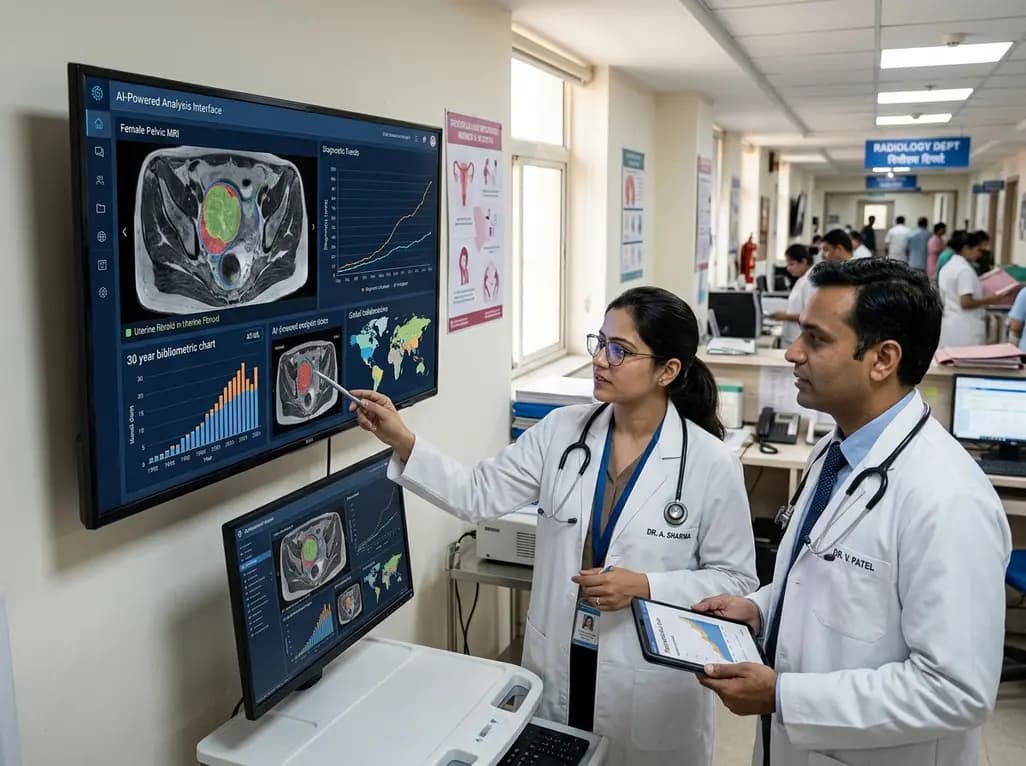
A 30-year bibliometric analysis highlights key research trends in AI in women's health from 1992 to 2024. Discover how evolving computational models, global institutional collaborations, and clinical decision support tools are shaping maternal, oncological, and reproductive care worldwide.
Today

A term neonate with severe respiratory distress and massive cardiomegaly was diagnosed with a giant immature pericardial teratoma. Multimodal imaging guided successful complete surgical resection, relieving life-threatening cardiopulmonary compression and leading to an excellent clinical outcome.
Today

A Level I trauma center study shows a brief bedside mental health intervention boosts 30-day follow-up screening adherence by 84% in nonviolent injury patients. However, outcomes for violence survivors reveal critical care gaps, underscoring the urgent need for specialized community violence intervention programs.
Today

A preclinical study demonstrates that the SGLT2 inhibitor remogliflozin attenuates cyclophosphamide-associated peripheral neurotoxicity in rats. Remogliflozin restores antioxidant balance via Nrf2, suppresses NF-κB-driven neuroinflammation, activates PI3K/Akt survival signaling, and preserves structural myelin integrity.
Today
