.webp&w=384&q=75)

Loading, please wait...
Loading, please wait...

Rapid technological breakthroughs continue to reshape modern clinical medicine. Specifically, clinicians actively deploy AI in women's health to optimize reproductive outcomes and refine oncological risk assessments. A landmark bibliometric study published in 2026 highlights this scientific transformation spanning three decades. By evaluating literature from 1992 to 2024, the study illuminates international research networks and emerging diagnostic paradigms. Furthermore, understanding these historical patterns equips medical specialists with the critical foresight needed to adopt algorithmic tools safely.
Over the past thirty years, computational healthcare software evolved from rigid rule-based systems into sophisticated neural architectures. Researchers conducted a descriptive bibliometric study using the Web of Science Core Collection database to examine this trajectory. Specifically, the authors retrieved 592 foundational articles published between 1992 and 2024. They utilized VOSviewer and the Bibliometrix R package to analyze global trends, author productivity, and keyword clusters. Consequently, the findings demonstrate an exponential increase in scientific publications during the last seven years.
Moreover, earlier investigations focused primarily on basic statistical models for perinatal charting. In contrast, modern investigators deploy deep neural networks and computer vision to solve intricate clinical challenges. Keyword co-occurrence analysis reveals that terms like "women," "health," and "risk" dominate current academic literature. This linguistic pattern reflects an urgent clinical commitment to mitigating preventable complications across female lifespans. Therefore, academic literature is shifting decisively from speculative theory toward actionable decision-support tools. Ultimately, this comprehensive bibliometric mapping provides clinicians with an essential roadmap for evidence-based digital adoption.
International academic partnerships drive the rapid evolution of digital medical tools across reproductive healthcare. The bibliometric study revealed that 1,079 institutions across 89 countries contributed to artificial intelligence literature in women's health. Notably, the United States leads global research productivity with 742 indexed publications. Within this national cohort, the University of California System emerged as the most prolific institution, authoring 62 studies.
Furthermore, medical informatics journals play an indispensable role in disseminating high-impact discoveries. The Journal of Medical Internet Research serves as the leading publication outlet, featuring 20 seminal papers. Similarly, individual researcher productivity shows concentrated leadership, with author Benavent M. producing five influential publications. However, the data highlights substantial geographic concentration across affluent Western nations. Developing nations publish fewer original studies despite experiencing heavy burdens of maternal and cervical morbidity. Consequently, building cross-border academic consortia remains crucial for global equity. In addition, collaborative research initiatives ensure that predictive models reflect diverse genetic and environmental contexts. Thus, international scientific cooperation will directly determine the real-world generalizability of emerging clinical technologies.
Computational algorithms already deliver measurable clinical benefits across several core obstetrical and gynecological disciplines. For instance, computer vision models assist clinicians in identifying early-stage cervical dysplasias during colposcopy. Moreover, deep learning algorithms detect subtle breast microcalcifications on screening mammograms with outstanding diagnostic sensitivity. Consequently, these automated secondary readers help radiologists reduce diagnostic oversights and avoid unnecessary biopsies.
Additionally, reproductive endocrinologists utilize predictive algorithms to personalize assisted reproductive therapy protocols. Machine learning classifiers analyze morphokinetic embryo imaging data to select viable embryos for transfer. Similarly, maternal-fetal medicine specialists leverage neural networks to analyze electronic fetal monitoring signals during active labor. These intelligent monitoring systems detect fetal distress markers before irreversible hypoxic injury occurs. Furthermore, predictive risk models evaluate routine biomarker panels to anticipate gestational hypertension and preeclampsia. Therefore, algorithmic triage systems allow obstetricians to implement timely therapeutic strategies for vulnerable mothers. Ultimately, these clinical decision-support systems strengthen clinical judgment rather than replacing human expertise.
Despite substantial algorithmic progress, healthcare systems must overcome significant technical and ethical vulnerabilities before routine clinical deployment. Machine learning models depend heavily on the diversity and quality of their baseline datasets. Historically, clinical registries contained limited data from minority demographic groups, creating biased prediction algorithms. Consequently, uncalibrated diagnostic models frequently display reduced diagnostic precision when treating underrepresented female populations.
Furthermore, deep learning architectures frequently operate as opaque mathematical black boxes. This lack of mechanistic interpretability prevents clinicians from understanding the precise variables driving automated risk classifications. In addition, patient data confidentiality remains a critical concern across mobile digital health applications. Many commercial applications collect sensitive menstrual and reproductive metrics without standardized clinical oversight. Therefore, medical societies must mandate rigorous external validation across heterogeneous clinical cohorts before approving software tools. Additionally, multidisciplinary teams must incorporate transparent explainability features into algorithmic interfaces. By establishing strict regulatory benchmarks, healthcare leaders can guarantee equitable, reliable performance for all patient cohorts.
The global bibliometric trends offer vital strategic opportunities for India's healthcare landscape. India faces substantial logistical challenges, including uneven specialist distribution and high disease burdens in rural regions. Consequently, validated computational tools can bridge critical gaps in primary obstetrics and gynecological care. For instance, point-of-care digital colposcopy devices allow community health workers to screen for cervical neoplasia during field visits.
Moreover, radiation-free thermal imaging platforms supported by machine learning provide non-invasive breast examinations in peripheral primary health centres. Automated ultrasound biometry algorithms also help general practitioners detect fetal growth restriction accurately. However, healthcare institutions must calibrate imported algorithms on local Indian patient cohorts before clinical deployment. Regional genetic diversity, nutritional variations, and maternal comorbidities significantly alter predictive baselines. Furthermore, hospital administrators must align digital deployments with the Ayushman Bharat Digital Mission guidelines. Thus, investing in indigenous clinical validation ensures data security and diagnostic accuracy. Ultimately, scalable digital solutions will empower Indian physicians to deliver equitable, life-saving maternal healthcare across underserved communities.
Machine learning models significantly improve early detection by analyzing mammograms, ultrasound scans, and cervical colposcopy images with remarkable diagnostic precision. Consequently, these computational algorithms help clinicians detect malignant lesions before clinical symptoms manifest. Furthermore, automated digital analysis reduces false negatives in high-volume screening programs. Therefore, integrating diagnostic algorithms into clinical workflows empowers gynecologic oncologists to initiate timely treatments, which ultimately improves five-year survival rates across diverse patient populations.
Clinicians encounter several significant hurdles, including limited external dataset validation, workflow disruption, and data privacy restrictions. Furthermore, many machine learning tools lack diverse demographic training, which risks generating biased predictions in underrepresented ethnic cohorts. Additionally, high infrastructure costs and regulatory hurdles prevent widespread adoption across resource-limited community centers. Consequently, multidisciplinary teams must perform rigorous local validation to confirm clinical utility before introducing algorithmic triage into routine obstetrics practice.
Indian healthcare institutions can adopt digital tools by investing in cloud-enabled infrastructure and standardized electronic health records. Furthermore, hospital administrators should implement hybrid screening programs that combine automated triage algorithms with community outreach. Additionally, medical societies must formulate clear validation protocols aligned with national digital health frameworks. Consequently, structured training initiatives will enable healthcare professionals to interpret algorithmic risk scores accurately, ensuring equitable and patient-centered maternal interventions across rural regions.
Disclaimer: This content is for informational and educational purposes only and does not substitute professional medical judgment. Refer to the latest local and national guidelines for clinical practice.
References

Read summarized clinical updates, watch expert medical content, and earn CME certifications right from your smartphone.
Open your smartphone camera to scan and install.





A 30-year bibliometric analysis highlights key research trends in AI in women's health from 1992 to 2024. Discover how evolving computational models, global institutional collaborations, and clinical decision support tools are shaping maternal, oncological, and reproductive care worldwide.
Today
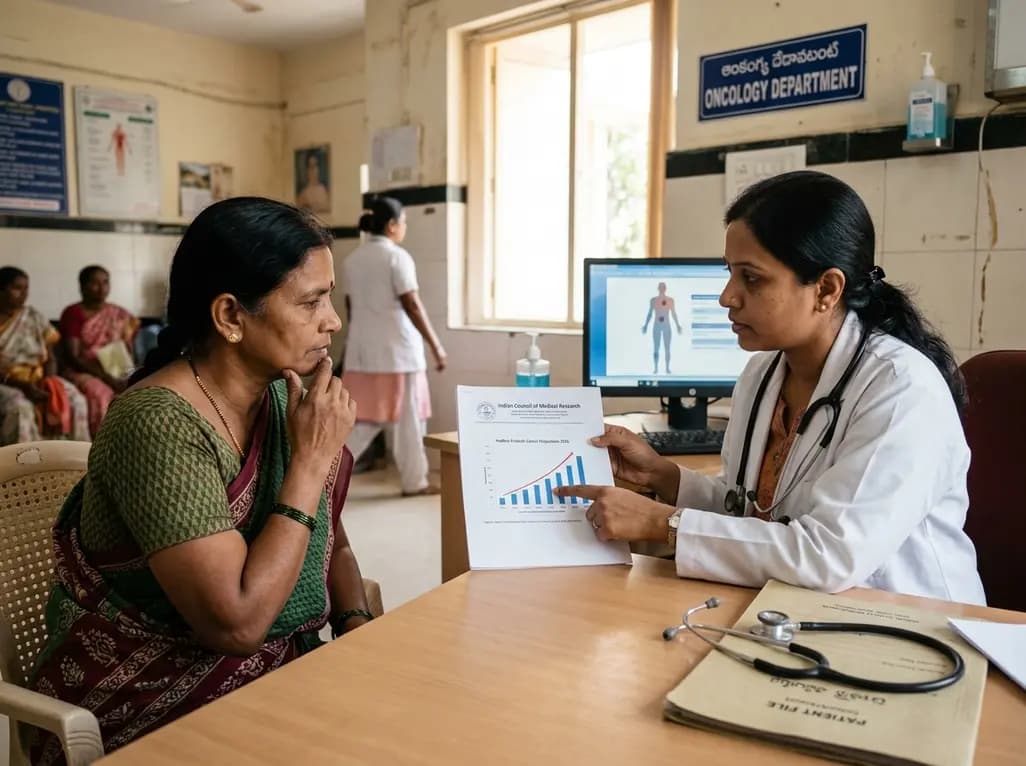
A new ICMR-NINE profile projects 65,000 new adult cancer cases in Andhra Pradesh for 2026, with women carrying the highest burden. The findings underscore an urgent need for oncological infrastructure, early detection initiatives, and public awareness campaigns addressing widespread tobacco and metabolic risk factors.
Today

Aortic root aneurysms often develop silently, yet timely intervention provides a critical window to salvage the native aortic valve. Preserving the patient's own anatomy avoids lifelong anticoagulation, provided clinicians identify root dilatation before secondary leaflet distortion and ventricular failure occur.
Today

A Level I trauma center study shows a brief bedside mental health intervention boosts 30-day follow-up screening adherence by 84% in nonviolent injury patients. However, outcomes for violence survivors reveal critical care gaps, underscoring the urgent need for specialized community violence intervention programs.
Today
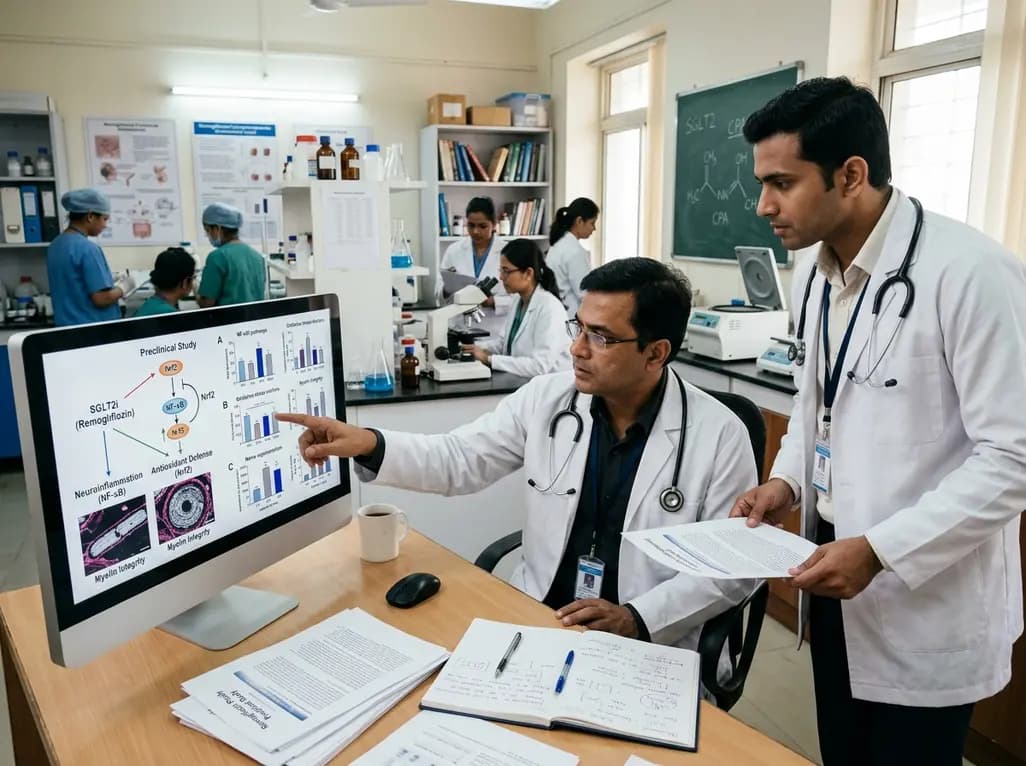
A preclinical study demonstrates that the SGLT2 inhibitor remogliflozin attenuates cyclophosphamide-associated peripheral neurotoxicity in rats. Remogliflozin restores antioxidant balance via Nrf2, suppresses NF-κB-driven neuroinflammation, activates PI3K/Akt survival signaling, and preserves structural myelin integrity.
Today
