.webp&w=384&q=75)

Loading, please wait...
Loading, please wait...

Recent nutritional science emphasizes the functional value of agro-industrial by-products. Specifically, sweet apricot kernels derived from Prunus armeniaca processing represent a highly nutritious yet underutilized resource. A recent analytical study evaluated three Central Asian cultivars, namely Suhany, Kandek, and Kurmayi. The researchers demonstrated that these kernels provide rich concentrations of plant protein, dietary fiber, cardioprotective unsaturated fatty acids, and essential minerals. Furthermore, their favorable biochemical profile supports metabolic wellness while maintaining safe cyanogenic glycoside levels for routine human consumption.
From a macronutrient perspective, sweet apricot kernels represent an energy-dense dietary component with substantial functional value. Proximate analysis revealed a low moisture level ranging between 3.3% and 4.7%, which supports microbiological stability and shelf-life preservation. Furthermore, total lipid content accounted for 40.0% to 49.9% of dry seed weight, providing a concentrated source of essential fats. In addition to high lipid concentrations, the kernels exhibited a notable protein fraction ranging from 17.9% to 18.9%, comparable to almonds and walnuts.
Moreover, crude fiber comprised 8.1% to 14.7% of total kernel weight. Consequently, incorporating these kernels into daily diets significantly assists in meeting recommended daily fiber goals. Fiber plays an established role in modulating glycemic response, promoting satiety, and supporting gut microbiome diversity. Additionally, ash content measured between 2.2% and 2.7%, confirming a preserved spectrum of vital inorganic minerals. Therefore, these underutilized seeds provide a balanced nutritional matrix for functional food applications.
Evaluating amino acid architecture is fundamental when determining the clinical value of plant-based proteins. In this context, sweet apricot kernels demonstrate a well-rounded amino acid profile capable of supporting cellular synthesis and tissue maintenance. Quantitative analysis revealed that glutamic acid is the predominant amino acid across all tested cultivars, representing 24% to 25% of the total amino acid pool. Because glutamic acid acts as a neurotransmitter precursor and fuels enterocytes, it maintains intestinal mucosal integrity and systemic homeostasis.
Furthermore, these kernels supply meaningful amounts of branched-chain and essential amino acids that support metabolic recovery and lean muscle preservation. In addition, the balanced distribution of amino acid fractions enhances protein solubility and emulsification properties. Consequently, food technologists can utilize protein isolates derived from these seeds in clinical enteral formulations and functional supplements. Therefore, sweet apricot kernel proteins represent a sustainable alternative to conventional plant protein sources.
Cardiovascular health is strongly influenced by dietary fatty acid composition, and sweet apricot kernels display an exceptionally favorable lipid architecture. The total fat content is overwhelmingly dominated by unsaturated fatty acids, which confer clear cardioprotective benefits. Specifically, oleic acid (C18:1, cis-9) represents 24% to 29% of the total lipid fraction. Clinical evidence demonstrates that dietary oleic acid effectively reduces low-density lipoprotein cholesterol while preserving high-density lipoprotein levels and lowering vascular inflammation.
Moreover, linoleic acid (C18:2, cis-9,12), an essential omega-6 polyunsaturated fatty acid, accounts for 5% to 9% of the total lipid content. Linoleic acid serves as an indispensable structural component of biological cell membranes and regulates eicosanoid biosynthesis. Because the kernels maintain a low saturated fatty acid ratio, their inclusion in balanced diets mitigates atherogenic risk factors. Thus, lipid extracts from sweet apricot kernels represent valuable culinary oils suitable for supporting cardiovascular health.
Beyond macronutrients, sweet apricot kernels deliver an impressive array of essential trace elements and bioactive polyphenols. Mineral quantification demonstrated clinically meaningful levels of zinc, magnesium, and copper. For example, a single standard serving of 30 grams provides up to 11% of the daily zinc requirement, between 7% and 20% for magnesium, and 78% for copper. Magnesium supports enzymatic reactions and vascular tone, whereas zinc and copper regulate immune function and endogenous antioxidant defenses.
Additionally, the seeds contain notable concentrations of total polyphenols, ranging from 29 to 194.8 mg Gallic Acid Equivalents per 100 grams dry weight. These phenolic compounds scavenge free radicals, thereby attenuating cellular oxidative stress and chronic low-grade inflammation. Furthermore, vitamin C concentrations ranged between 2.2 and 7.1 mg per 100 grams, providing synergistic antioxidant defense. Consequently, consuming these kernels enhances daily antioxidant intake, fostering long-term metabolic health.
When evaluating stone fruit kernels, clinicians must assess cyanogenic glycoside content to ensure consumer safety. Bitter apricot varieties contain high levels of amygdalin, which hydrolyzes into toxic hydrogen cyanide upon ingestion. In contrast, sweet apricot kernels exhibit negligible amygdalin concentrations, ranging between 0.06 and 0.88 grams per 100 grams. Consequently, standard dietary consumption of sweet cultivars does not pose acute cyanogenic toxicity risks to human health.
Nevertheless, healthcare professionals should educate individuals regarding the crucial distinction between bitter and sweet varieties. Patients must only consume verified sweet cultivars sourced from reputable producers adhering to standardized food safety regulations. In addition, individuals with severe tree nut allergies should exercise caution due to potential botanical cross-reactivity. When incorporated sensibly into balanced diets, sweet kernels offer a safe, nutrient-dense dietary supplement. Therefore, clear labeling and public education will facilitate their safe clinical adoption.
Sweet apricot kernels contain minimal amygdalin levels (0.06 to 0.88 g/100 g), making them safe for normal dietary consumption. Conversely, bitter kernels contain high cyanogenic glycoside concentrations that release dangerous amounts of hydrogen cyanide upon digestion. Therefore, consumers must strictly choose verified sweet cultivars to prevent acute toxicity while enjoying the dense macronutrient and micronutrient benefits provided by the seeds.
Sweet apricot kernels support cardiovascular wellness through their favorable unsaturated lipid profile, predominantly consisting of oleic and linoleic acids. These healthy fatty acids lower circulating low-density lipoprotein cholesterol, combat systemic inflammation, and improve arterial elasticity. Furthermore, high magnesium content promotes optimal vascular tone and blood pressure regulation, making these kernels a valuable component of heart-healthy dietary strategies for metabolic disease prevention.
Yes, sweet apricot kernels provide nutritionally relevant quantities of essential trace minerals that support physiological balance. Specifically, a single 30-gram serving fulfills up to 78% of the daily requirement for copper, 20% for magnesium, and 11% for zinc. Consequently, regular dietary inclusion assists cellular enzymatic functions, enhances immune responses, improves antioxidant defenses, and maintains overall bone and connective tissue health.
Disclaimer: This content is for informational and educational purposes only and does not constitute medical advice, diagnosis, or treatment. Always consult a qualified healthcare professional regarding any medical condition or dietary changes. Refer to the latest local and national guidelines for clinical practice.
References

Read summarized clinical updates, watch expert medical content, and earn CME certifications right from your smartphone.
Open your smartphone camera to scan and install.





A recent study evaluated the nutritional and bioactive properties of sweet apricot kernels, showing rich unsaturated fats, protein, essential minerals, and low amygdalin levels.
last month

With post-monsoon dengue surges threatening South Asian health systems, physicians must refine triage and management. This guide covers vital warning signs, plasma leakage detection, crystalloid titration, and vector containment strategies to prevent mortality during seasonal arboviral epidemics.
Today

Findings from Project Viva indicate that sustained postpartum weight retention, rather than excessive gestational weight gain alone, directly worsens women's mid-life cardiovascular health, degrading blood pressure and glycemic parameters decades after delivery.
Today
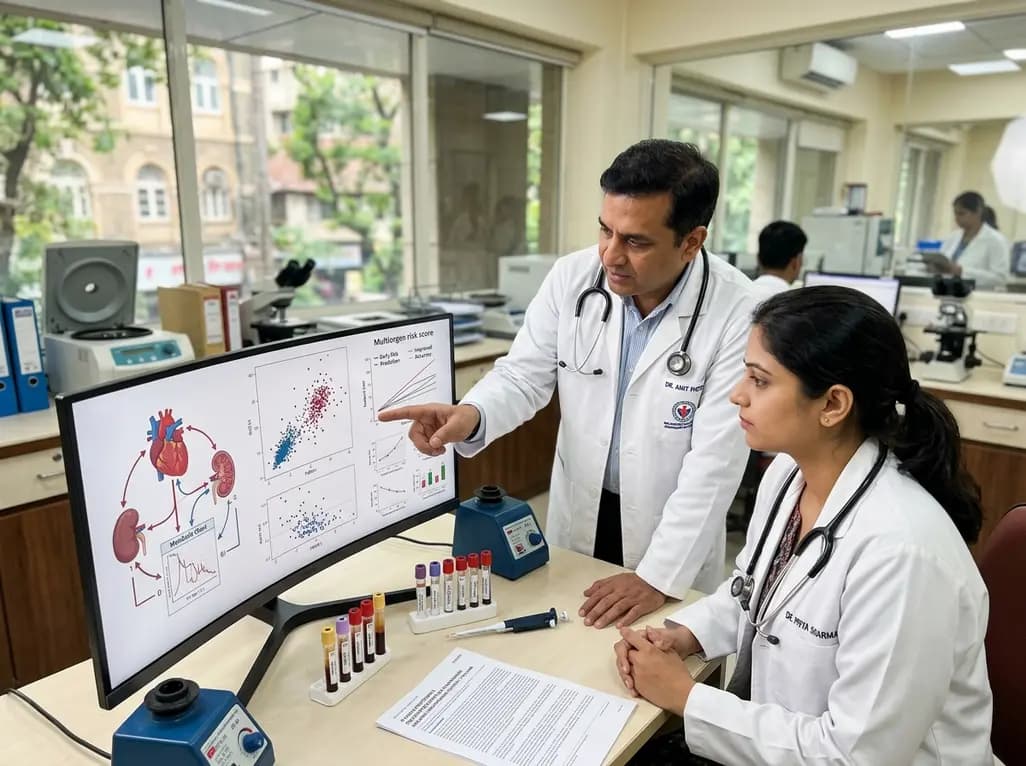
A large UK Biobank study reveals that plasma proteomic signatures capture preclinical organ damage and improve multiorgan risk prediction across early CKM syndrome stages 0 to 2 beyond traditional PREVENT clinical models.
Today

A retrospective CBCT study reveals that superior TMJ space asymmetry correlates moderately with occipital condyle-atlas-axis asymmetry in unilateral TMJ osteoarthritis, highlighting an imaging correlate between jaw biomechanics and upper cervical alignment rather than a standalone diagnostic marker.
Today

A Bayesian multilevel meta-analysis reveals that aerobic training combined with moderate carbohydrate restriction modestly lowers HbA1c in type 2 diabetes. However, sparse data and very low certainty leave incremental benefits over exercise or diet alone unproven, highlighting the need for individualized care.
Today
