

Loading, please wait...
Loading, please wait...
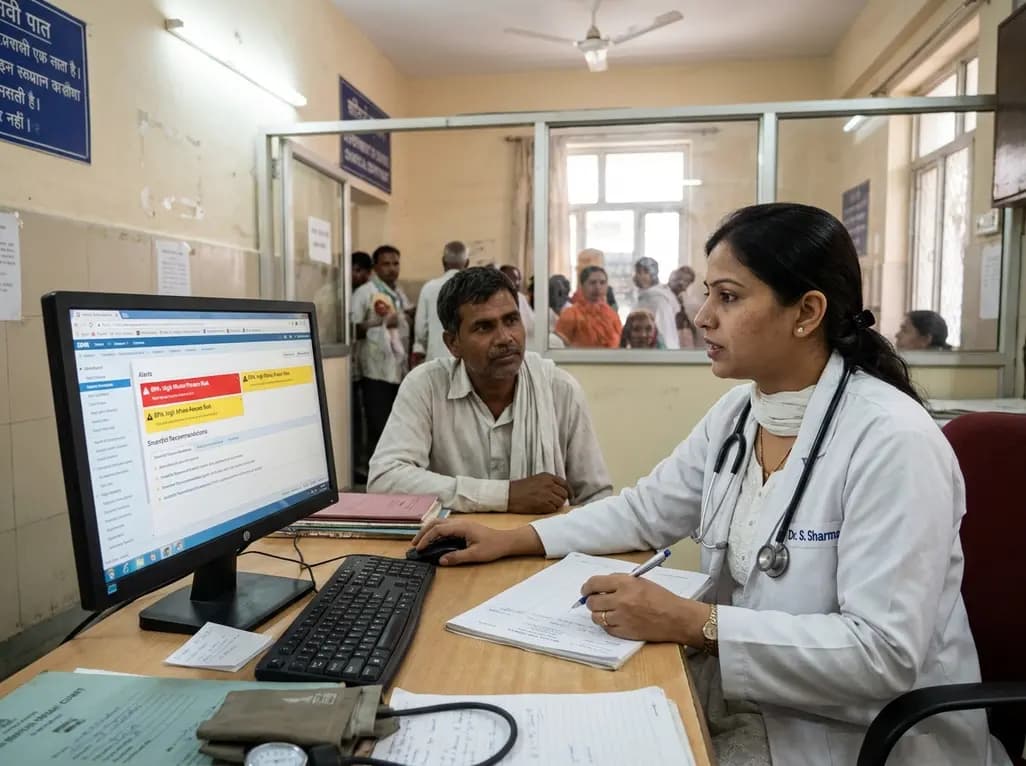
In contemporary healthcare systems, addressing non-medical drivers of disease has evolved from an aspirational concept into an operational priority. Primary care clinicians frequently recognize that unmet economic, nutritional, and emotional challenges undermine health outcomes. However, screening surveys often generate passive data that providers cannot easily translate into clinical action. Recent implementation evidence reveals that establishing a structured whole-person screening workflow within electronic health records transforms inert survey responses into actionable referrals, diagnostic documentation, and proactive care.
Primary care practices globally treat patients facing complex social and economic hurdles. For example, food insecurity, housing instability, financial distress, and emotional exhaustion disrupt medical treatment plans. Despite widespread recognition of these barriers, health systems often collect questionnaire data that remains idle in electronic records. Consequently, busy clinicians face a dilemma during brief consultations. They must manage acute medical conditions while attempting to recall external community services. Furthermore, traditional paper forms and disconnected surveys fail because they do not interface with the clinician's immediate charting routine. When screening data remains passive, primary care physicians cannot readily order social services or track longitudinal risks. In safety-net clinics and health centers, this structural barrier generates notable provider frustration. Patients disclose significant vulnerabilities, yet clinicians lack practical tools to respond. Therefore, healthcare leaders increasingly recognize that screening without structured intervention offers minimal clinical benefit. Systems urgently require electronic mechanisms that couple patient-reported challenges with standardized point-of-care actions.
To overcome these documentation barriers, health informatics specialists designed an integrated electronic intervention for busy outpatient clinics. Specifically, the initiative implemented a Whole PERSON Health Score assessment embedded directly inside the electronic medical record. This screening instrument captures multiple domains, including physical symptoms, emotional distress, social support, and financial resources. The assessment generates colour-coded indicators using an intuitive traffic-light framework. For instance, red and yellow markers immediately highlight severe or moderate vulnerabilities requiring clinical attention. Most importantly, the electronic system triggers a Best Practice Advisory whenever qualifying red or yellow domains appear. This automated prompt directs the clinician into a specialized SmartSet order bundle. Consequently, providers avoid searching through disparate menus or memorizing external referral numbers. Additionally, program leaders paired this point-of-care tool with an executive accountability dashboard. This transparent monitoring system tracks clinic screening rates and referral volumes in real time. As a result, primary care teams maintain continuous oversight over population health activities.
A primary difficulty in addressing social needs involves translating patient disclosure into verifiable healthcare action. Fortunately, this digital workflow bridges that gap during routine patient visits. Over the multi-year study period, patients completed over 177,000 health score assessments across participating community clinics. Remarkably, nearly 98% of these completed screenings identified at least one actionable red or yellow domain. This high prevalence shows that vulnerable populations carry substantial multi-domain needs that standard consultations overlook. When the Best Practice Advisory alerted clinicians, the system linked the notification to the patient's recent screening in 99% of cases. Clinicians subsequently opened the dedicated SmartSet in nearly 83% of all advisory presentations. Moreover, providers documented structured downstream workflow actions in over 82% of these encounters. These recorded actions included diagnostic Z-codes, which formally record social risk factors in medical charts. Clinicians also initiated formal referrals for social services, food resources, and mental healthcare. Thus, the integrated system converted self-reported vulnerabilities into tangible clinical support.
Achieving sustained provider adoption represents a notorious challenge in clinical informatics. Initially, busy healthcare providers often resist electronic advisories due to alert fatigue and documentation burdens. Nevertheless, this implementation demonstrated a dramatic upward trajectory in physician engagement over time. During the initial rollout period, clinicians opened the SmartSet in only 41% of advisory presentations. However, as clinics refined their support routines and reviewed performance data, engagement climbed steadily. By the final study month, clinicians opened the SmartSet in over 94% of presentations. Furthermore, robust regression analyses confirmed that this remarkable rise reflected genuine institutional adoption rather than temporary novelty. By incorporating relevant ICD-10 Z-codes directly into the order set, the system simplified administrative burden. Consequently, clinicians documented non-medical risks with unprecedented consistency. Capturing standardized Z-codes helps health networks demonstrate community needs to public health authorities and payers. In addition, routine documentation allows medical teams to track social trends across patient panels. Ultimately, thoughtful interface design fosters sustained clinical participation.
These evaluation findings offer compelling lessons for primary care networks worldwide, including health systems modernizing their digital infrastructure. In resource-constrained public clinics, doctors manage high patient volumes alongside complex chronic diseases. Clinicians rarely possess sufficient time to investigate financial distress or food insecurity during standard consultations. However, initiatives like national digital health missions show that standardized health records hold transformative potential. For instance, pairing digital screening with pre-configured order sets allows clinics to systematically link vulnerable patients to welfare services. Furthermore, executive accountability dashboards ensure that healthcare centers maintain reliable screening standards over time. In fact, relying on passive surveys or expecting individual doctors to remember community programs inevitably yields erratic results. In contrast, embedding point-of-care decision support into routine encounters guarantees that identified needs trigger structured, verifiable interventions. Therefore, healthcare administrators should prioritize intuitive tools that minimize cognitive friction for frontline providers. When electronic systems simplify documentation and referral logistics, clinicians can deliver genuinely comprehensive, whole-person care.
Traditional screening programs typically collect paper surveys or passive digital forms that sit unnoticed in the medical record. In contrast, this workflow couples the assessment directly to real-time clinical decision support. When a patient reports vulnerabilities, the system immediately presents an advisory and pre-populated order set to the physician. Consequently, clinicians can document relevant diagnosis codes and submit referrals without navigating complex menus, turning passive survey data into active care.
The electronic system prevents cognitive overload by applying selective trigger criteria and streamlined execution paths. Rather than interrupting every encounter, the advisory appears only when a patient completes a recent qualifying assessment demonstrating moderate or severe need. Furthermore, opening the advisory launches a bundled SmartSet that consolidates coding, patient instructions, and community referrals into a single screen. This efficient integration saves valuable documentation time, which significantly improves clinician satisfaction and long-term compliance.
Yes, community health centers can replicate this digital model by configuring standard electronic health record features. Organizations do not require expensive proprietary software to link standardized questionnaires to order sets and automated referrals. However, successful implementation requires leadership commitment, transparent accountability dashboards, and clear team-based workflows. When nursing and support staff manage the screening assessments prior to the clinician encounter, primary care providers can seamlessly finalize referrals without disrupting busy daily clinics.
Disclaimer: This content is for informational and educational purposes only and should not be taken as professional medical advice. Always consult a healthcare professional for diagnosis and treatment decisions. Refer to the latest local and national guidelines for clinical practice.
References
Khurana D et al. Electronic Health Record-Embedded Workflow to Operationalize Whole-Person Screening in Safety-Net Primary Care: Observational Implementation Evaluation Study. J Med Internet Res. 2026 Nov 13. doi: 10.2196/101920. PMID: 43024930.
Gottlieb LM, Wing H, Adler NE. Addressing social needs in health care settings: evidence, challenges, and opportunities for implementation. Annu Rev Public Health. 2017;38:157-176.
Bitton A, Fifield J, Raghavan R, et al. Primary health care strengthening and social determinants of health. Bull World Health Organ. 2021;99(11):810-818.

Read summarized clinical updates, watch expert medical content, and earn CME certifications right from your smartphone.
Open your smartphone camera to scan and install.





A study in safety-net clinics reveals that embedding a Whole Person Health Score with Best Practice Advisories and SmartSets in the EHR increased clinical action and raised tool adoption to 94%.
Today

A landmark study reveals that lipid-rich malignant ascites alters the T-cell metabolic transcriptome, causing cholesterol efflux and impaired fatty acid oxidation. This suppresses TCR signalling and blocks BiTE immunotherapy, while lipid depletion restores antitumour cytotoxicity in ovarian cancer.
Today

Novel clinical evidence demonstrates the feasibility of combining VA-ECMO with the NyokAssist self-expanding transvalvular pump for active left ventricular unloading in infarct-related cardiogenic shock, achieving successful stabilization and decannulation.
Today

Recent crash analyses demonstrate significant variations in traffic injury severity across vehicle seating positions. Electric vehicle passengers face disproportionately higher trauma risks than drivers, particularly during airbag deployments, demanding adapted emergency assessment and clinical vigilance.
Today
Knosp grade 4 Cushing's disease poses severe surgical risks due to deep cavernous sinus invasion. A long-term study demonstrates that combining maximal safe transsphenoidal resection with early adjuvant stereotactic radiotherapy achieves 87% disease control while eliminating major neurovascular morbidity.
Today
