

Loading, please wait...
Loading, please wait...

Cardiogenic shock complicating acute myocardial infarction presents severe therapeutic dilemmas. Clinicians frequently initiate venoarterial extracorporeal membrane oxygenation to restore systemic perfusion and rescue failing organs. However, retrograde aortic flow sharply increases cardiac afterload and impairs coronary circulation. Consequently, interventional cardiologists emphasize prompt left ventricular unloading to protect vulnerable cardiac myocytes. Emerging self-expanding ventricular assist devices now offer promising solutions to decompress the left ventricle while mitigating classical vascular access complications.
Peripheral venoarterial extracorporeal membrane oxygenation provides vital biventricular and pulmonary support. Nevertheless, retrograde arterial reinjection creates a substantial hemodynamic paradox. Because the arterial cannula forces blood toward the aortic root, left ventricular afterload rises precipitously. When severe ischemic injury impairs left ventricular contractility, the aortic valve fails to open against this high pressure. Consequently, blood rapidly pools inside the left ventricle, causing chamber dilatation and elevated end-diastolic pressure. This pathological elevation transmits backward into pulmonary circulation, generating severe pulmonary edema and alveolar hemorrhage. Furthermore, elevated cavity pressure stretches the ventricular wall and increases myocardial tension. This mechanical stress compresses intramural coronary vessels and restricts subendocardial perfusion. Because starving myocardium requires rest, unvented VA-ECMO paradoxically aggravates ischemic damage. In addition, static blood within the aortic root raises intraventricular thrombosis risks. Thus, extracorporeal support without decompression presents serious clinical obstacles. Intensive care teams must recognize these consequences and institute active venting promptly.
Active left ventricular unloading counteracts the detrimental consequences of retrograde mechanical circulatory support. Continuous transvalvular blood aspiration directly reduces chamber volume and lowers end-diastolic pressure. As a result, myocardial wall tension falls, drastically diminishing myocardial oxygen consumption. Moreover, lowering intracavitary pressure restores the transmyocardial perfusion gradient, which improves native coronary perfusion to stunned tissue. Clinical data show that early decompression expedites functional cardiac recovery. In addition, venting relieves pulmonary venous congestion, mitigating lung injury and accelerating mechanical ventilator weaning. Active unloading also eliminates intracardiac blood stasis, which prevents ventricular thrombus formation and thromboembolic strokes. Furthermore, ventricular decompression stabilizes systemic hemodynamics, permitting rapid down-titration of high-dose inotropes and vasopressors. Reducing catecholamines protects patients from lethal arrhythmias, peripheral vasoconstriction, and metabolic exhaustion. Therefore, combining extracorporeal life support with active transvalvular venting provides comprehensive cardioprotection. Ultimately, this coordinated approach converts high-risk rescue therapy into an effective bridge to myocardial recovery or advanced mechanical therapies.
Conventional microaxial blood pumps require large-bore arteriotomies that often trigger vascular laceration and severe limb ischemia. To overcome these hazards, engineers developed the NyokAssist device, an innovative self-expanding percutaneous ventricular assist system. Specifically, this catheter features a slender 9 French insertion profile that enters femoral access smoothly over a guidewire. Once positioned across the aortic valve, the nitinol-based impeller expands automatically to 24 French. Consequently, the expanded impeller delivers powerful transvalvular support up to 3.5 liters per minute. In addition, the device locates its drive motor externally rather than inside the patient. Placing the motor externally prevents heat generation inside the bloodstream, significantly reducing thermal hemolysis. Furthermore, the pump operates efficiently at moderate speeds between 18,000 and 25,000 revolutions per minute. In contrast to conventional devices requiring faster rotational speeds, this moderate speed shields erythrocytes from mechanical shear trauma. Thus, this novel technology combines miniature vascular entry with high hemodynamic output.
A pioneering clinical case recently demonstrated the clinical feasibility of this self-expanding pump during acute myocardial infarction. Physicians deployed the NyokAssist pump alongside peripheral VA-ECMO in a 56-year-old male experiencing profound cardiogenic shock. Following transfemoral access, operators positioned the 9 French device across the aortic valve into the left ventricle. Simultaneously, the clinical team executed urgent coronary angiography and successful percutaneous coronary intervention on the culprit left circumflex lesion. The pump immediately unloaded the left ventricle, stabilizing systemic blood pressure and decreasing pulmonary pressures. As a direct consequence, the patient achieved swift metabolic normalization and reversal of end-organ hypoperfusion. On post-procedure day five, intensive care teams successfully decannulated the patient from VA-ECMO. The patient subsequently maintained hemodynamic stability on solitary NyokAssist support for seven additional days. Because irreversible ischemic necrosis prevented native recovery, clinicians transferred the patient for heart transplantation consideration. Remarkably, no vascular injuries or hemolysis occurred throughout the support period.
Vascular access complications remain a formidable barrier in emergency mechanical circulatory support. Large-bore cannulas exceeding 14 French frequently cause retroperitoneal hematomas, arterial dissection, and lower limb ischemia. Consequently, peripheral vascular injuries often diminish the survival advantage of mechanical unloading. In contrast, the 9 French insertion sheath of the NyokAssist system reduces arterial puncture trauma substantially. Smaller sheath calibers maintain distal leg perfusion, minimizing the danger of acute compartment syndrome. Furthermore, small arteriotomies simplify femoral deployment during active resuscitation, saving critical time. In addition, post-procedural vascular closure becomes significantly safer and more dependable. Operators achieve rapid hemostasis using conventional percutaneous closure devices or brief manual compression. This reduced profile especially benefits female patients and individuals with severe peripheral vascular disease or tortuous anatomy. Moreover, minimizing vascular trauma prevents major blood transfusions, which otherwise trigger systemic inflammation and multi-organ failure. Therefore, low-profile self-expanding technology represents a vital structural advance for shock management.
Venoarterial ECMO delivers retrograde arterial flow, which substantially elevates left ventricular afterload. When myocardial infarction impairs ventricular contractility, the aortic valve remains closed against this pressure. Consequently, blood accumulates in the left ventricle, causing chamber dilatation, subendocardial ischemia, and pulmonary edema. Active left ventricular unloading extracts pooled blood, reduces wall stress, decreases myocardial oxygen demand, and prevents intraventricular thrombosis. Therefore, venting protects ischemic myocardium and facilitates hemodynamic recovery.
Standard microaxial pumps require large-bore arteriotomies between 14 and 18 French, increasing bleeding and limb ischemia risks. In contrast, this self-expanding pump enters vascular access through a slender 9 French catheter. Once advancing across the aortic valve, the nitinol impeller self-expands to 24 French to deliver robust cardiac output. Additionally, its external motor prevents bloodstream heating and hemolysis, ensuring safer long-term hemodynamic support with simplified post-procedural vascular closure.
Clinicians diagnose left ventricular distension using bedside echocardiography showing poor aortic valve opening, spontaneous echocardiographic contrast, and worsening mitral regurgitation. Elevated pulmonary capillary wedge pressure and progressive pulmonary edema on chest radiography also indicate severe afterload mismatch. In infarct-related cardiogenic shock, prophylactic unloading upon VA-ECMO initiation significantly improves survival compared to delayed rescue venting. Prompt decompression prevents refractory pulmonary hemorrhage and preserves viable myocardium before irreversible multiorgan damage occurs.
Disclaimer: This content is for informational and educational purposes only. It is not intended as medical advice, diagnosis, or treatment. Always consult qualified healthcare professionals before implementing clinical changes or therapies. Refer to the latest local and national guidelines for clinical practice.
References

Read summarized clinical updates, watch expert medical content, and earn CME certifications right from your smartphone.
Open your smartphone camera to scan and install.





Novel clinical evidence demonstrates the feasibility of combining VA-ECMO with the NyokAssist self-expanding transvalvular pump for active left ventricular unloading in infarct-related cardiogenic shock, achieving successful stabilization and decannulation.
Today
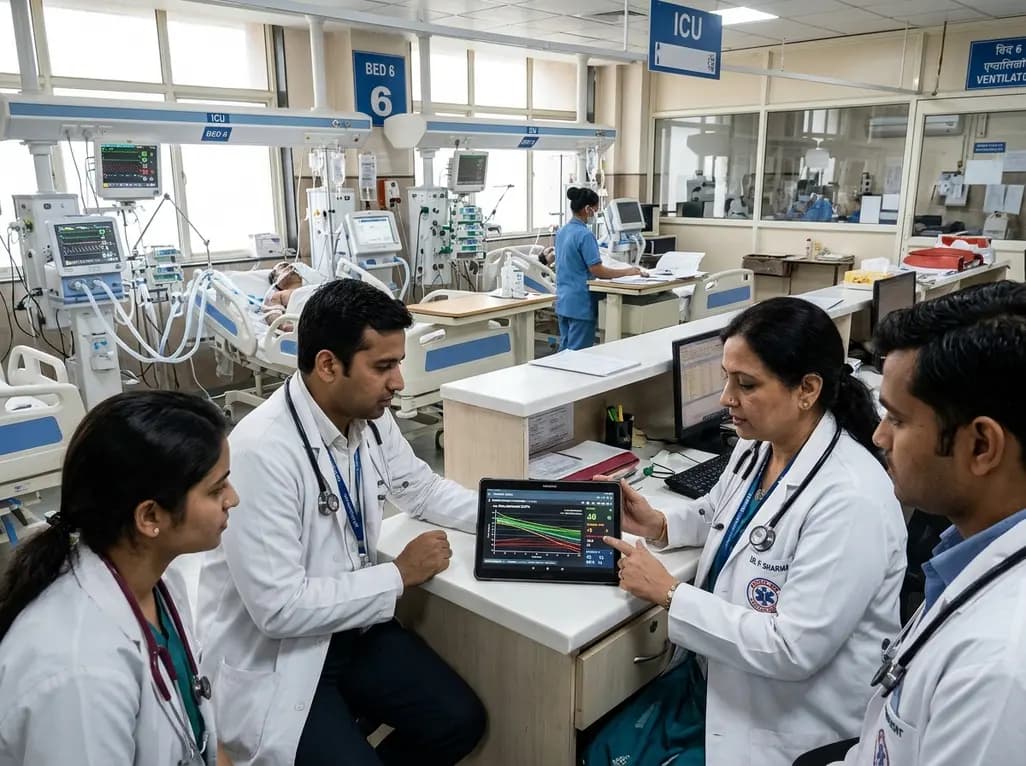
A multicenter study validates a machine learning-guided recalibrated SOFA score, demonstrating significantly improved ICU mortality discrimination while preserving the simple, additive, point-based structure critical for bedside decision-making.
Today

A landmark study reveals that lipid-rich malignant ascites alters the T-cell metabolic transcriptome, causing cholesterol efflux and impaired fatty acid oxidation. This suppresses TCR signalling and blocks BiTE immunotherapy, while lipid depletion restores antitumour cytotoxicity in ovarian cancer.
Today

Recent crash analyses demonstrate significant variations in traffic injury severity across vehicle seating positions. Electric vehicle passengers face disproportionately higher trauma risks than drivers, particularly during airbag deployments, demanding adapted emergency assessment and clinical vigilance.
Today

Understand the causal role of Lipoprotein(a) in cardiovascular disease, why international guidelines recommend once-in-a-lifetime molar testing, and the clinical implications of recent phase 3 RNA outcome trials.
Today
