

Loading, please wait...
Loading, please wait...

Managing Knosp grade 4 CD presents one of the most demanding technical challenges in modern skull base surgery and neuroendocrinology. In this extreme anatomical subtype, corticotroph adenomas extend lateral to the internal carotid artery within the cavernous sinus. Consequently, complete microscopic clearance via standard transsphenoidal surgery remains virtually impossible without extreme neurovascular risk. Persistent hypercortisolism substantially accelerates systemic cardiovascular morbidity, metabolic deterioration, and overall mortality. Therefore, clinicians must eliminate endocrine excess while avoiding catastrophic surgical complications. Historical attempts at aggressive cavernous sinus dissection frequently resulted in internal carotid injury, oculomotor nerve palsy, and disabling cranial neuropathies. Because dedicated studies on this rare cohort remain scarce, surgeons have debated whether radical extirpation justifies these profound hazards. Recent clinical evidence offers compelling guidance. A systematic protocol combining intentional maximal safe tumor decompression with planned early adjuvant radiotherapy establishes a viable paradigm. This dual approach aims to neutralize systemic biochemical toxicity while preserving neurological integrity and patient quality of life throughout prolonged post-intervention follow-up periods.
Surgical management for invasive corticotroph adenomas requires a disciplined balance between tumor cytoreduction and anatomical safety. During transsphenoidal exploration, skull base surgeons deliberately limit cavernous sinus exploration to avoid dissecting lateral to the internal carotid artery. Consequently, the operating team intentionally leaves residual lateral disease within the dural compartment. However, surgeons still maximize debulking across the sellar, suprasellar, and medial parasellar corridors. Furthermore, substantial central tumor volume reduction alleviates mass effect on adjacent neural pathways. This surgical restraint directly prevents direct mechanical trauma to the intracavernous cranial nerves and avoids carotid laceration. In addition, debulking reduces total circulating adrenocorticotropic hormone burdens, which stabilizes severe hypercortisolemic manifestations prior to secondary treatments. Neurosurgeons emphasize that heroic attempts to peel tumor capsules off the lateral dural walls rarely confer curative biochemical remission in Knosp grade 4 CD. Instead, targeted subtotal decompression establishes an optimal anatomical bed for adjuvant stereotactic interventions. Therefore, deliberate cytoreduction protects critical neurovascular structures while establishing conditions necessary for definitive multimodal disease control.
Following surgical cytoreduction, clinicians deliver early adjuvant stereotactic radiotherapy specifically targeting residual lateral cavernous sinus disease. Historically, neurosurgeons deferred radiation until radiographic progression occurred, fearing cumulative radiation toxicities. However, in aggressive corticotroph tumors, delaying radiotherapy permits prolonged hypercortisolemia, compounding severe endocrine and cardiovascular sequelae. Therefore, prompt postoperative delivery of stereotactic radiosurgery or fractionated stereotactic radiotherapy serves as an indispensable primary adjuvant strategy. By precisely conforming high-dose radiation fields to residual parasellar tissue, radiation oncologists spare the optic chiasm and brainstem from excessive exposure. Furthermore, modern stereotactic planning permits steep dose falloff across the cavernous sinus margins. As a result, early radiation halts residual corticotroph cell division and progressively suppresses autonomous hormone secretion. In clinical cohorts, early radiotherapy systematically induced delayed endocrine normalization without incurring catastrophic optic neuropathy or stroke. Consequently, the combination of planned surgical decompression and prompt targeted irradiation transforms an untreatable surgical condition into a durably manageable neuroendocrine entity.
Long-term clinical analyses confirm that combining maximal safe resection with early adjuvant radiotherapy achieves robust disease control in Knosp grade 4 CD. In a landmark retrospective cohort evaluating consecutive patients over a mean follow-up of 70.5 months, researchers reported combined endocrinological and radiological disease control in 87% of cases. Crucially, no patient developed permanent internal carotid artery injuries or disabling cranial neuropathies. Furthermore, all patients with the Crooke cell adenoma variant achieved durable, long-term endocrine remission under this combined approach. Nevertheless, true tumor progression still occurred in 13% of the study population, each presenting with intractable hypercortisolism. Among progressing patients, three individuals ultimately died from severe systemic complications linked to unrestrained cortisol toxicity. These outcomes demonstrate that while multimodal management provides excellent overall survival, treatment refractoriness remains lethal when autonomous corticotroph activity persists. Therefore, clinicians must maintain rigorous, lifelong biochemical surveillance to detect late recurrences early, permitting timely rescue interventions before irreversible systemic decline ensues.
Identifying reliable prognostic indicators helps neuroendocrinologists stratify disease recurrence risk and individualize post-treatment monitoring protocols. Notably, clinical analyses demonstrate that an elevated Ki-67 labeling index and previous radiation exposure correlate strongly with multimodal treatment failure. When tumors display aggressive cellular proliferation, standard stereotactic doses may fail to arrest autonomous hormonal secretion. In addition, patients refractory to repeat irradiation present few salvage alternatives. Although clinicians often administer temozolomide and adrenal steroidogenesis inhibitors for refractory corticotroph disease, biochemical responses remain unpredictable in aggressive lineages. Consequently, multidisciplinary teams must integrate histopathological grading, molecular profiling, and volumetric cavernous sinus imaging into routine clinical workflows. Future therapeutic pathways may incorporate novel somatostatin receptor ligands, targeted peptide receptor radionuclide therapy, or checkpoint immunotherapy for refractory subtypes. Ultimately, achieving durable disease control across complex parasellar corticotroph adenomas demands seamless collaboration between neurosurgeons, endocrinologists, and radiation oncologists across the entire continuum of patient care.
Knosp grade 4 lesions completely encase the intracavernous internal carotid artery and extend deep into the lateral cavernous sinus compartments. Standard transsphenoidal corridors provide restricted visualization beyond the carotid siphon. Consequently, attempting radical microdissection lateral to the artery dramatically increases the danger of arterial laceration, severe hemorrhage, and permanent cranial nerve paralysis. Surgeons therefore prioritize safe cytoreduction over risky total extirpation.
Early adjuvant stereotactic radiotherapy targets residual autonomous corticotroph adenoma tissue remaining in the cavernous sinus after safe surgical decompression. Instead of waiting for overt tumor progression, clinicians administer prompt stereotactic radiation to halt invasive cellular proliferation. Furthermore, targeted irradiation gradually suppresses pathological adrenocorticotropic hormone secretion, restoring normal endocrine homeostasis while safeguarding adjacent visual pathways and cranial nerves.
Clinical studies identify a high Ki-67 labeling index, elevated mitotic activity, and prior radiation failure as primary predictors of treatment resistance. Patients exhibiting these features frequently experience persistent hypercortisolism despite aggressive multidisciplinary care including temozolomide chemotherapy. Consequently, these refractory profiles require intensive long-term biochemical monitoring, specialized systemic therapies, and customized medical regimens to prevent severe systemic metabolic complications.
Disclaimer: This content is for informational and educational purposes only, and does not substitute professional medical advice, diagnosis, or treatment. Always consult a qualified healthcare provider for specific clinical decisions. Statements regarding unapproved pharmaceutical uses, emerging therapies, or surgical techniques represent the authors' clinical perspectives and should be corroborated with formal practice guidelines. Refer to the latest local and national guidelines for clinical practice.
References
Ishida A et al. Long-term disease control in Knosp grade 4 Cushing's disease using maximal safe resection and early adjuvant radiotherapy. J Neurosurg. 2026 Nov 13. doi: 10.3171/2026.8.JNS261221. PMID: 43024870.
Fleseriu M, Auchus R, Bancos I, et al. Consensus on diagnosis and management of Cushing's disease: a guideline update. Lancet Diabetes Endocrinol. 2021;9(12):847-875.
Castinetti F, Ragnarsson O, Hermus A, et al. Management of endocrine disease: outcome of stereotactic radiosurgery in Cushing's disease. Eur J Endocrinol. 2022;186(5):R133-R147.

Read summarized clinical updates, watch expert medical content, and earn CME certifications right from your smartphone.
Open your smartphone camera to scan and install.





Knosp grade 4 Cushing's disease poses severe surgical risks due to deep cavernous sinus invasion. A long-term study demonstrates that combining maximal safe transsphenoidal resection with early adjuvant stereotactic radiotherapy achieves 87% disease control while eliminating major neurovascular morbidity.
Today
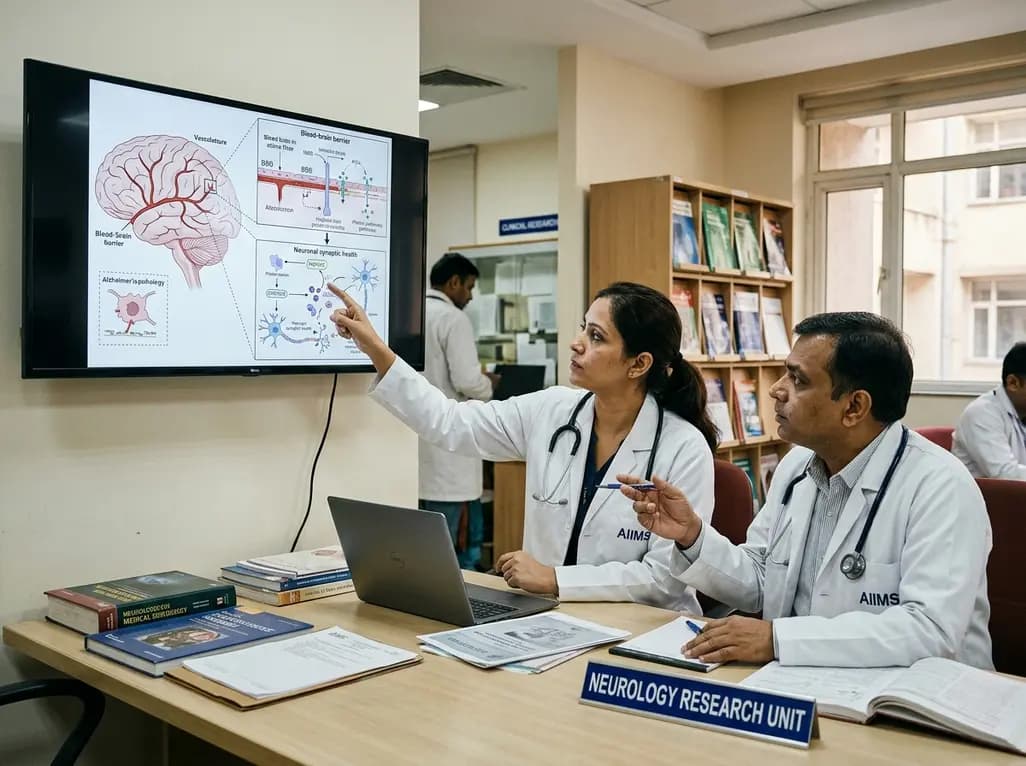
Groundbreaking research from the Gladstone Institutes demonstrates that the blood-brain barrier functions as an active molecular filter rather than a static wall. By identifying systemic proteins like APOA1 that preserve neuronal synapses, investigators unveil promising outside-in therapeutic targets for dementia.
Today

A landmark study reveals that lipid-rich malignant ascites alters the T-cell metabolic transcriptome, causing cholesterol efflux and impaired fatty acid oxidation. This suppresses TCR signalling and blocks BiTE immunotherapy, while lipid depletion restores antitumour cytotoxicity in ovarian cancer.
Today
Novel clinical evidence demonstrates the feasibility of combining VA-ECMO with the NyokAssist self-expanding transvalvular pump for active left ventricular unloading in infarct-related cardiogenic shock, achieving successful stabilization and decannulation.
Today

Recent crash analyses demonstrate significant variations in traffic injury severity across vehicle seating positions. Electric vehicle passengers face disproportionately higher trauma risks than drivers, particularly during airbag deployments, demanding adapted emergency assessment and clinical vigilance.
Today
