.webp&w=384&q=75)

Loading, please wait...
Loading, please wait...

Traditional methods for diagnosing T-cell lymphoproliferative disorders rely heavily on molecular gene rearrangement studies. However, these techniques often face significant limitations, including long turnaround times and a lack of specific phenotypic information. Recently, T-cell clonality testing has seen a major breakthrough through the application of flow cytometry-based assessments using TRBC1 and TRBC2 antibodies. This novel method allows clinicians to evaluate clonality rapidly while simultaneously maintaining critical cellular phenotype data. Consequently, it simplifies the diagnostic pathway for complex hematological cases and improves laboratory efficiency.
A recent study involving 54 clinical samples demonstrated the diagnostic power of this simplified approach. Researchers compared the new flow cytometry method with conventional molecular testing to evaluate its accuracy. Results showed high concordance in identifying major clonal populations. Additionally, the test identified minor clonal populations that traditional molecular methods might occasionally miss. Therefore, the integration of TRBC1 and TRBC2 antibodies provides a robust and highly sensitive alternative to standard DNA-based assays.
The diagnostic process utilizes fluorescent-conjugated monoclonal antibodies targeting the beta-chain constant regions of the T-cell receptor. This methodology closely mirrors the kappa-lambda light chain analysis used in routine B-cell neoplasia diagnosis. Moreover, the significantly faster turnaround time facilitates prompt clinical decisions and treatment initiation. Furthermore, lab professionals can now provide detailed phenotypic and clonal information within a single diagnostic step, enhancing the overall precision of hematopathology reporting.
While PCR-based methods are the traditional standard for molecular confirmation, they are often labor-intensive and slow. TRBC1/TRBC2 flow cytometry provides results within hours and includes detailed phenotypic data that molecular testing cannot offer.
This method is highly effective for identifying clear T and NKT cell clones. Specifically, it is useful in cases with minor clonal populations where traditional morphology or molecular testing might produce ambiguous results.
Disclaimer: This content is for informational and educational purposes only. It is not intended to be a substitute for professional medical advice, diagnosis, or treatment. Always seek the advice of your physician or other qualified health provider with any questions you may have regarding a medical condition. Refer to the latest local and national guidelines for clinical practice.
References
Forró B et al. [Novel T-cell clonality assessment using T-cell receptor beta constant region 1 and 2 antibodies in T-cell lymphoproliferative disorders]. Orv Hetil. 2026 Apr 12. doi: 10.1556/650.2026.33522. PMID: 41966756.
Maciocia PM, et al. Targeting the T-cell receptor beta-chain constant region for immunotherapy of T-cell malignancies. Nat Med. 2017 Dec;23(12):1416-1423.
Horna P, et al. Flow cytometric T-cell receptor Vβ repertoire analysis: A bridge to TRBC1-based clonality assessment. Cytometry B Clin Cytom. 2021 Jul;100(4):463-472.

Read summarized clinical updates, watch expert medical content, and earn CME certifications right from your smartphone.
Open your smartphone camera to scan and install.





A new flow cytometry method using TRBC1 and TRBC2 antibodies provides faster, more sensitive T-cell clonality testing compared to traditional molecular assa...
6 months ago

Following regulatory scrutiny from FSSAI regarding promotional representations and lean muscle preservation claims, Dr. Reddy's Laboratories and Nestlé Health Science are currently reviewing the branding and marketing strategy for their joint nutritional supplement Celevida GLP+.
Today

A comprehensive scoping review synthesises evidence linking prenatal maternal mental health to long-term offspring neurodevelopment, evaluating neuroendocrine, inflammatory, and epigenetic pathways while highlighting clinical screening and future research priorities.
Today

The Directorate General of Health Services directs Indian states to halt the hazardous reuse and reprocessing of single-use medical devices. Discover regulatory implications under the Drugs and Cosmetics Act, critical infection risks, legal liabilities, and operational changes required across clinical specialties.
Today
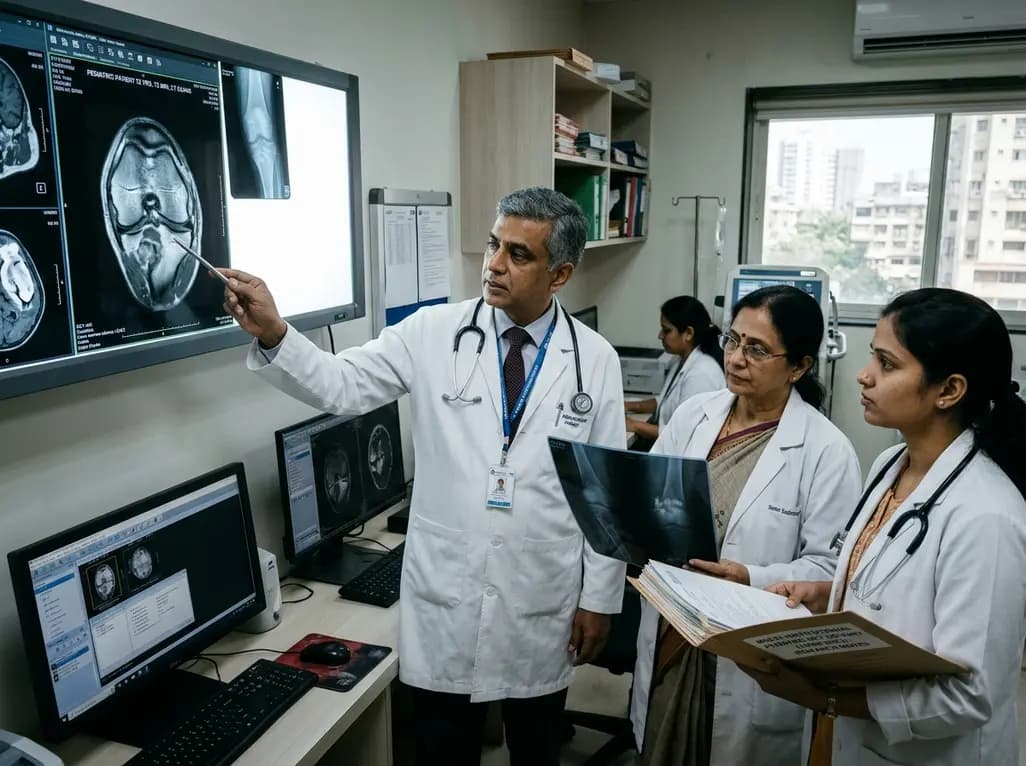
A 25-year multi-institutional cohort reveals high recurrence rates in pediatric giant cell tumor of bone, particularly in patients with open physes and bone marrow edema on preoperative MRI. Early surveillance and careful balance between growth plate preservation and tumor clearance are essential.
Today

India is advancing preventive healthcare by integrating genomics, artificial intelligence, and quantum technologies. With the SANGAM programme sequencing one million Indian genomes, clinicians can unlock personalized therapies, detect cardiometabolic risks early, and curb the burden of diabetes and heart disease.
Today
