.webp&w=384&q=75)

Loading, please wait...
Loading, please wait...
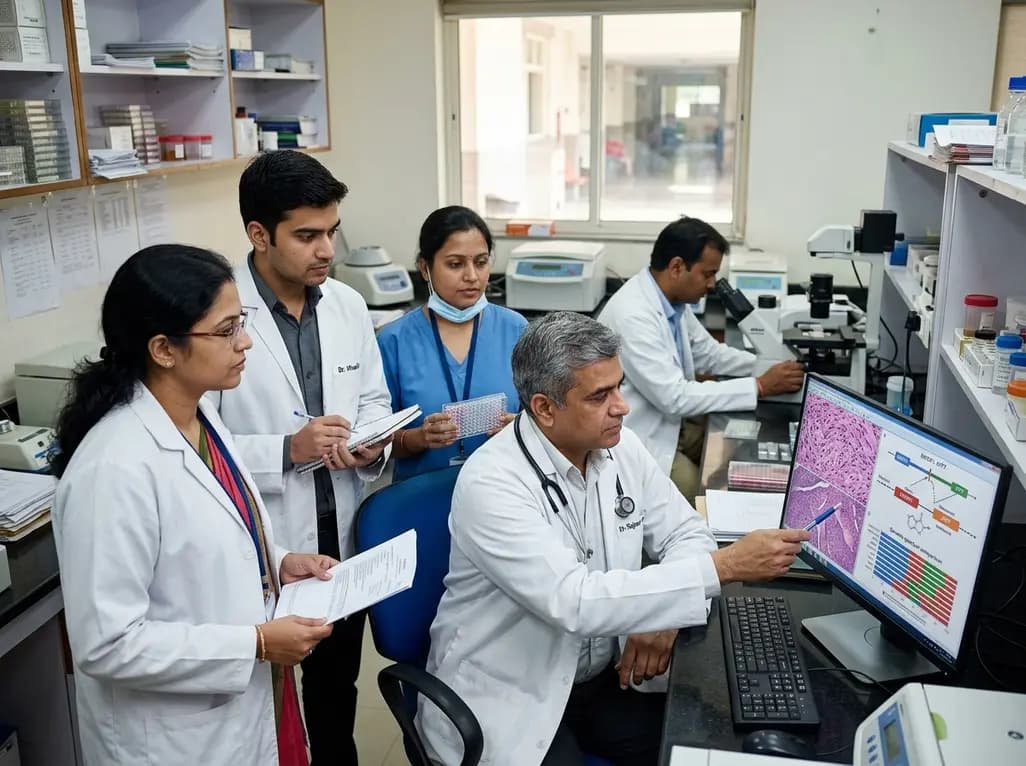
Mesenchymal neoplasms represent a biologically diverse group of soft tissue tumors. Recently, advanced molecular profiling has revolutionized soft tissue pathology by identifying novel oncogenic gene fusions. Among these rare entities, spindle cell rhabdomyosarcoma continues to expand its known clinical and genetic spectrum. Historically, clinicians categorized rhabdomyosarcomas primarily into embryonal, alveolar, and pleomorphic variants. However, pathologists now classify spindle cell and sclerosing subsets using distinct molecular drivers, including rearrangements in TFCP2, VGLL2, and NCOA2.
Furthermore, recent molecular evidence highlights the promiscuous nature of the EWSR1 gene, which pairs with diverse transcription factors to drive oncogenesis. In a recent case report, pathologists identified a novel EWSR1::ATF7 fusion transcript in a young adult presenting with a solitary muscular lesion displaying skeletal muscle differentiation. Consequently, this remarkable discovery challenges established diagnostic categories. It demonstrates how modern targeted sequencing reveals unexpected genomic alterations that broaden our understanding of rare soft tissue tumors.
The patient presented as a 28-year-old man who developed a slowly enlarging, painless mass within the left posterior neck musculature. Deep-seated intramuscular lesions in young adults often pose substantial diagnostic challenges. Therefore, clinicians must carefully evaluate both clinical tempo and comprehensive cross-sectional imaging findings before attempting tissue biopsy.
Diagnostic imaging demonstrated a relatively well-circumscribed soft tissue mass embedded within skeletal muscle. Additionally, computed tomography revealed scattered focal calcifications throughout the tumor parenchyma. Because several benign conditions, such as nodular fasciitis or myositis ossificans, demonstrate calcification, radiologists must maintain a wide differential diagnosis. However, an enlarging mass in an adult necessitates precise histological evaluation to exclude indolent or aggressive sarcomas. In this case, surgical excision provided adequate tissue for definitive histopathological examination and subsequent ancillary molecular testing, ensuring an accurate diagnostic evaluation.
Microscopic evaluation revealed a lobulated neoplasm within a dense, sclerotic fibrous background. The lesion was composed of monotonous round, ovoid, and spindle-shaped tumor cells arranged in expansive nodules, loose fascicles, and compact solid nests. Interestingly, the stroma displayed focal metaplastic bone formation alongside rare microcalcifications, mirroring the radiologic findings.
Importantly, the neoplastic cells exhibited remarkably bland cytological features without significant cellular atypia, brisk mitotic figures, or tumor necrosis. In standard diagnostic practice, the absence of mitotic activity often points toward a lower-grade process. However, immunohistochemical testing conclusively demonstrated rhabdomyoblastic differentiation. The tumor cells expressed myogenic regulatory markers, confirming skeletal muscle lineage despite the absence of overt cytologic atypia. Consequently, pathologists recognized that this unique morphological architecture deviated from classic patterns, strongly suggesting a specialized variant within the spindle cell sarcoma category.
Because the morphological features remained ambiguous, investigators pursued comprehensive molecular testing. Next-generation sequencing successfully uncovered a novel in-frame EWSR1::ATF7 gene fusion. The EWSR1 gene on chromosome 22q12 frequently participates in oncogenic chromosomal translocations across various sarcoma types, but its fusion with ATF7 is exceptionally rare.
Moreover, the team performed genome-wide DNA methylation profiling to classify the tumor against established reference cohorts. Interestingly, methylation profiling yielded no matching classes within current sarcoma databases, highlighting the novelty of this neoplasm. ATF7 belongs to the activating transcription factor family, closely related to ATF1 and CREB1. While EWSR1::ATF1 fusions routinely define clear cell sarcoma, the EWSR1::ATF7 chimeric product drives a distinct myogenic program here. Therefore, this finding reinforces the vital role of genomic sequencing in unmasking previously uncharacterized oncogenic drivers.
Pathologists encountered an extensive differential diagnosis when analyzing this intramuscular neoplasm. Specifically, the differential included sclerosing epithelioid fibrosarcoma, low-grade fibromyxoid sarcoma, extra-skeletal osteosarcoma, and solitary fibrous tumor. The presence of metaplastic bone and stromal sclerosis initially suggested a fibro-osseous or matrix-producing lesion.
However, robust immunohistochemical positivity for myogenic transcription factors reliably excluded pure fibroblastic and neurogenic mimics. Furthermore, molecular identification of the EWSR1::ATF7 chimera favored classification as a fusion-associated spindle cell rhabdomyosarcoma. Unlike conventional spindle cell variants driven by MYOD1 mutations, which carry an aggressive clinical course, fusion-driven subtypes display variable biological behavior. Thus, identifying specific translocation partners allows pathologists to avoid misclassification. In clinical practice, separating low-grade mimics from genuine rhabdomyoblastic sarcomas is essential for designing appropriate surgical margins and therapeutic protocols.
Accurate pathological characterization directly dictates clinical decision-making and patient counseling. Complete surgical resection with negative margins remains the cornerstone of definitive local control for localized soft tissue neoplasms. However, clinicians must carefully determine whether systemic cytotoxic chemotherapy or adjuvant radiotherapy is warranted for such rare fusion-driven entities.
Because data on EWSR1::ATF7 neoplasms remain limited to isolated reports, oncologists must monitor patients through prolonged follow-up schedules. In particular, regular cross-sectional surveillance imaging is crucial to detect potential local recurrence or delayed distant metastasis early. Additionally, as functional studies clarify the downstream oncogenic pathways activated by the EWSR1::ATF7 transcription factor, targeted therapies may offer future therapeutic avenues. Consequently, collaborative multi-institutional registries and further case series are essential to establish evidence-based guidelines for this emerging sarcoma subtype.
The EWSR1::ATF7 gene fusion is a newly discovered oncogenic driver combining the EWSR1 transactivation domain with the ATF7 transcription factor. Although EWSR1 commonly partners with ATF1 or FLI1 in clear cell sarcoma or Ewing sarcoma, pairing with ATF7 has not been documented previously. In this unique tumor, the novel chimera drives rhabdomyoblastic differentiation without typical high-grade cytologic atypia, creating a distinct clinicopathologic entity.
Spindle cell rhabdomyosarcoma is distinguished through combined histological, immunohistochemical, and molecular examinations. While light microscopy reveals fascicular spindle cells within collagenous or sclerotic stroma, immunohistochemistry confirms skeletal muscle lineage via positive desmin, MyoD1, or myogenin expression. Crucially, molecular testing differentiates fusion-positive variants from MYOD1-mutant forms and non-myogenic mimics such as solitary fibrous tumors, schwannomas, and low-grade fibromyxoid sarcomas, guiding accurate clinical management.
Complete surgical resection with clear pathological margins represents the primary treatment modality for localized fusion-associated spindle cell rhabdomyosarcoma. Multidisciplinary tumor boards evaluate the addition of adjuvant radiotherapy or systemic chemotherapy based on anatomical location, tumor size, and surgical margins. Because long-term clinical data on novel fusion subtypes remain scarce, rigorous cross-sectional imaging surveillance is essential to detect any recurrence or metastatic progression promptly.
Disclaimer: This content is for informational and educational purposes only, and does not substitute professional medical advice, diagnosis, or treatment. Healthcare professionals should utilize their clinical judgment alongside these materials. Clinical scenarios, dosages, and guidelines can vary; verify with current medical literature. The authors and distributors assume no liability for errors, omissions, or clinical outcomes resulting from the use of this content. Refer to the latest local and national guidelines for clinical practice.
References

Read summarized clinical updates, watch expert medical content, and earn CME certifications right from your smartphone.
Open your smartphone camera to scan and install.





A report reveals a novel EWSR1::ATF7 gene fusion in a soft tissue mesenchymal neoplasm with rhabdomyoblastic differentiation, expanding the genetic spectrum of spindle cell rhabdomyosarcoma.
4 weeks back

A cross-sectional study reveals significant gaps in palliative care quality within nursing homes. Physicians report discrepancies between perceived importance and actual delivery in pain relief, psychological support, and existential care, highlighting urgent needs for clinical and systemic improvements.
Today

A ten-year cohort study of ABU case logs reveals that URPS fellowship training significantly drives higher annual case volumes, advanced surgical complexity, and increased female representation in pelvic floor reconstruction, underscoring the vital need for structured subspecialty training.
Today

Cardiovascular-kidney-metabolic (CKM) syndrome links metabolic, renal, and cardiovascular diseases along a shared continuum. This review examines holistic CKM management, PREVENT risk assessment, multi-organ pharmacotherapies like SGLT2i and GLP-1 RAs, and multidisciplinary care models to improve patient outcomes.
Today
Posttraumatic pisotriquetral instability is a rare wrist injury causing severe hypothenar pain and weakness. Explore clinical examination, imaging, and pisiformectomy.
Today
The Italian CardioMET registry evaluated guideline-directed cardioprotective therapy in 2,527 outpatients with type 2 diabetes. Despite high cardiovascular risk, SGLT2 inhibitors and GLP-1 receptor agonists remain underutilized, highlighting the urgent need for multidisciplinary cardiometabolic care.
Today
