

Loading, please wait...
Loading, please wait...

Frontotemporal lobar degeneration encompasses a clinically and pathologically heterogeneous group of neurodegenerative diseases. These debilitating disorders primarily disrupt social behavior, executive control, and language processing in middle-aged and older adults. Furthermore, genetic abnormalities account for nearly one-third of all diagnosed cases. In addition, clinicians typically associate familial forms with mutations in tau, progranulin, or C9orf72 genes. However, pathogenic variants in the charged multivesicular body protein 2B gene represent a much rarer etiology. Historically, clinicians documented these specific mutations only in Denmark, Belgium, and China. Consequently, diagnostic workups often overlook this gene during routine clinical evaluations. A recent breakthrough in Spain identified a novel splice-site variant in monozygotic twins. This critical finding proves that the geographical distribution of this rare gene is broader than previously recognized. Therefore, clinicians must maintain a high index of suspicion across diverse international populations. Similarly, ongoing genetic discovery continually refines our understanding of complex dementia syndromes.
Phenotypic heterogeneity frequently complicates the diagnosis of familial neurodegenerative disorders. The Spanish report examined monozygotic male twins harboring the novel splice-site variant c.35-1G>A. Strikingly, these genetically identical brothers exhibited profoundly divergent clinical presentations and distinct ages of onset. The first twin presented at sixty-two years of age with canonical behavioral variant frontotemporal dementia. Specifically, he displayed progressive apathy, social disinhibition, loss of empathy, and severe executive impairment. In contrast, the second twin remained asymptomatic until sixty-six years of age. He subsequently developed an atypical syndrome that closely mimicked dementia with Lewy bodies. Furthermore, his presentation included vivid visual hallucinations, cognitive fluctuations, and prominent parkinsonian motor features. Consequently, this dramatic divergence underscores the significant role of epigenetic mechanisms and environmental influences. In addition, secondary genetic modifiers may alter disease progression and clinical phenotypes. Neurologists should recognize that identical mutations do not guarantee uniform clinical features within the same family.
The charged multivesicular body protein 2B plays a fundamental role in the endosomal sorting complex required for transport. This essential cellular machinery coordinates endosomal trafficking, autophagosome maturation, and lysosomal degradation. Proper neuronal survival requires continuous clearance of damaged organelles and toxic metabolic byproducts. However, the novel c.35-1G>A variant alters canonical splicing during gene transcription. As a result, this mutation produces a prematurely truncated protein lacking its critical carboxyl-terminal regulatory domain. Consequently, the defective protein fails to dissociate normally from endosomal membranes. Neurons therefore accumulate dysmorphic endosomes and defective autophagic vesicles within their cytoplasm. In addition, impaired autophagic flux triggers chronic neuroinflammatory responses and microglial activation. Over time, these combined pathological events drive progressive cortical atrophy and selective neuronal loss. Therefore, disruption of endosomal-lysosomal dynamics represents the primary mechanism driving neurodegeneration in these patients. Targeted restoration of endosomal function remains a crucial objective for therapeutic research.
Accurate clinical differentiation remains essential when evaluating atypical neurodegenerative syndromes. A presentation mimicking dementia with Lewy bodies can easily mislead treating physicians toward an incorrect synucleinopathy diagnosis. Therefore, clinicians must deploy comprehensive diagnostic workups when assessing atypical cognitive decline. Structural magnetic resonance imaging provides critical localization by demonstrating focal frontotemporal or frontoparietal atrophy. Furthermore, fluorodeoxyglucose positron emission tomography reveals pronounced frontal and anterior temporal hypometabolism rather than posterior temporoparietal deficits. Cerebrospinal fluid biomarker analysis also assists clinicians by ruling out Alzheimer disease pathology. In addition, dopamine transporter imaging helps quantify nigrostriatal degeneration in patients who manifest progressive parkinsonism. Clinicians must synthesize these multimodal imaging markers with thorough neuropsychological assessments. Consequently, advanced diagnostic investigations resolve ambiguous presentations and prevent costly clinical misclassifications. Early and precise characterization substantially improves patient management and long-term care planning.
The discovery of private mutations highlights the clear need for modern genomic diagnostic approaches. Conventional single-gene Sanger sequencing often fails to identify rare variants across non-canonical loci. Consequently, modern clinicians rely on high-throughput next-generation sequencing dementia gene panels. These comprehensive panels simultaneously evaluate common and rare genes, including charged multivesicular body protein 2B. Furthermore, exome and genome sequencing technologies successfully capture complex intronic and splice-site alterations. Clinicians should refer affected families for professional genetic counseling as soon as hereditary dementia is suspected. Genetic counselors provide vital guidance regarding autosomal dominant inheritance risks, predictive testing, and reproductive choices. Moreover, multidisciplinary teams assist family members through the emotional and ethical complexities of predictive results. In addition, geneticists apply rigorous guidelines to classify novel variants accurately. Thus, comprehensive genomic screening provides invaluable clarity for patients, clinicians, and at-risk relatives.
Current clinical management for familial frontotemporal dementia focuses primarily on symptom alleviation and supportive multidisciplinary care. Clinicians currently lack approved disease-modifying therapies that can halt underlying neurodegenerative processes. Therefore, physicians utilize tailored pharmacological interventions to address disruptive behavioral disturbances. For example, selective serotonin reuptake inhibitors provide modest benefits for apathy, disinhibition, and compulsive behaviors. However, clinicians must avoid typical neuroleptics because these medications carry high risks of severe extrapyramidal toxicity. Non-pharmacological therapies, including occupational adaptation and caregiver education, significantly reduce daily behavioral distress. Furthermore, ongoing translational research explores innovative targeted strategies such as antisense oligonucleotides. These emerging molecular therapies aim to correct aberrant splicing or silence toxic truncated transcripts. In addition, researchers are actively evaluating small molecules that enhance autophagic clearance and restore endolysosomal function. Consequently, future therapeutic breakthroughs will depend on early genetic detection and individualized precision medicine.
The novel splice-site mutation alters normal messenger RNA transcription, generating a prematurely truncated protein. This aberrant protein lacks its critical regulatory domain and fails to disassemble from endosomal membranes. Consequently, neurons suffer from disrupted endolysosomal trafficking, impaired autophagic clearance, elevated neuroinflammation, and progressive frontotemporal cortical atrophy.
Identical twins possess identical genetic sequences, but epigenetic variations, post-zygotic somatic mutations, and environmental factors accumulate over time. In addition, differences in cognitive reserve, lifestyle exposures, and microglial activation profiles modulate downstream pathology. Consequently, identical variants can produce disparate presentations, including canonical behavioral dementia versus a Lewy body mimic.
Clinicians should consider genetic testing when patients present with early-onset cognitive impairment, progressive behavioral deterioration, or a strong family history of neurodegenerative disease. Comprehensive next-generation sequencing dementia panels detect both canonical and rare splice-site variants, ensuring accurate diagnosis, guiding therapeutic decisions, and informing at-risk family members through specialized counseling.
Disclaimer: This content is for informational and educational purposes only. It is not intended to provide medical advice or to be a substitute for professional medical assessment, diagnosis, or treatment. It cannot be used to endorse or promote any chemical, compound or product. Clinicians should exercise their own independent clinical judgment when adopting these clinical recommendations or practices. Prior to prescribing or administering any drug, product or procedure, clinicians must confirm its approved status and carefully review all relevant information, including safety, efficacy, indications, dosages, contraindications, and other product information, which should also be cross-referenced against appropriate and updated research or information sources. Additionally, clinicians must consult current and complete product information and literature concerning the administration of any medical device, procedure, or drug, in particular for candidates that are new, unusual, or seldom used. To the fullest extent permitted by law, no liability is assumed for any injury and/or damage to persons or property arising out of or related to any use of this material. Refer to the latest local and national guidelines for clinical practice.
References

Read summarized clinical updates, watch expert medical content, and earn CME certifications right from your smartphone.
Open your smartphone camera to scan and install.





A novel CHMP2B splice-site variant (c.35-1G>A) identified in monozygotic twins expands the known spectrum of familial frontotemporal lobar degeneration, presenting discordantly as behavioral frontotemporal dementia and a Lewy body dementia mimic.
Today

Review how tailored exercise programs benefit frail older patients with heart failure. Explore pathophysiological mechanisms, individualized training prescriptions, and strategies to overcome adherence barriers in clinical practice.
Today
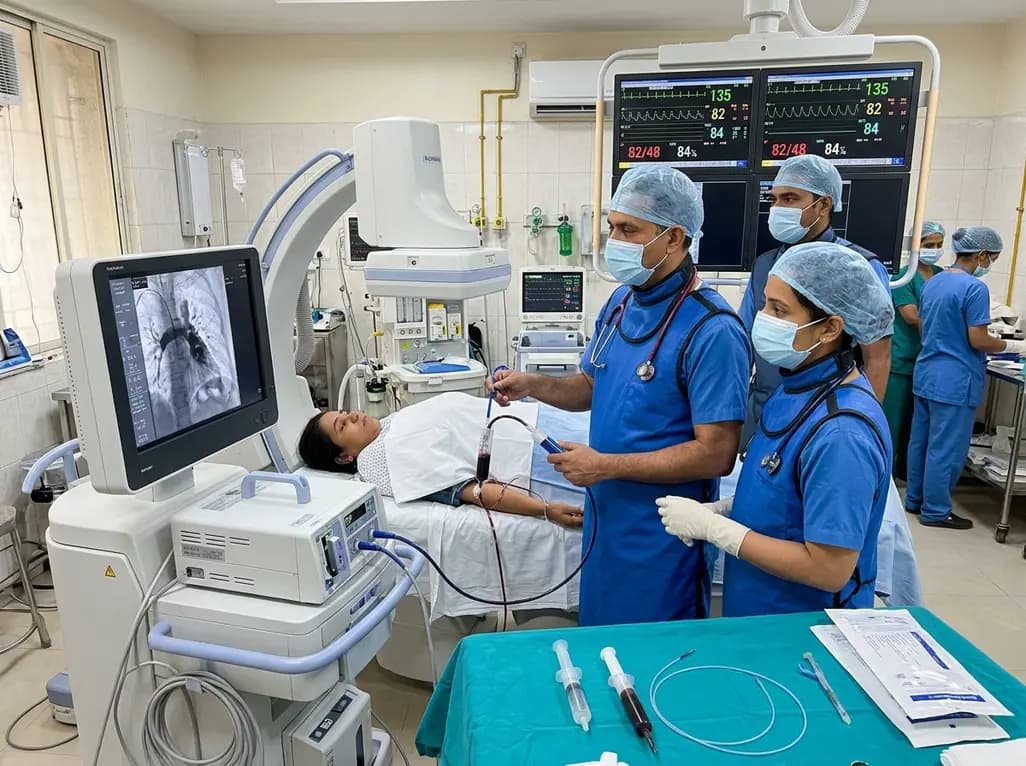
In high-risk pulmonary embolism complicated by severe anemia and active uterine bleeding, systemic thrombolysis is contraindicated. Large-bore aspiration thrombectomy provides rapid hemodynamic rescue without fibrinolysis, supported by inferior vena cava filter placement and multidisciplinary critical care.
Today

A cross-sectional study in Zanzibar reveals that 46.5% of adults with type 2 diabetes experience multidomain autonomic dysfunction on the COMPASS-31 tool, primarily orthostatic intolerance, while 45.9% exhibit cardiovascular autonomic neuropathy, highlighting the urgent need for structured clinical screening.
Today

This comparative study evaluates posterior labral tears with and without glenohumeral instability, highlighting distinct demographic patterns, MRI underestimation in stable shoulders, and successful arthroscopic repair outcomes.
Today

A recent case-control study reveals that urinary clusterin provides superior diagnostic performance for early diabetic kidney disease detection in pediatric type 1 diabetes mellitus, identifying tubular damage before conventional microalbuminuria occurs.
Today
